
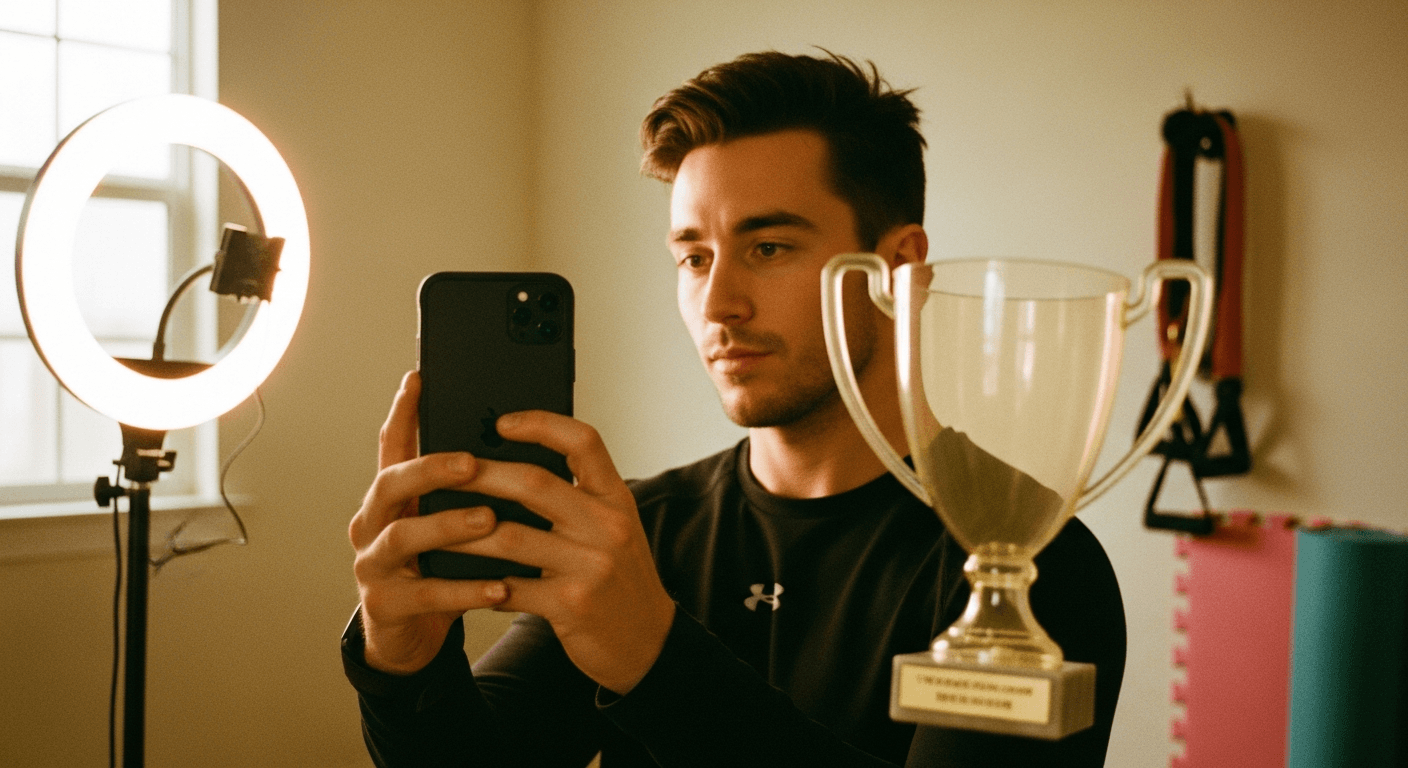
Someone posts a 90-day transformation photo. The comments flood in. Within weeks, they're selling a $97 program and calling themselves a coach. This is how a significant portion of the fitness advice circulating online gets created. And in 2026, with short-form video rewarding confidence over competence, the problem has only gotten sharper.
This isn't about dismissing personal success stories. Transformations are real, and they matter. But there's a line between sharing what worked for you and prescribing what someone else should do. That line is a credential, a body of knowledge, and a legal and ethical responsibility. A lot of people selling fitness services online don't have any of those things.
Personal Success Is Not a Coaching Qualification
Losing 40 pounds, completing an ultramarathon, or building a competitive physique are genuine achievements. They are not, however, transferable expertise. The human body doesn't work the same way twice. What produced results for one person, in one hormonal environment, at one point in their life, may be actively harmful for someone else.
Real coaching requires understanding anatomy, physiology, exercise programming principles, nutrition science, and behavioral psychology. Certified programs from organizations like the National Academy of Sports Medicine (NASM), the American Council on Exercise (ACE), or the National Strength and Conditioning Association (NSCA) require passing rigorous exams built on that knowledge base. A before-and-after photo doesn't teach you about periodization, contraindications, or when to refer a client to a physician.
This distinction matters even more when advice crosses into nutrition. Prescribing macros, recommending specific supplements, or designing therapeutic eating plans for weight loss or medical conditions crosses into territory governed by registered dietitians in most US states. An uncertified influencer telling a follower to cut carbs to 50 grams a day isn't just offering bad advice. In some contexts, it's practicing nutrition counseling without a license.
Why Social Media Makes This Worse
Algorithms don't reward nuance. They reward engagement, and nothing drives engagement in the fitness space like dramatic transformations, bold claims, and the suggestion that you've found the one thing everyone else is getting wrong. That content structure systematically disadvantages honest, credentialed professionals, who tend to say things like "it depends" and "consult your doctor."
Research consistently shows that people are most likely to seek out health information online during periods of vulnerability. After a diagnosis. After a breakup. After stepping on a scale and feeling ashamed. This is exactly when unqualified advice does its most damage. A person in that mental state isn't cross-referencing credentials. They're looking for someone who seems certain and relatable.
That psychological window is also when supplement promotions get pushed hardest. An influencer who just went through a weight loss journey has built-in credibility with a follower who's starting one. When that influencer recommends a protein powder or fat burner in the same breath as their "program," the commercial motivation blurs into the personal story. The follower often can't tell where the genuine advice ends and the paid promotion begins.
For context on how supplement marketing intersects with real science, it's worth understanding what the evidence actually shows. An article like Amino Acids and Active Folate: What New Supplements Promise illustrates how even well-researched compounds require precise context to be relevant. That context is exactly what unqualified advisors can't provide.
Red Flags You Can Spot Before You Pay Anything
You don't need to be an industry insider to identify problematic fitness advice online. Here's what to look for before you trust anyone with your health.
- No verifiable certification. Any legitimate fitness professional can tell you their certifying body, their certification number, and when it was issued. NASM, ACE, and NSCA all have public lookup tools. If someone can't or won't provide this, treat that as a serious warning sign.
- Cookie-cutter programming. Genuine coaches ask questions before they write a plan. They want to know your injury history, your schedule, your goals, your equipment access, and your training history. If someone offers you a generic 12-week PDF within 24 hours of a first message, it wasn't designed for you. It was designed for everyone.
- Advice tied to product promotions. There's nothing inherently wrong with a certified professional recommending a product they believe in. The problem is when every piece of advice conveniently leads to an affiliate link. That's a content strategy, not a coaching relationship.
- Absolute language with no caveats. "This will work for everyone." "Doctors don't want you to know this." "Cut this one food and watch what happens." Legitimate fitness science is full of individual variation and context-dependency. Anyone who removes that complexity is either oversimplifying to sell something or doesn't know enough to recognize what they're missing.
- No mention of referrals or limits of scope. A qualified coach knows what they're not qualified to handle. If someone presents themselves as the solution to everything, from weight loss to chronic pain to hormonal issues to anxiety, without ever mentioning a doctor or specialist, that's not comprehensive coaching. That's a liability in motion.
What Real Coaches Actually Do Differently
Genuine fitness professionals aren't defined purely by their credentials, though credentials matter. They're defined by how they practice. And there are observable differences between a qualified coach and someone who's monetizing a personal story.
Qualified coaches track outcomes. Not follower counts or testimonials selected for marketing purposes, but measurable client progress over time: strength numbers, body composition changes, performance benchmarks. They adjust programming when results plateau instead of blaming the client. Tools like biometric tracking and digital coaching platforms are increasingly part of how serious professionals manage client outcomes, as explored in mHealth Biometrics and Coaching: The T2D Study Coaches Need.
Qualified coaches demonstrate scope-of-practice discipline. A certified personal trainer who suspects a client's fatigue is related to a thyroid issue refers them to their doctor. They don't sell them an adrenal support supplement. A coach working with a pregnant client who has specific protein needs points them toward evidence-based resources like Protein and Pregnancy: The Guide for Active Women and recommends they work with a registered dietitian for clinical guidance.
Qualified coaches also show intellectual humility. They update their approach when new research challenges old assumptions. They acknowledge that the science on something like post-workout nutrition is more nuanced than the gym floor myths suggest. An evidence-grounded coach will point clients toward articles like The Post-Workout Protein Window: What You Actually Need to Know rather than repeat the same talking points from a decade ago.
That intellectual humility extends to programming. The best coaches know that longevity, not aesthetics, is increasingly what their clients actually need. Understanding the difference between building muscle mass and building muscle quality matters deeply for long-term health, particularly for clients over 35. This is a distinction that requires real education, not just personal experience lifting weights.
How to Verify Before You Invest
The practical steps here are straightforward, and they take less than ten minutes.
Start with the certifying body. NASM's website has a credential verification tool. So does ACE. The NSCA maintains a registry of certified individuals. If a trainer claims any of these credentials, you can confirm them. If they claim a credential from an organization you've never heard of, search that organization directly. Some certifications require nothing more than watching a few videos and paying a fee. The industry has no universal licensing standard in the United States, which means anyone can call themselves a personal trainer. Verified credentials from recognized bodies are the closest thing to a filter that exists.
Ask specific questions before signing up for anything. What certifications do you hold? How do you design programming for someone with my history? What happens if I get injured or my results plateau? How do you handle clients who have medical conditions that affect training? A qualified professional will have clear, confident answers. Someone winging it will deflect, get vague, or pivot back to testimonials.
Be skeptical of pricing structures that seem designed to extract rather than deliver. A high-quality online coaching relationship in the US typically runs between $150 and $400 per month for genuine individualized programming and check-ins. A $27 PDF "program" sold to 50,000 people is a product, not coaching. Both can be legitimate depending on your needs, but they're not the same thing. Don't pay coaching prices for a product, and don't expect a product to function as coaching.
The Standard Should Be Higher
The fitness industry has a credibility problem that it hasn't fully reckoned with. Platforms that profit from health content don't have strong incentives to verify the expertise of the people producing it. Regulatory frameworks in the US haven't kept pace with the scale of online health advice. That means the burden falls on you, the person trying to improve your health, to apply the scrutiny that the system doesn't.
That's not fair. But it's the current reality. And the cost of getting it wrong isn't just money. Poorly designed training programs cause injuries. Bad nutrition advice worsens metabolic conditions. Supplement recommendations made without clinical context can interfere with medications or mask symptoms that need medical attention.
The people worth trusting in the fitness space aren't always the ones with the largest audiences or the most compelling before-and-after content. They're the ones who can show you their credentials, explain their methodology, and tell you honestly what they're not equipped to handle. That combination of knowledge and humility is what separates a professional from someone who got fit and decided that was enough.