
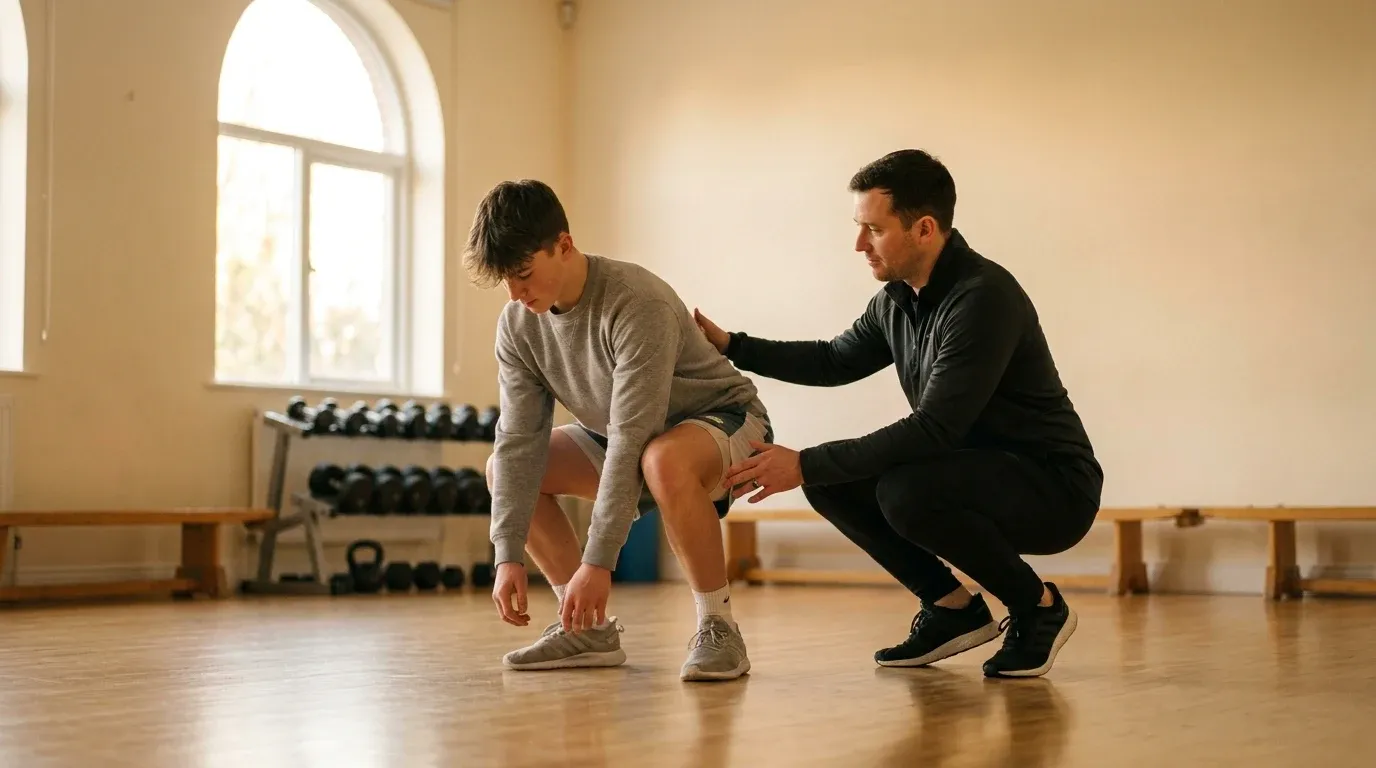
Teen fitness coaching is growing fast, and the interest is legitimate. Youth obesity rates remain elevated across the US, UK, and Australia, youth sports participation continues to climb, and more teenagers are actively seeking structured physical activity outside of school. What hasn't kept pace is parent education about what good coaching for minors actually looks like.
If your teenager is asking about personal training, that's worth taking seriously. But before you search for a local trainer or sign up for sessions, there are things you need to understand about how youth fitness coaching differs from adult programming, and why getting it wrong can cause more harm than doing nothing at all.
What Teen Personal Training Is Actually For
The first misconception to clear up: quality personal training for teenagers is not about building muscle mass or losing weight. Reputable coaches working with youth populations focus on three core outcomes. movement quality, physical literacy, and confidence.
Physical literacy means developing foundational movement skills. squatting, hinging, pushing, pulling, bracing, jumping, landing. Teenagers who build this foundation early are more durable athletes, more likely to stay active into adulthood, and less prone to the overuse injuries that sideline so many youth sports participants.
Confidence is the other major goal. A teenager who learns to move well, who feels capable in their body, and who experiences real progress in a safe environment carries those psychological gains well beyond the gym. Research consistently shows that physical competence during adolescence correlates with long-term physical activity habits and better self-reported wellbeing.
What teen training is not: a fat loss intervention, a bodybuilding program, or a performance optimization system designed around adult physiology. Coaches who market to teenagers using transformation language or before-and-after framing are signaling that they don't understand adolescent development. Or that they don't care.
The Certifications and Standards That Actually Matter
Not all personal training certifications are equal, and most general certifications don't include meaningful coverage of youth populations. When you're evaluating coaches for your teenager, you should be asking specifically about youth-focused credentials.
In the US, organizations like the National Strength and Conditioning Association (NSCA) offer the Certified Strength and Conditioning Specialist (CSCS) credential, which includes youth-specific content. The National Academy of Sports Medicine (NASM) and the American College of Sports Medicine (ACSM) offer youth fitness specializations as add-on credentials. In the UK, Level 3 Sports Coaching qualifications with youth endorsements serve a similar function.
Beyond credentials, look for these baseline standards:
- A current safeguarding or child protection certification. Any coach working with minors should hold this without exception. In the US, this often falls under background check requirements and safe sport training. In the UK, it's a formal safeguarding qualification.
- A structured intake process that includes parents. The first conversation about goals should involve you, not just your teenager. A coach who sets training objectives without parental input is skipping a critical step.
- A clear philosophy around youth development. Ask directly: what's your approach with teenagers? What does progress look like for a 14-year-old? The answers tell you a great deal.
- Age-appropriate programming documentation. You should be able to see what your teenager is actually doing in sessions and why.
Session rates for qualified youth coaches typically run between $60 and $120 per hour in major US cities, with group formats often available at $25 to $50 per session. If a coach is priced at the very low end with no credentials to explain it, that's worth questioning.
The Real Risk Is Psychological, Not Physical
The most common fear parents express about teen weight training is injury. That concern is understandable but largely misplaced. The evidence on resistance training for adolescents is clear: when properly supervised and age-appropriately programmed, strength training is safe for teenagers and does not damage developing growth plates. The American Academy of Pediatrics updated its position statement on this years ago.
The actual risk is more subtle and more lasting. It's the relationship a teenager develops with their body, with performance, and with food during the years they spend in a training environment.
A coach who frames sessions around aesthetic change. who comments on a teenager's body composition, who rewards weight loss, or who encourages restrictive eating. can do serious psychological damage that follows a young person into adulthood. Disordered eating patterns, exercise compulsion, and distorted body image frequently trace back to formative experiences during adolescence.
This is especially true given that teenagers are already navigating significant social pressure around appearance. A training environment that amplifies rather than counteracts those pressures is harmful regardless of how technically competent the coach might be.
Watch for these red flags in how a coach communicates with your teenager:
- Comments about body weight, body fat, or physical appearance
- Encouraging calorie restriction or specific diets without a registered dietitian involved
- Framing rest or recovery as weakness or laziness
- Using shame or comparison as motivational tools
- Discouraging your involvement as a parent after the initial sessions
On the nutrition side specifically: teenagers do not need aggressive supplementation. Protein needs can and should be met through food. If your teenager's coach is recommending specific supplements beyond basic vitamin D or omega-3s, that's a conversation that should involve their pediatrician first. For context on where the adult evidence stands, you can read about what the science actually shows on popular dietary interventions to understand how often adult nutrition strategies are oversimplified. The same critical lens applies with even more force to teenagers.
Why Group and Semi-Private Sessions Often Work Better
One-on-one personal training is the default assumption most parents have when they think about hiring a coach for their teenager. It's not always the best format for this age group.
Adolescents are inherently social learners. They're motivated by peers, they learn through observation, and they're more likely to stay engaged in environments where they feel part of a group. A solo training session with an adult coach can feel isolating or even intimidating for many teenagers, particularly those who are already self-conscious about their fitness level.
Group or semi-private formats. typically two to six participants of similar age and ability. solve several problems at once. They reduce the intensity of the coach-teen dynamic, they create natural peer accountability, they're generally more affordable, and they tend to produce better long-term adherence. Research on youth sport participation consistently shows that enjoyment and social connection are the primary predictors of whether a young person continues physical activity.
This also connects to a broader point about recovery and lifestyle. Teenagers are dealing with sleep deprivation at epidemic levels, partly due to school schedules that conflict with adolescent biology. Studies on later school start times show meaningful improvements in teen sleep, and the same principle applies to training load management. A coach who doesn't account for how much sleep their teenage clients are actually getting is missing a critical variable in their programming.
On that note: sleep and passive rest remain the most underutilized recovery tools for any athlete. For teenagers, who are simultaneously growing, studying, and managing social stress, this matters more than it does for adults.
How to Have the Conversation With Your Teenager
If your teenager has come to you expressing interest in personal training, that's an opening worth handling carefully. The goal is to support their interest while being discerning about where and with whom they train.
Start by understanding their motivation. Are they trying to get stronger for a sport? Do they want to feel more comfortable in their body? Are they following a social media trend? The answer shapes what kind of program actually fits them and what red flags to watch for in the coaching environment they enter.
Be honest about what good coaching looks like. Explain that real progress at their age is measured in skill, strength, and confidence. not in the mirror. Frame finding the right coach as a process that involves both of you.
Once they're in a program, stay involved. Ask about sessions, watch periodically if the format allows it, and check in on how the coach communicates. You don't need to be intrusive. you need to be present enough to notice if something feels off.
Understanding what good training looks like across life stages helps too. Reading about how training principles shift for adults at different life stages gives you a useful baseline for recognizing age-appropriate programming when you see it applied to your teenager.
What Good Teen Coaching Looks Like in Practice
To make this concrete: a well-run youth training session for a 14-year-old should look nothing like a session for a 35-year-old trying to build muscle. There's no maximal loading, no exhaustion-based programming, and no aesthetic benchmarking.
A typical well-structured session might include a dynamic warm-up focused on mobility and coordination, skill work on foundational movement patterns using bodyweight or light loads, some conditioning that doubles as play (agility work, sport-specific drills, partner-based challenges), and a deliberate cooldown that includes a moment to reflect on what went well.
The coach should be spending meaningful time teaching, not just counting reps. Your teenager should leave the session feeling capable and energized, not depleted or self-conscious. And the quality of what happens right after training matters too: coaches who help teenagers build positive post-session routines are investing in long-term habit formation, not just the hour in the gym.
That combination of movement quality, psychological safety, and consistent enjoyment is what separates youth fitness coaching that actually helps from the kind that quietly does harm. Your job as a parent is knowing the difference before you sign anything.