
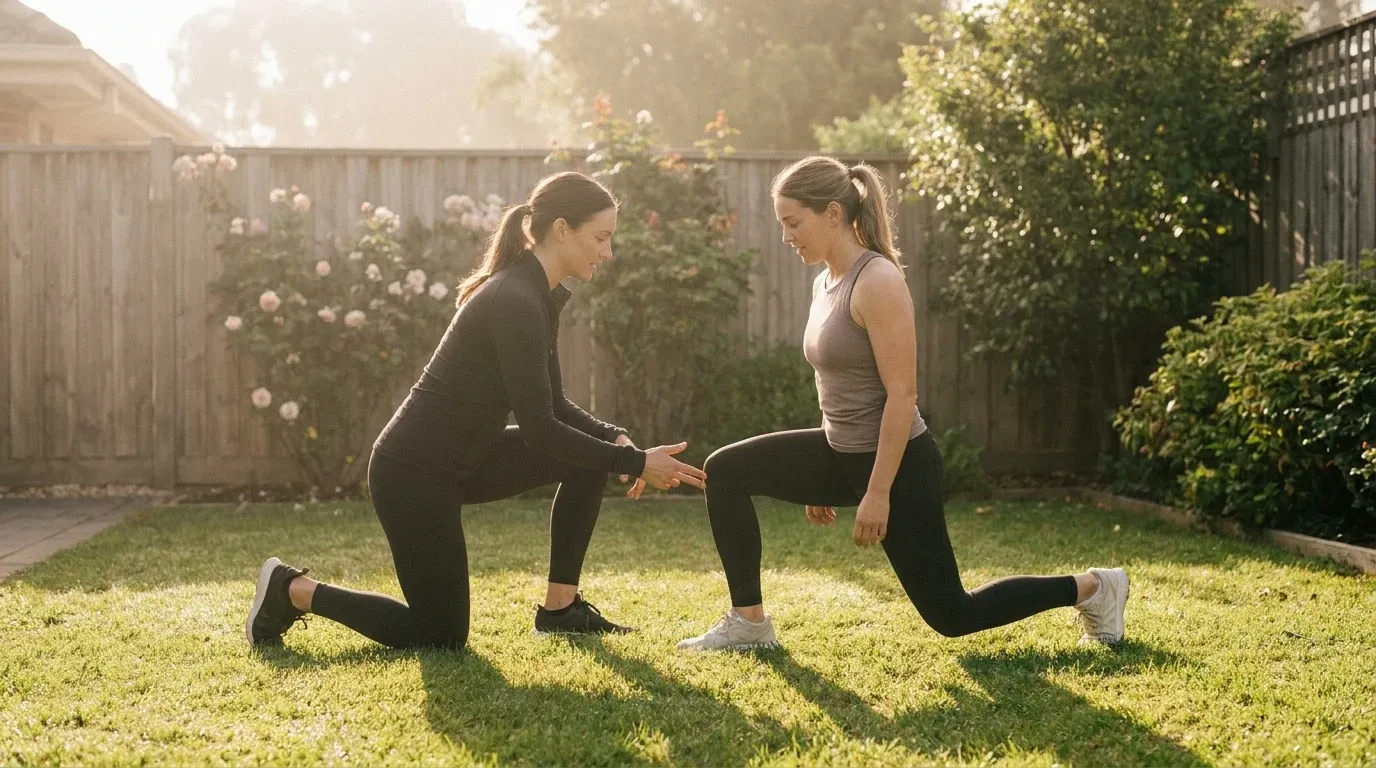
A lot of people want a trainer but don't want a gym. That's not a contradiction. It's a growing reality in the fitness industry, and coaches who work exclusively outside traditional gym settings are meeting serious demand. Whether you're training in your living room, a local park, or over a video call, the structure and results can match anything you'd get under fluorescent lights surrounded by strangers.
Here's what that actually looks like in practice.
Why People Are Skipping the Gym in the First Place
The reasons are varied, but they cluster around a few consistent themes. Cost is one. A gym membership in the US runs anywhere from $30 to over $100 per month, and that's before you factor in travel time, parking, or childcare. For someone also paying for personal training, the gym can feel like a redundant expense.
Discomfort is another. Research consistently shows that gym anxiety, sometimes called "gymtimidation," is a genuine barrier to exercise adherence, particularly among beginners and people returning to fitness after a long break. When the environment itself feels threatening, even the best intentions fall apart before the first rep.
Then there's simple preference. Some people train better at home. Some prefer open air. Some have schedules that make fixed gym hours impractical. A trainer who can meet you where you are, literally, removes one of the most common reasons people stall before they start.
The Three Main Formats and What Each Looks Like
Home Training
Home sessions are exactly what they sound like: your trainer comes to you, or meets you virtually, and uses your available space and equipment. The good news is that equipment is optional, especially at the start.
A skilled trainer can build a comprehensive program using nothing but bodyweight, a few square meters of floor space, and a sturdy chair. Squats, push-up progressions, hip hinges, core work, and mobility drills cover the full movement spectrum. As you progress, a set of resistance bands ($20 to $40) or a pair of adjustable dumbbells can add significant variety without turning your living room into a storage unit.
One underrated advantage of home training: the environment itself can be optimized to support focus. Small changes like controlling light levels and reducing background noise have a measurable impact on how well you perform and recover. Simple environment adjustments that quietly lower your stress apply to training spaces just as much as they do to everyday living.
Outdoor Training
Parks, trails, stadium stairs, and open fields are underused training venues. For a trainer working outdoors, the environment itself becomes equipment. Inclines add load. Uneven terrain challenges stability. Sprints and tempo work become far more intuitive outdoors than on a treadmill.
Outdoor sessions tend to work especially well for clients who want cardio-forward programming, functional strength, or a format that feels less clinical. Research on high-intensity outdoor intervals, for example, shows that even brief bouts of sprint-based work produce significant metabolic adaptations. Three minutes of sprinting outperforms 90 minutes of steady cardio at the molecular level, which makes outdoor sprint work a genuinely efficient option for time-strapped clients.
Weather is the obvious variable. Most trainers who specialize in outdoor work have contingency plans: a covered area nearby, a shift to virtual if conditions are bad, or a hybrid structure that keeps sessions running regardless of forecast.
Virtual Training
Virtual personal training took off during 2020 and never fully receded. It's now a legitimate standalone format, not a fallback. A client trains in their own space while the trainer watches in real time via video, cueing form, adjusting tempo, and coaching through the full session just as they would in person.
The main limitation is that the trainer can't physically spot or manually correct you. This means virtual training works best when clients are willing to move a device to capture their full body from the right angle, and when the trainer is experienced at reading form through a screen. Many are. Video coaching has developed its own set of best practices over the past five years.
Pricing for virtual training typically runs $50 to $120 per session in the US market, compared to $80 to $150 or more for in-person. For many clients, the savings make consistent training financially sustainable for the first time.
What a Typical Non-Gym Session Actually Looks Like
Regardless of format, a well-run personal training session follows a consistent arc. Understanding it helps you know what to expect and what to demand if you're not getting it.
Check-in (5 minutes). The session starts with a brief conversation, not small talk for its own sake, but a structured assessment of how you're showing up today. Sleep quality, stress levels, soreness, energy. A good trainer adjusts the plan based on what they hear. If you slept four hours and your lower back is tight, the session changes. This is one of the clearest differences between working with a coach and following a generic program.
Warm-up (8 to 12 minutes). This is not optional filler. A proper warm-up primes the nervous system, elevates heart rate progressively, and prepares the specific muscles you're about to load. For a home or outdoor session, this might include joint circles, dynamic stretches, light activation work, and a couple of movement rehearsal sets. Skipping or rushing it is one of the most common coaching mistakes that undermine long-term results.
Main work (25 to 40 minutes). This is the core of the session. Your trainer programs the exercises, sets, reps, and rest intervals in advance, but they're watching and adjusting in real time. Live form coaching is the central value proposition here. A cue delivered at the right moment, "drive your knees out," "keep your chest tall," "breathe before the rep," can fix a movement pattern that no written program could address. This is also where progression happens: your trainer tracks what you did last session and pushes the right variables forward.
Cooldown and debrief (5 to 10 minutes). The session closes with intentional recovery work and a clear next-steps conversation. What went well, what needs attention, what you'll work on before you meet again. If you have a session between now and your next appointment, your trainer tells you exactly what to do. Nothing is left vague.
Why This Format Works Especially Well for Beginners
The gym floor is one of the most confusing environments for someone who's new to structured exercise. Equipment you don't know how to use, people who look like they've been training for years, no clear starting point. The cognitive and emotional load is high before you've done a single rep.
Non-gym personal training removes almost all of that friction. You're in a familiar space. There's no audience. The entire session is designed around your current capacity, not a generalized standard. You can ask questions without feeling self-conscious. You can move slowly without comparison.
This lower barrier to entry matters more than it sounds. Adherence research consistently shows that the first 60 to 90 days are the most critical period for establishing a lasting habit. Anything that keeps a beginner coming back during that window dramatically improves long-term outcomes. A format that feels safe and manageable is not a compromise. It's a feature.
The same principle applies to anyone returning to fitness after an injury, a long gap, or a difficult period. The goal at the start is not maximum intensity. It's consistency, and consistency requires that the experience feel approachable. Building internal drive around exercise becomes much easier when the environment stops being an obstacle.
What to Look for in a Trainer Who Works Outside Gyms
Not every trainer is well-suited to non-gym formats. Some rely on the equipment-rich gym environment as a crutch. A trainer who genuinely excels outside a gym should be able to do the following without hesitation:
- Design a complete 8 to 12-week program using bodyweight only, then show you how it scales as you add equipment
- Explain the purpose of every exercise they program, not just what to do but why
- Adjust a session on the spot based on how you're feeling that day
- Track your progress session to session with specific metrics, not just general impressions
- Communicate clearly between sessions, check-ins, form videos, or written feedback
Certifications matter, but practical adaptability matters more. Ask for a trial session before committing. Most experienced out-of-gym trainers will offer one.
The Bottom Line on Cost and Commitment
Working with a personal trainer outside a gym is often more affordable than people assume, particularly in virtual formats. A package of 8 sessions might run $400 to $700 depending on your location and the trainer's experience level. That's in range with what many people spend on gym memberships they rarely use.
The commitment required from you is straightforward: show up consistently, communicate honestly about how you're feeling, and trust the process long enough to see results. The environment is the easy part. A good trainer handles that. What they can't do is manufacture your consistency. That part's yours.
If you've been waiting until you feel "ready" for a gym, it's worth reconsidering what ready actually means. A trainer who meets you at home, in a park, or on a screen can get you there without the gym ever being part of the equation.