
Every coach is on Instagram. Most are posting consistently, growing their follower count, and watching their DMs stay empty. The problem isn't effort. It's that discovery and conversion are two completely different problems, and most coaches are solving only one of them.
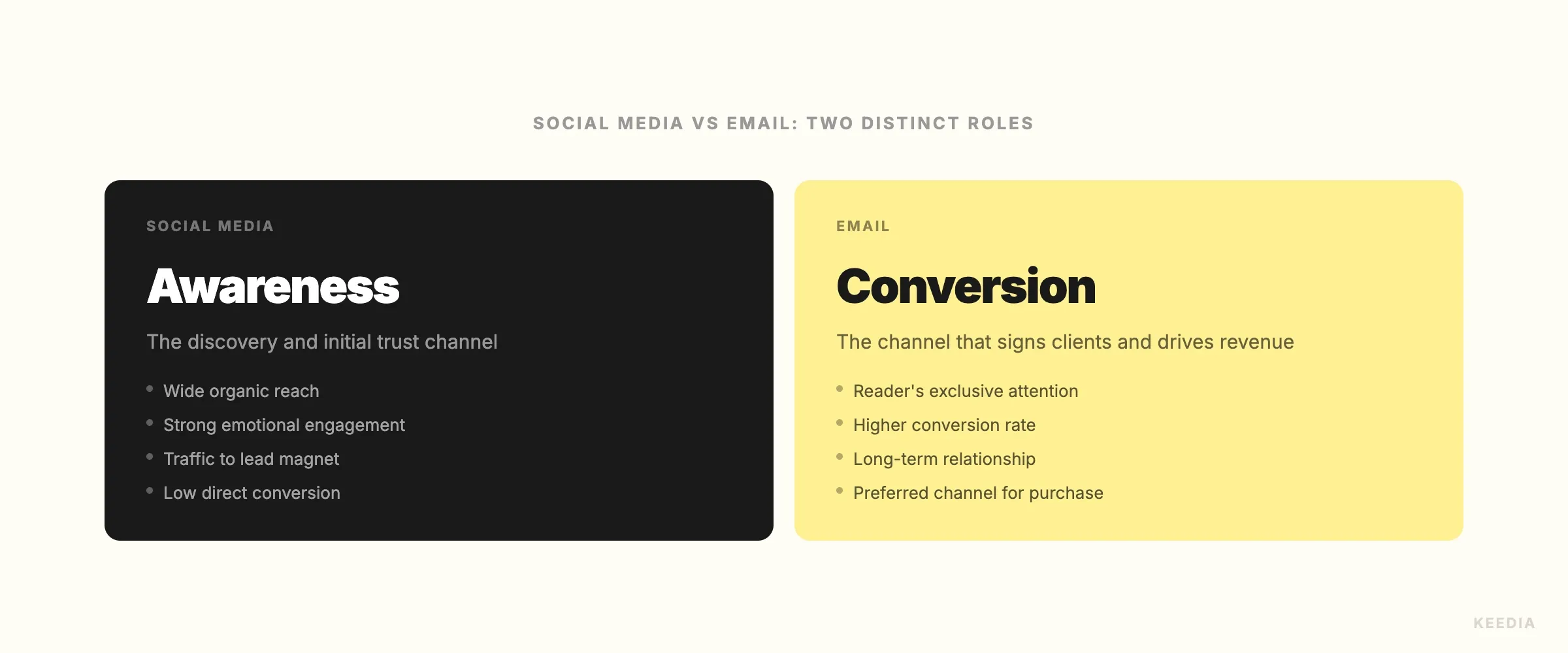
Here's the reality: social media is where potential clients find you. Email is where they hire you. Once you accept that distinction, your entire strategy changes.
Instagram Drives Discovery. It Doesn't Close Deals.
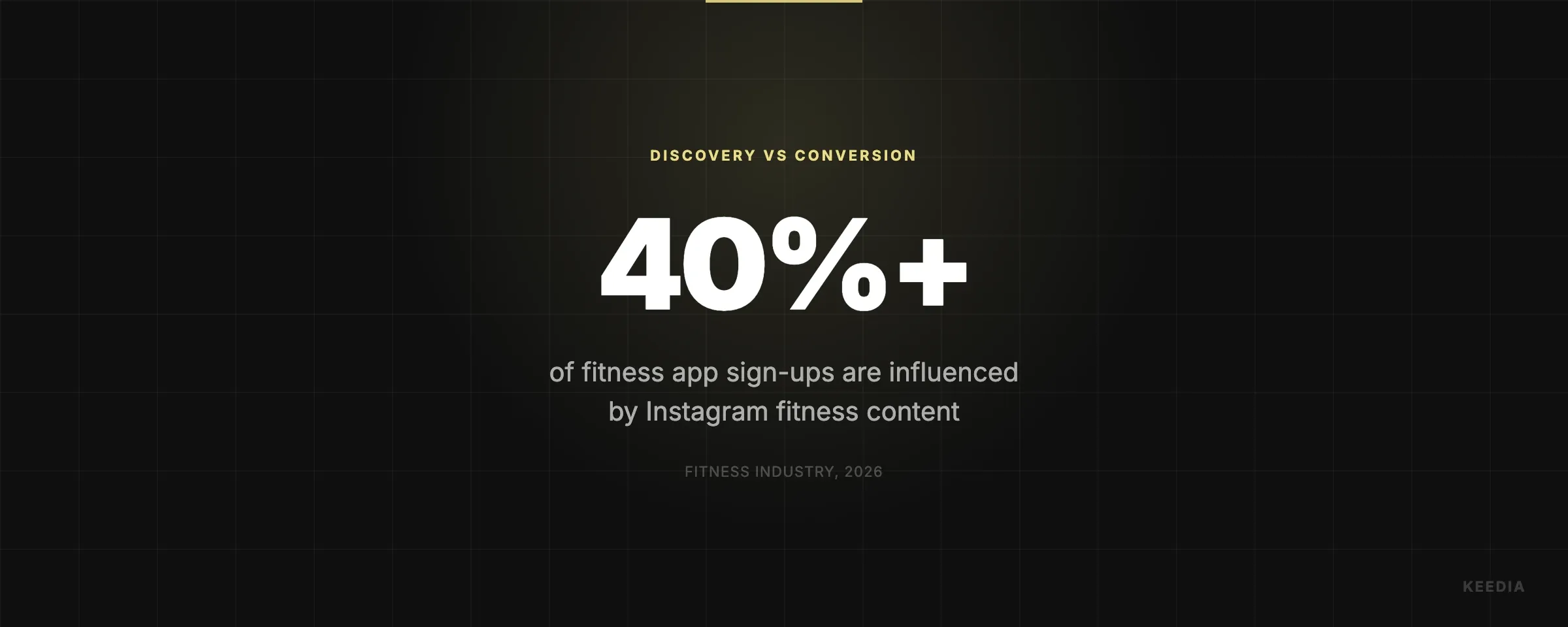
Instagram fitness content now contributes to over 40% of fitness app sign-ups, making it the dominant discovery platform in the industry. That's a significant number, and it confirms that showing up on social media matters. But look closer at what that stat actually says: those people discovered a product through Instagram. They didn't hire a coach through an Instagram post.
Discovery is the top of the funnel. Conversion happens somewhere else. Coaches who conflate the two end up optimizing for likes when they should be optimizing for leads.
If you want a clear picture of how dramatically the coaching landscape has shifted, the State of Personal Training in 2026: Numbers, Trends and What's Changing for Coaches outlines exactly how client acquisition channels have evolved. Social media's role is larger than ever, but it's almost entirely a top-of-funnel tool.
Email Still Outperforms Social for Actual Client Acquisition
This isn't a popular take in a world obsessed with Reels and TikTok growth. But the data is consistent: email marketing outperforms social media for direct client acquisition across every meaningful metric.
Consumers consistently rank email as their preferred channel for brand communication. When it comes to actually hiring a service provider, email touchpoints convert at significantly higher rates than social DMs. A potential client who joined your email list two weeks ago is far more likely to book a discovery call than someone who's been following you on Instagram for a year.
The reason is straightforward. Email is a pull medium. When someone gives you their email address, they're signaling intent. They want information from you. Your Instagram follower might love your content but have no plan to hire you. Your email subscriber is a qualified lead by definition.
The practical implication: every piece of social content you create should have one job beyond entertaining or educating. That job is capturing email addresses. A free training guide, a nutrition template, a five-day challenge delivered by email. Whatever format fits your niche, the goal is the same. Get people off the platform and onto your list.
2026 Changes One Thing: AI is Now a Discovery Channel
If email has always outperformed social, what's actually new in 2026? AI-driven discovery. ChatGPT, Perplexity, and similar tools are now actively recommending coaches, trainers, and wellness professionals to users who ask questions like "who's a good online strength coach for women over 40?" or "find me a certified running coach in Austin."
This merges what used to be two separate spaces: paid ads and organic search. AI recommendations don't care about your Instagram follower count. They pull from your website, your published content, your reviews, and your overall web presence. A coach with 500 Instagram followers but a well-structured website, published articles, and strong testimonials is more likely to surface in an AI recommendation than a coach with 50,000 followers and no website.
The action item here is concrete. You need a real website with a clear service page, an about page that communicates your specific expertise, and published content that demonstrates your knowledge. This is no longer optional. It's the infrastructure that makes every other marketing channel work harder.
Understanding which AI tools for coaches are actually worth using in 2026 is a separate conversation, but building AI visibility starts with your web presence, not your social strategy.
Platform Selection: Stop Using One Channel for Every Client
TikTok and Instagram reach under-35 clients effectively. Facebook and LinkedIn reach corporate demographics, older professionals, and clients looking for more structured, premium services. These are not interchangeable audiences, and a single-platform strategy leaves serious revenue on the table.
Here's how to think about it practically:
- Instagram and TikTok: Short-form video, fast-paced content, visual transformations, relatable daily content. Best for coaches targeting general fitness, weight loss, and under-35 clients.
- LinkedIn: Long-form written posts, professional framing, executive wellness, corporate performance. If you're offering $500/month coaching packages to professionals, this is where they spend their working hours.
- Facebook Groups: Underrated for community-building around niche audiences. A well-run private group creates belonging and trust faster than any public feed.
- YouTube: The highest-trust platform for coaches. Longer videos build deeper authority than any short-form content. It's slower to grow but compounds over years, not months.
You don't need to be everywhere. You need to be on the two or three platforms where your specific target client actually spends time, and you need to be consistent enough that you become recognizable.
What to Post: The Content Format That Actually Converts
Transformation photos are not the highest-ROI content type in 2026. They used to work. They still generate engagement. But they don't build the kind of trust that leads someone to spend $300 to $500 a month on coaching.
The highest-converting content format right now is educational short-form video that demonstrates your expertise without giving away your entire methodology. This sounds like a contradiction. It isn't.
The goal is to show that you know things your audience doesn't know yet, while making clear that the real depth, the real personalization, comes from working with you directly. A 60-second video explaining why most people plateau on a progressive overload program demonstrates expertise. It also implies that you know exactly how to fix it. That creates a reason to hire you.
Compare that to a transformation photo. A transformation photo says "my client got results." It doesn't explain why, or how, or why you specifically are the person who can create those results for this particular viewer.
For coaches working in performance training, content that references current research, like evidence-based protocols around VO2max improvement or periodization, signals a level of expertise that generic motivational content never can. A coach who can explain research-backed approaches to improving VO2max or discuss the nuances of periodization for natural athletes immediately separates themselves from the majority of coaches posting before-and-after photos.
The Funnel: Mapping Social Traffic to Actual Bookings
Here's the architecture that works. It's not complicated, but most coaches skip steps and wonder why they're not getting clients.
Step 1: Content that earns attention. Post educational short-form video consistently on your primary platform. Aim for three to five posts per week. Every piece of content should have a clear point of view and demonstrate specific knowledge.
Step 2: A lead magnet that captures email. Every post, every bio, every story should point toward a free resource that requires an email address. Make it specific. "Free full-body workout" is weak. "5-week strength program for runners who want to stop getting injured" converts because it solves a precise problem.
Step 3: An email sequence that builds trust. When someone joins your list, they should receive a sequence of four to six emails over two weeks. These emails go deeper than your social content. They demonstrate your philosophy, share client outcomes, and handle the most common objections you hear before someone books a call.
Step 4: A clear call to action toward a booking. At the end of your email sequence, and in ongoing emails, there should be one call to action. Book a discovery call. Not "follow me on Instagram." Not "check out my website." One action, one link.
This funnel is unsexy. That's why it works. Most coaches are too focused on making viral content to build the infrastructure that actually converts. The coaches generating consistent revenue in 2026 are the ones who treat social media as a traffic source and treat email as their sales engine.
One Metric That Will Tell You If Your Strategy is Working
Stop tracking follower growth as a primary business metric. The number to watch is your email list growth rate. If you're gaining 50 to 100 new subscribers per week from your social content, your funnel is working. If you're gaining 10,000 new followers and 20 email subscribers, your funnel is broken regardless of how good your content looks.
Getting a client is only part of the equation. Keeping them is where your business actually scales. The same systems thinking that applies to acquisition applies to retention. Understanding what triggers client churn at 90 days helps you design onboarding and communication sequences that keep clients engaged long after the initial excitement wears off.
The coaches who will dominate client acquisition in 2026 and beyond aren't the ones with the best aesthetics or the most followers. They're the ones who understand that social media is a billboard, email is a conversation, and conversion happens in the conversation.