
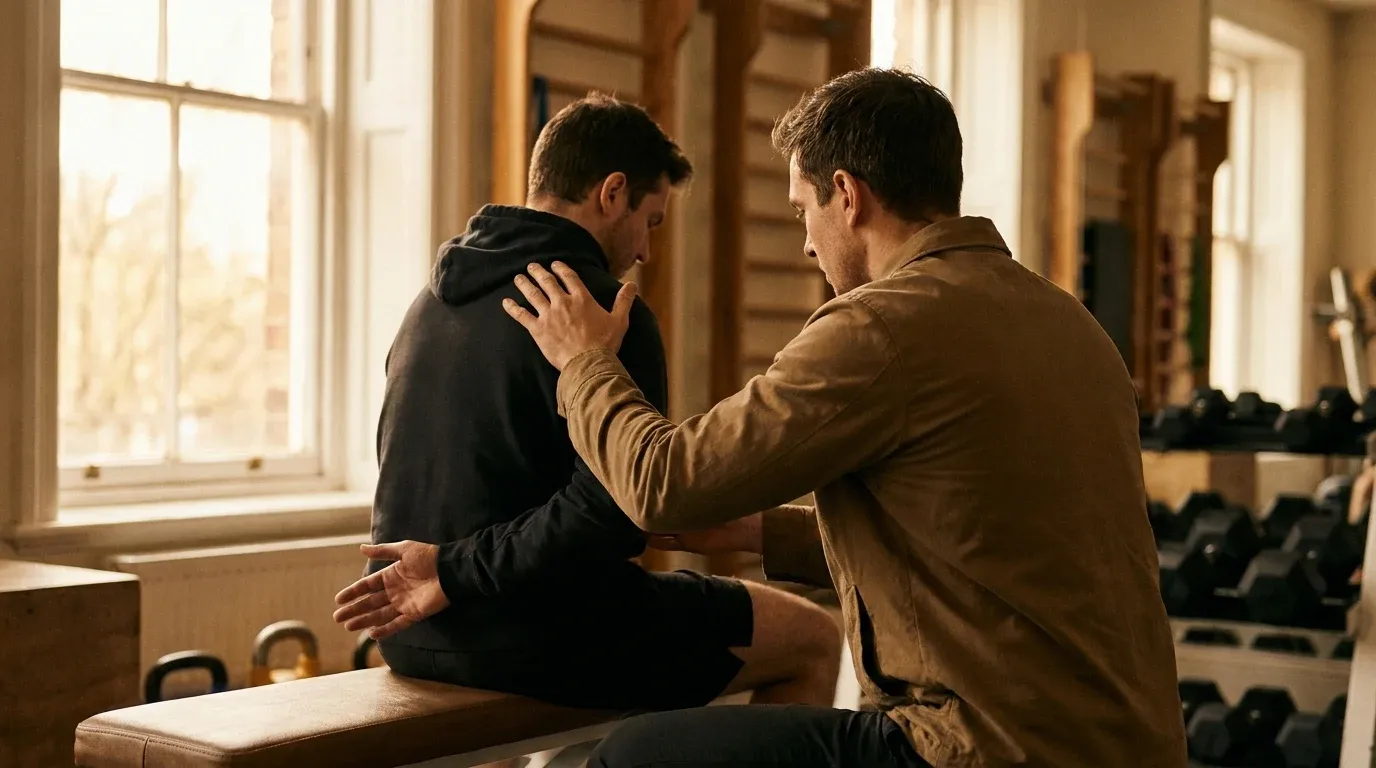
Frozen shoulder is one of those conditions that exposes the gap between trainers who guess and trainers who know. It affects roughly 2–5% of the general population, with the highest concentration in adults aged 40–60. That demographic sits squarely in the middle of most personal trainers' client rosters. If you haven't encountered it yet, you will.
The problem isn't just that the condition is common. It's that it's routinely mismanaged in gym settings. Coaches either push too hard, trying to force range of motion that the shoulder physically cannot tolerate, or they abandon upper-body programming entirely and leave the client undertrained for months. Neither approach serves the client well. Here's how to do better.
What Frozen Shoulder Actually Is
Adhesive capsulitis, the clinical name for frozen shoulder, is a condition in which the connective tissue surrounding the shoulder joint becomes inflamed and progressively thickens. This causes the joint capsule to tighten, restricting movement in multiple planes. Pain and stiffness develop gradually and can persist for anywhere from one to three years without proper management.
The condition is more common in people with diabetes, thyroid dysfunction, or a history of shoulder injury, and it occurs more frequently in women than men. It's not a soft tissue tear or a rotator cuff problem, though those conditions can coexist. Understanding the distinction matters because the programming response is different from what you'd apply to other shoulder pathologies.
The Three Phases and Why They Change Everything
Frozen shoulder doesn't behave the same way throughout its progression. There are three clinically recognized phases, and each one demands a different approach from you as a coach.
Phase 1: Freezing. This is the inflammatory stage. Pain is the dominant feature, often worse at night and during overhead or rotational movements. Range of motion begins to decline, but pain frequently exceeds the mechanical restriction. During this phase, your job is to manage load, not build it. Avoid anything that loads the shoulder in overhead, end-range, or externally rotated positions. Focus on the lower body, core stability, and unilateral pressing that stays well within a pain-free arc.
Phase 2: Frozen. Pain may actually begin to decrease during this phase, but stiffness becomes the defining characteristic. Range of motion is at its worst. Clients often feel like they're improving because the acute pain has eased, which can lead both coach and client to push too aggressively. Resist that instinct. Modified loading is appropriate here, including movements like neutral-grip pressing, scapular stability work, and controlled isometrics, but end-range loading is still off the table.
Phase 3: Thawing. Mobility begins to return gradually. This is the phase where progressive loading can resume in a structured way, ideally coordinated with the client's physiotherapist. Improvements can be slow and nonlinear. Programming should introduce range of motion progressively, monitoring for symptom flare-up after each session before advancing.
Misidentifying which phase a client is in is one of the most common errors coaches make. If you're not sure, ask the client directly about their current symptom pattern, and get the clinical picture from their healthcare provider.
The Mistakes Coaches Keep Making
Two errors dominate. The first is aggressive stretching or loading into the restricted range of motion. It's intuitive to think that a stiff joint needs to be pushed, but during the freezing and frozen phases, forcing range of motion can increase inflammation and worsen symptoms. Clients may not give you immediate feedback because delayed-onset soreness can mask the warning signal for 24–48 hours.
The second mistake is the opposite: writing the entire upper body off. When a client presents with frozen shoulder, some coaches instinctively remove all upper-body work from the program, worried about liability or not knowing where the safe boundary is. This is an overcorrection that leaves significant training capacity on the table. The contralateral shoulder, the mid-back, the scapular stabilizers, and the core can all be trained safely. Even the affected side can often tolerate some work if it's properly modified.
A third, less discussed error is ignoring the downstream effects. Compensation patterns develop quickly when one shoulder is restricted. The thoracic spine, cervical region, and opposite shoulder can all absorb excess load over months of altered movement. Building assessment checkpoints into your programming helps you catch these patterns early.
What Safe Modified Programming Actually Looks Like
The goal during the frozen and freezing phases is to maintain as much training stimulus as possible while protecting the shoulder from aggravation. Here's a practical framework:
- Lower body priority: Squats, deadlifts, lunges, and leg press can typically continue without modification. This keeps training volume and metabolic output high even when upper-body work is restricted.
- Neutral-grip pressing: A neutral grip with a narrower stance tends to reduce shoulder impingement compared to a wide pronated grip. Dumbbell pressing in a neutral position, kept within a pain-free arc, is often well tolerated in the frozen phase.
- Scapular work: Exercises that promote scapular retraction and depression without loading the glenohumeral joint, such as prone Y-T-W variations or wall slides, support shoulder girdle stability without stressing the capsule.
- Isometric loading: Low-intensity isometrics in mid-range positions can maintain muscular engagement without provoking inflammation. These are particularly useful during the freezing phase when even submaximal loading can be irritating.
- Contralateral training: Research supports the cross-education effect, meaning training the unaffected limb can produce modest strength retention in the affected side. It's not a substitute for direct training, but it's a useful tool when direct loading isn't possible.
Always use a symptom log. Ask clients to rate pain and stiffness before and after each session, and again 24 hours later. If post-session soreness regularly spikes above baseline, the load is too high.
Recovery Adjuncts Worth Knowing About
Your programming doesn't exist in isolation from the client's broader recovery behaviors. Sleep quality, for example, is a meaningful variable in inflammatory conditions. Frozen shoulder is notoriously associated with disrupted sleep due to shoulder pain in lying positions, and poor sleep can amplify pain perception and slow tissue recovery. If your client is sleeping badly, it's worth flagging. Research covered in how good sleep protects brain and cardiovascular health illustrates just how systemic the downstream effects of sleep deprivation can be.
Recovery modalities like hydrotherapy are also worth a conversation with the client's physio. Warm water reduces joint compression and can improve ease of movement in certain phases. The evidence on hot tub therapy for muscle recovery after exercise doesn't map directly onto adhesive capsulitis, but warmth and buoyancy can make gentle range-of-motion work more comfortable during the thawing phase.
Similarly, what modern performance science says about recovery reinforces that inflammation management, sleep, and stress reduction all compound over time. Clients dealing with a chronic condition like frozen shoulder benefit from a holistic recovery approach, not just modified sets and reps.
Communication With the Clinical Team Is Not Optional
This is the part many coaches deprioritize, often because reaching out to a physiotherapist or physician feels awkward or like overstepping. It's not. It's your professional responsibility.
When a client discloses a frozen shoulder diagnosis, ask them directly whether they're under the care of a physio or orthopedic specialist. If they are, request permission to contact that provider, or ask the client to bring you a written summary of their current phase, restrictions, and treatment goals. If they aren't under any clinical care, encourage them to seek it. Frozen shoulder responds well to physiotherapy-led intervention, and your programming should complement that treatment, not substitute for it.
Document everything. What the client disclosed, what modifications you implemented, and any communication with the clinical team. This protects both of you and creates a paper trail that demonstrates professional practice.
Positioning yourself as a coach who works within a multidisciplinary model is also good for your business. As tools that track client health data and training outcomes become more sophisticated, the coaches who build clinical referral networks will differentiate themselves clearly. The kind of infrastructure being developed around platforms discussed in FitnessKPI's $1.45M funding round points toward a future where data-sharing between coaches and healthcare providers becomes more seamless.
The Takeaway for Coaches
Frozen shoulder isn't a reason to put a client's training on hold for a year. It's a reason to program smarter. Know the phase your client is in. Modify rather than eliminate. Track symptoms carefully. And build a working relationship with the clinical team managing their condition.
The clients who trust you to handle a complex situation with knowledge and care are the ones who stay with you long-term. Getting this right isn't just about avoiding harm. It's about demonstrating the kind of expertise that makes you irreplaceable.