
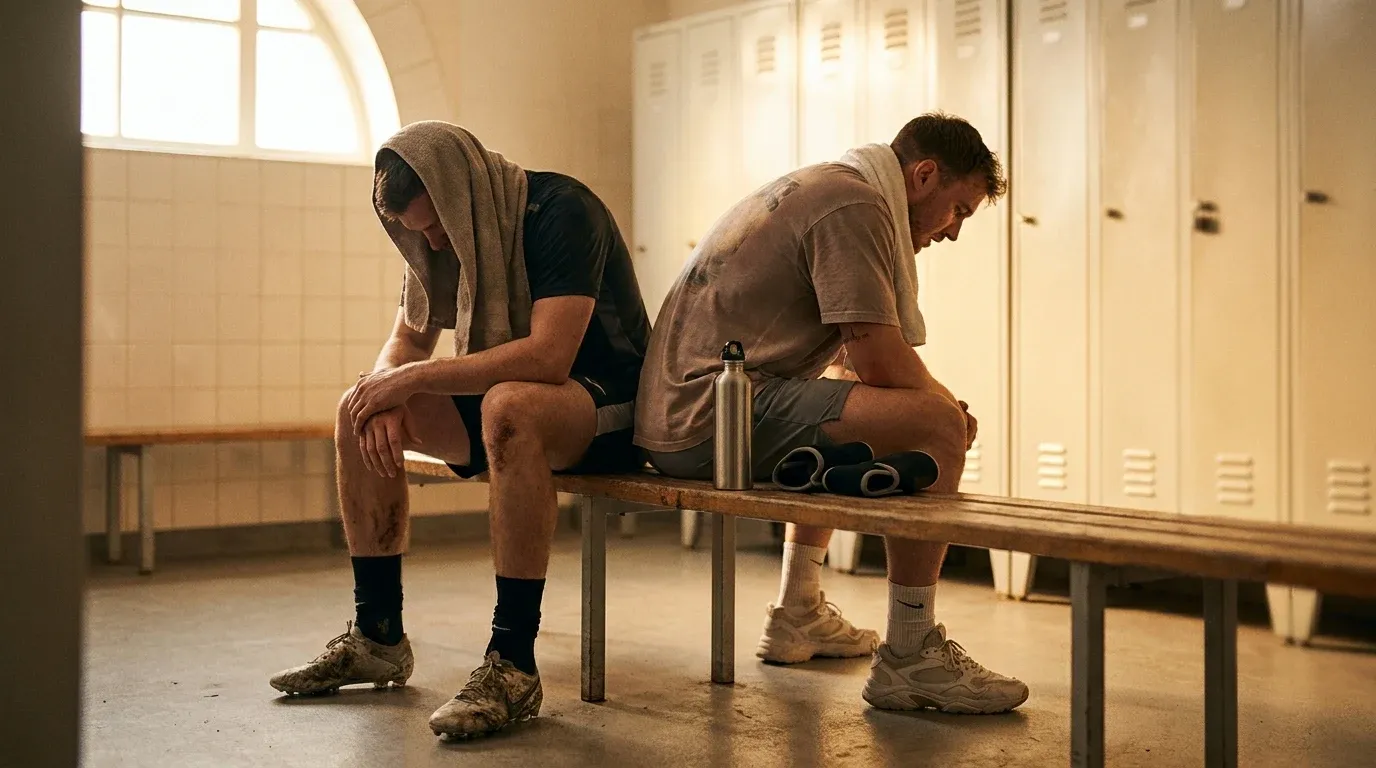
Most gym athletes think of recovery as something you do when you're injured or exhausted. Elite sport science tells a different story. Recovery is a training variable, not an afterthought. And new research out of the University of Oklahoma is making that case with hard data from one of the most physically demanding sports on the planet.
The findings from OU researchers examining how heavy training loads affect elite soccer athletes aren't just relevant to professional players. If you lift consistently, program your own sessions, or simply push hard more than twice a week, this research speaks directly to how you're managing your body.
What the Research Actually Found
The University of Oklahoma study tracked physiological and performance markers in elite soccer athletes across periods of intensified training. The central finding was straightforward but significant: when training load accumulates without adequate recovery periods built in, both power output and injury resilience decline measurably.
It wasn't a dramatic breakdown. That's what makes it important. Athletes weren't collapsing or getting hurt in obvious ways. Instead, their capacity to express force dropped, their neuromuscular response times slowed, and their tissues became progressively less tolerant of the same training stresses that had been manageable weeks earlier.
This is the insidious part of overreaching. It doesn't announce itself. It accumulates quietly across sessions until performance degrades and injury risk spikes. By the time most athletes notice something is wrong, the deficit has been building for days or weeks.
Why This Matters Beyond the Pitch
Soccer players operate under conditions that, on the surface, look very different from a standard gym program. They run 7 to 9 miles per match, absorb repeated sprint-deceleration cycles, and compete on a compressed weekly schedule during season. That context is specific.
But the underlying physiology is not. The mechanisms by which accumulated load degrades performance in soccer athletes are the same mechanisms at work when a lifter programs back-to-back high-intensity sessions without managing weekly load or building in deload weeks.
If you're training legs heavily on Monday, following with a max-effort deadlift session on Wednesday, and then attempting a heavy squat day on Friday, you're creating a very similar load profile to what the OU researchers identified as problematic. The sport is different. The stress response is not.
Understanding how progressive overload works in practice means accepting that more load is only productive when recovery capacity keeps pace. Without that balance, you're not building. You're eroding.
The Power Output Problem
One of the most practically useful findings from this research involves power output. In the soccer athletes studied, accumulating load without recovery didn't just cause fatigue. It caused measurable drops in their ability to produce force rapidly. That's a performance variable that matters whether you're kicking a ball or pulling a barbell.
Power is one of the first qualities to degrade under excessive load. It's also one of the last to come back. Strength may feel intact even when power is compromised, which is why lifters often dismiss recovery needs. You can still hit your numbers on a straight lift while your neuromuscular system is quietly lagging.
This connects to a broader pattern worth understanding. Why muscles lose force over time involves neuromuscular factors that are highly sensitive to cumulative fatigue. Even in younger athletes, chronic underrecovery mimics some of the same performance characteristics associated with neuromuscular aging.
Injury Resilience Is a Moving Target
The OU data on injury resilience is equally applicable to gym athletes, and arguably more urgent. Tissue resilience, meaning your tendons, connective tissue, and muscle fibers' ability to tolerate load, isn't fixed. It fluctuates with training status, recovery quality, and load accumulation.
When you're well-recovered, your tissues can absorb training stress and adapt positively. When you're underrecovered, the same load that was productive last week becomes a liability this week. The movement patterns haven't changed. The weight hasn't changed. But your body's ability to handle it has dropped.
This is how a lot of non-contact training injuries happen. Not from a single catastrophic effort, but from hitting a load that would have been fine three weeks earlier, on a day when the body's resilience has been quietly depleted.
For lifters who train without a coach or structured program, this is an especially relevant warning. There's no one auditing your weekly volume. You have to do it yourself.
Translating Soccer Science Into Gym Practice
The practical application here comes down to two things: monitoring session RPE and tracking weekly load. Neither requires expensive equipment. Both require honest self-assessment.
Session RPE means rating how hard each training session actually felt on a 1-to-10 scale. Not how hard it should have felt based on the program. How hard it actually felt. A session planned as a 7 out of 10 that lands at a 9 is information. Over a week of similar gaps, it's a signal that accumulated fatigue is outpacing recovery.
Weekly load is the sum of those efforts across all sessions. Professional sports programs track this as a core coaching variable. Most gym athletes don't track it at all. A simple weekly log noting session RPE, training duration, and how your body felt the following morning gives you enough data to spot problematic patterns before they cost you performance.
This kind of monitoring is standard practice in professional sport. It's just as valid for someone training four days a week in a commercial gym. The OU research reinforces that the threshold between productive loading and counterproductive loading is a physiological one, not a sport-specific one.
The Deload Week You Keep Skipping
One of the consistent lessons from athletic load management research is that deload periods aren't rest. They're part of the training structure. Reducing volume or intensity for one week every four to six weeks allows the nervous system and connective tissues to consolidate adaptations that have been building under load.
Skipping deloads repeatedly is where the compounding problem begins. Each hard block adds load without full resolution. The deficit carries forward. And at some point, usually at an inconvenient time, the body forces the recovery it didn't get voluntarily.
This is especially worth considering for athletes over 40, where recovery capacity is genuinely altered. The question of how to structure training across different physical demands and life stages is something addressed directly in how coaches should approach training prescription after 40. Recovery tolerance changes. Load management has to change with it.
What Recovery Actually Requires
Recovery between hard sessions isn't just about sleep and passive rest, though both matter enormously. It involves active management of the stress response, which includes how you move on off days, what you consume in the hours after training, and how you address nervous system fatigue specifically.
Low-intensity movement, mobility work, and deliberate downregulation of the stress response all contribute. The first 24 hours after a hard workout set the trajectory for how well your next session will land. Most lifters treat that window as dead time. High-performing athletes treat it as part of training.
Nutrition timing, protein distribution, and carbohydrate restoration in the hours following intensive work are also significant factors that gym athletes routinely underestimate.
The Bigger Lesson
Elite soccer science didn't invent recovery principles. But it does test them under extreme conditions with rigorous measurement. When that research confirms that even world-class athletes with full-time support structures break down under unmanaged load accumulation, it's worth taking seriously at every level of training.
You don't need to train like a professional athlete. But you can borrow the framework professional athletes use to keep training sustainable. Monitor your load. Take the deload week. Treat recovery as a variable you actively manage, not a gap between sessions.
The gym is not a different environment from the pitch when it comes to how your physiology responds to stress. It's the same biology. It responds to the same principles. And it fails in the same ways when those principles are ignored.