
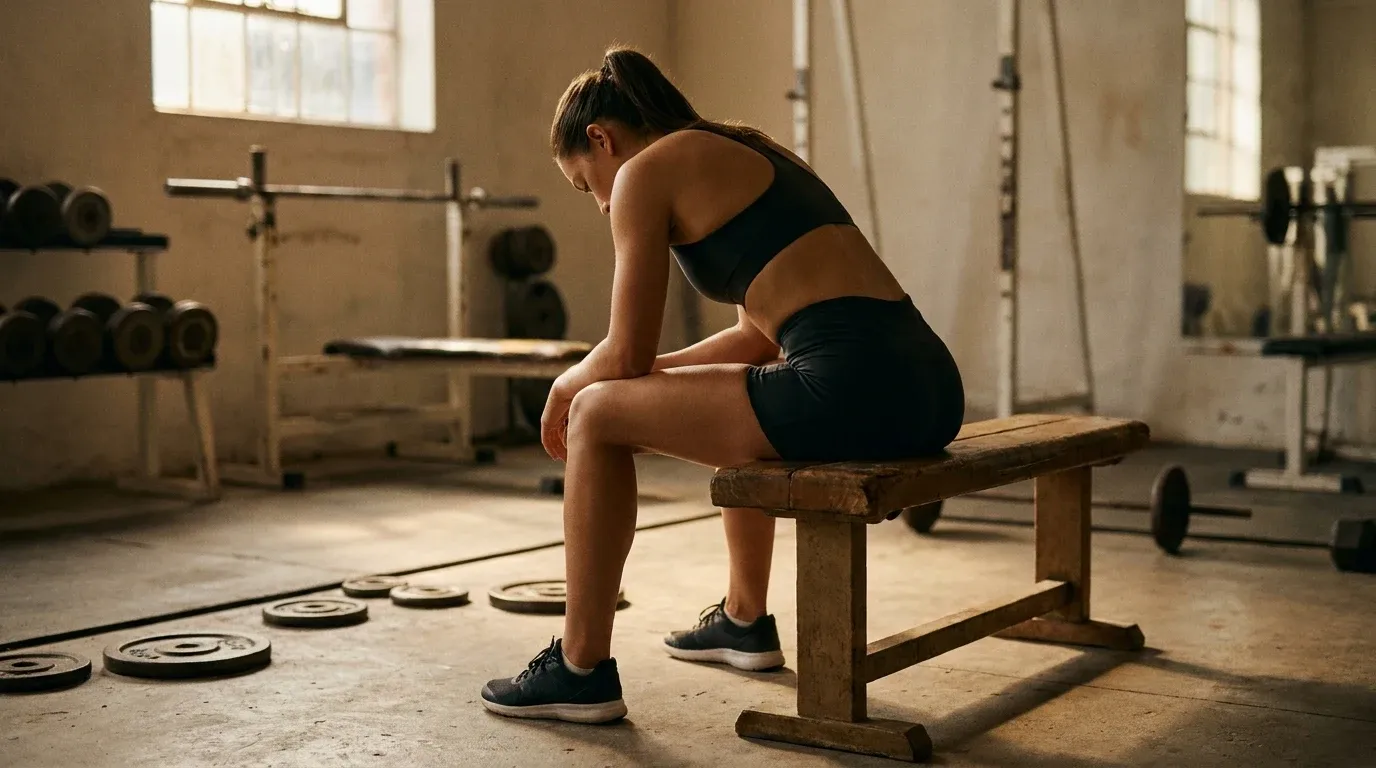
A 2026 international sport science forum made something uncomfortably clear: women are still being shortchanged by exercise research. Not because scientists aren't trying. But because the standards meant to fix the problem are, paradoxically, making it harder to include female participants at scale.
The result is a growing methodological gap that leaves female athletes, recreational runners, lifters, and weekend warriors relying on training advice built almost entirely from male bodies. That's not a minor footnote. It shapes everything from how much protein you're told to eat, to how long you should recover, to how hard you should push in a given training block.
The Representation Problem Didn't Go Away
For at least two decades, researchers and advocates have flagged the underrepresentation of women in sport and exercise science. Studies published in leading journals have consistently shown that female participants make up a minority of subjects in exercise physiology research, often accounting for fewer than 40% of total participants across high-impact studies, and far less in areas like strength training and high-intensity interval protocols.
Progress has been slow but real. Funding bodies in the US and UK have introduced requirements encouraging sex-disaggregated data. Some journals now mandate that authors report participant sex and analyze results accordingly. On paper, the trajectory looked promising.
Then the methodological bar moved. And it moved in the right direction, scientifically speaking. But the consequences are complicated.
Why Better Science Is Narrowing the Research Base
Here's the problem. Researchers increasingly recognize that you can't just drop women into a study designed around male physiology and call it inclusive. Female physiology isn't a variation on a male template. It's distinct. And the menstrual cycle is central to understanding it.
Ovarian hormones, primarily estrogen and progesterone, fluctuate significantly across a typical 28-day cycle. These fluctuations affect muscle protein synthesis, substrate utilization during exercise, tendon laxity, cardiovascular response, recovery rate, and even perceived exertion. A study that doesn't account for where a female participant is in her cycle isn't just incomplete. It may be producing misleading data.
The emerging gold standard now requires researchers to track and verify hormonal profiles across the menstrual cycle, ideally through blood sampling at multiple time points, sometimes across two full cycles to establish a reliable baseline. That's rigorous. That's correct. And it's also expensive, logistically demanding, and time-consuming in ways that push many research teams toward smaller female cohorts or, in some cases, excluding women from studies altogether to avoid the complexity.
What looked like an inclusion problem is now partly a methodology problem wearing inclusion's clothes.
What the Hormone Tracking Gap Actually Means for Training Advice
If you're a woman following a structured training program, there's a reasonable chance the protocols underlying that program were validated primarily on men. This isn't speculation. It's a structural feature of the current evidence base.
Recovery timelines are one area where this matters most. Research on muscle damage, inflammatory response, and repair rates has historically used male participants. Estrogen has documented antioxidant and membrane-stabilizing properties that may reduce exercise-induced muscle damage. If that's true, standard post-workout recovery windows may be miscalibrated for women, particularly during phases of the cycle when estrogen peaks.
Nutrition recommendations carry the same caveat. The field of sports nutrition has made meaningful efforts to study female athletes, but protein intake guidelines, carbohydrate periodization strategies, and hydration thresholds remain largely derived from or validated on male populations. This matters when you're deciding how to fuel a training block or interpret generic advice about post-workout nutrition windows.
The hormonal picture also extends beyond the menstrual cycle. For women approaching or navigating perimenopause, the research gap widens further. Menopause and Sleep: What the Science Says in 2026 explores how hormonal shifts affect sleep quality and recovery, a variable that training science has barely begun to integrate into female-specific programming.
The Practical Fallout for Female Athletes
You don't need to be an elite competitor for this to affect you. Recreational athletes following popular training plans, nutritional frameworks, and recovery protocols are all downstream of research that doesn't fully represent them.
Some specific areas where the evidence base is thinner for women:
- Strength and hypertrophy programming. Volume, intensity, and frequency guidelines are predominantly derived from male cohorts. Women may respond differently to training loads, and the optimal rep ranges and rest periods for female lifters remain understudied.
- Creatine supplementation. Research on creatine's ergogenic effects has heavily favored male participants. Evidence suggests women may actually see proportionally greater benefits given lower baseline muscle creatine stores, but dosing protocols have rarely been designed with female physiology in mind. Stabilized Creatine: Is the New Format Worth It? covers what the current evidence actually supports.
- Injury risk and tendon behavior. Ligament laxity fluctuates with estrogen, raising ACL injury risk at specific cycle phases. Many injury prevention programs don't account for this.
- Nutrition periodization. Fat oxidation rates differ across the menstrual cycle, as do carbohydrate metabolism patterns. Generic carb-loading and fat-adaptation strategies may not translate cleanly to female athletes. Plant Protein for Athletes: Does It Actually Perform? is one area where female-specific data is starting to emerge, though the research is still catching up.
The Supplement Industry Isn't Helping
One predictable response to the female data gap has been marketing. Supplement brands have moved quickly to position products as "designed for women," often with minimal evidence to back the claim. In many cases, they're taking existing research on male subjects, adjusting the dose downward, and relabeling the product.
It's worth being skeptical of female-specific marketing in spaces where female-specific research is thin. How the Supplement Industry Spins Science Against You breaks down the tactics used to make weak evidence sound authoritative, a dynamic that female consumers navigating a gap-filled research landscape are especially vulnerable to.
When you see a supplement marketed to women based on hormonal support or cycle syncing, ask what the underlying studies actually look like. Who were the participants? Were they women? Were hormonal phases tracked? The answers are often less impressive than the packaging suggests.
How to Train Smarter in the Meantime
None of this means you should throw out your training plan. It means you should hold generic advice with appropriate skepticism and do a few things differently.
First, recognize that your body's responses to training will shift across your cycle. Tracking perceived exertion, energy levels, recovery quality, and strength performance relative to your cycle phase is something even basic fitness apps now support. That self-knowledge is more actionable than waiting for the research to catch up.
Second, work with coaches who understand female physiology. When selecting a trainer or coach, it's worth asking directly whether they've worked with female-specific programming, not just "women's fitness," but cycle-informed periodization. How to Choose a Personal Trainer: A Simple Checklist includes the questions worth asking before you commit.
Third, be especially cautious with recovery-related advice. Rest periods, deload week timing, and sleep optimization protocols are areas where the evidence base for women is underdeveloped. Err toward more recovery rather than less, particularly during the luteal phase when progesterone is elevated and fatigue thresholds may shift.
Finally, don't assume that what works for a male training partner, male-authored fitness program, or male-dominated trial will translate to your physiology without adjustment. That's not pessimism. That's just accurately reading the state of the science.
A Field at a Crossroads
The 2026 forum findings don't represent a failure of intent. Most researchers want to study female athletes properly. The problem is structural. Rigorous science requires hormonal profiling, and hormonal profiling is hard to do at the scale needed to generate the kind of robust data that drives clinical guidelines and training recommendations.
Solving it will require more funding, longer study timelines, and institutional willingness to accept that female-specific research costs more and takes longer. That's a case the research community is increasingly making. But until those studies exist at scale, the women following the advice built from this incomplete evidence base deserve to know what's missing.
The science is improving. It's just not there yet.