
Most people think about bone health the way they think about retirement savings: something to worry about later. But the research keeps arriving at the same uncomfortable conclusion. The decisions you make in the weight room today are writing the blueprint for your skeleton at 60, 70, and beyond.
A new comparative study has done something genuinely useful: it ranked walking, running, yoga, and strength training side by side based on their actual, measured impact on bone mineral density. The results aren't subtle. And if you've been treating lifting as a purely aesthetic pursuit, the findings are worth your attention.
What the Study Actually Measured
Bone mineral density, or BMD, is the standard clinical benchmark for skeletal strength. It predicts fracture risk, osteoporosis progression, and long-term mobility. The study tracked BMD changes across four exercise categories over a sustained intervention period, controlling for age, sex, baseline fitness, and nutritional variables.
The four modalities tested were walking, running, yoga, and progressive resistance training. Each has a dedicated following. Each gets recommended for "general health." But their effects on bone tissue are far from equivalent.
Walking produced modest, statistically marginal improvements in BMD. It's better than sedentary behavior, but only slightly. Running performed better, particularly for lower-body bone sites like the femoral neck and lumbar spine, which bear the repetitive ground-reaction forces of impact. Yoga showed improvements in balance and fall-risk reduction, but minimal direct gains in bone density itself.
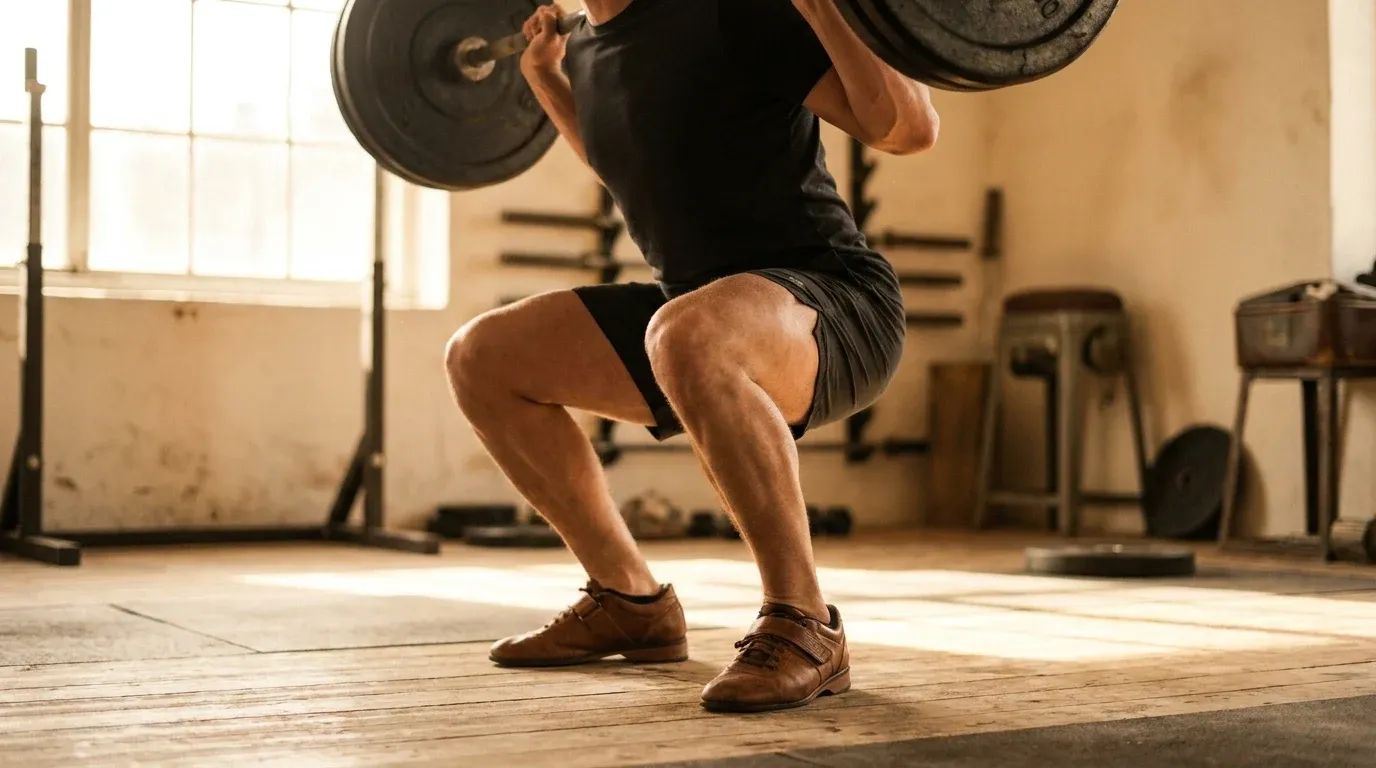
Resistance training was the clear leader. Progressive loading of the skeleton through weighted exercises triggered the most consistent, measurable increases in BMD across multiple bone sites, including the hip, spine, and wrist. The effect held across age groups and sexes, though it was most pronounced in adults over 40.
Why Impact and Load Are the Key Variables
Bone is living tissue. It responds to mechanical stress by laying down new mineral matrix, a process regulated by cells called osteoblasts. When you remove that stress, the opposite process, driven by osteoclasts, begins to dominate. This is why astronauts lose significant bone mass in microgravity and why long-term bed rest produces rapid skeletal decline.
The principle here is called Wolff's Law: bone remodels in response to the loads placed on it. Walking generates some ground-reaction force, but not enough to push most adults beyond their existing mechanical threshold. Running does better, particularly on hip and spine sites, but the load is still primarily axial and repetitive rather than varied and progressive.
Resistance training is different in a critical way. It allows you to systematically increase the load over time, targeting specific bone sites through the pull of muscles on their attachment points. A squat loads the femur and lumbar vertebrae. A deadlift stresses the entire posterior chain. A loaded carry challenges the hip structure. This mechanical variety and progressive overload is precisely what bone tissue responds to most strongly.
Yoga's contributions are real but indirect. Improved balance reduces fall risk, which matters enormously for fracture prevention in older adults. But if your goal is actually building or maintaining bone density, yoga alone doesn't move the needle significantly.
The Ranking, Plainly Stated
Based on the current evidence, here's where the four modalities sit for bone mineral density outcomes:
- Resistance training: Highest and most consistent BMD gains across multiple skeletal sites. The only modality shown to reliably increase bone density in older adults who are already experiencing age-related loss.
- Running: Moderate BMD benefits, particularly for weight-bearing lower-body sites. Impact loading helps, but gains plateau without progressive challenge.
- Walking: Marginal BMD benefit for sedentary individuals making an initial transition to movement. Insufficient for meaningful bone preservation in active adults.
- Yoga: Minimal direct BMD impact. Valuable for fall prevention, flexibility, and stress reduction, but not a primary tool for skeletal health.
This ranking doesn't mean you should abandon your morning run or your yoga practice. It means you should understand what each activity is actually doing for you, and build your training accordingly.
Why This Still Hasn't Changed How Most People Train
Here's a frustrating reality: the evidence for resistance training and bone health isn't new. Studies have been making this case for decades. And yet the majority of gym-goers still approach lifting primarily as a tool for changing how they look, not how their skeleton holds up over the next 40 years.
Part of the problem is perception. Bone health doesn't show up in the mirror. You can't feel your BMD improving the way you can feel your muscles growing or your cardio improving. The feedback loop is invisible, which makes it easy to deprioritize.
Another factor is how exercise is marketed. Walking apps, yoga subscriptions, and running challenges dominate the wellness consumer space. They're accessible, low-barrier, and easy to sell. Strength training requires equipment, instruction, and a longer learning curve. It's also, historically, been gendered in ways that have kept large portions of the population away from the weight room entirely.
If you've been away from the gym for a stretch, How to Restart Gym Training This Fall and Actually Stick to It offers a practical framework for building back in without burning out or getting injured. The habits you establish in the first few weeks of a return matter more than most people realize.
What a Bone-Protective Training Program Looks Like
You don't need to train like a competitive powerlifter to protect your bones. But you do need to meet a minimum threshold of mechanical stimulus that walking simply doesn't provide. Here's what the evidence supports:
- Train with progressive overload. The load needs to increase over time. Lifting the same weight indefinitely won't continue to stimulate bone adaptation once your body has adjusted to that load.
- Prioritize compound, multi-joint movements. Squats, deadlifts, rows, overhead presses, and loaded carries place the most mechanical demand on the largest bone sites, including the hip, spine, and shoulder girdle.
- Train at least two to three times per week. Single sessions produce acute bone stress. Repeated, consistent stimulus over months and years is what drives lasting structural change.
- Include impact training where appropriate. Jumping, hopping, and short running intervals add ground-reaction force that complements the muscle-pull stimulus of resistance training. Even simple box jumps or jump rope sessions add a meaningful layer.
- Don't skip upper body work. The wrist and forearm are common fracture sites in falls. Pulling and pressing exercises that load those structures matter more than most programs account for.
For a deeper breakdown of how to structure this within a lifting program, Which Training Actually Protects Your Bones? A Lifter's Guide covers the periodization and exercise selection decisions that make a meaningful difference.
Nutrition Is Part of the Equation
Training provides the mechanical signal. Nutrition provides the raw material. Without adequate calcium, vitamin D, magnesium, and protein, even a well-designed resistance training program will struggle to produce bone adaptation. These aren't optional nutrients for bone health. They're foundational.
Protein intake is particularly underappreciated in this context. Bone matrix is partly collagen, which is a protein. Higher protein intakes are associated with better BMD outcomes in resistance-trained individuals, especially those over 50. The old concern that dietary protein leaches calcium from bone has not held up in the research.
Mineral status also fluctuates seasonally. If you're training hard through fall and winter, it's worth understanding how micronutrient availability shifts. Why Your Minerals Drop Every Fall (And What to Do) is a useful reference for keeping your nutritional baseline where it needs to be during higher-training periods.
Recovery is the third leg. Bone remodeling happens during rest, not during training. If your sleep is compromised, adaptation slows. 6 Post-Workout Recovery Habits That Matter After 35 covers the practical recovery behaviors that support bone and muscle adaptation, particularly for adults in the age range where bone loss starts to accelerate.
The Bigger Picture
Osteoporosis affects an estimated 200 million people globally. In the United States alone, around 10 million adults have the condition, and another 44 million have low bone density that puts them at elevated fracture risk. Hip fractures in particular carry a startling mortality rate: roughly 20 to 30 percent of older adults who fracture a hip die within the following year, often from complications rather than the fracture itself.
These aren't statistics about elderly people who never exercised. Many are people who walked regularly, did yoga, stayed active, and simply didn't apply the specific mechanical stimulus that bone tissue actually requires.
The weight room is not just about aesthetics. It never really was. The case for resistance training as preventive medicine is as strong as the case for any pharmaceutical intervention targeting bone, and it comes with cardiovascular, metabolic, cognitive, and psychological benefits that no drug can replicate.
The study ranking these four exercise types didn't discover anything fundamentally new. It confirmed what the evidence has been building toward for years. What it does do is make the hierarchy impossible to misread. Walking is not enough. Yoga is not enough. Running helps, but it's not the whole answer. Lifting, done progressively and consistently, is the closest thing to a proven prescription for the bones you'll be living in for the rest of your life.