
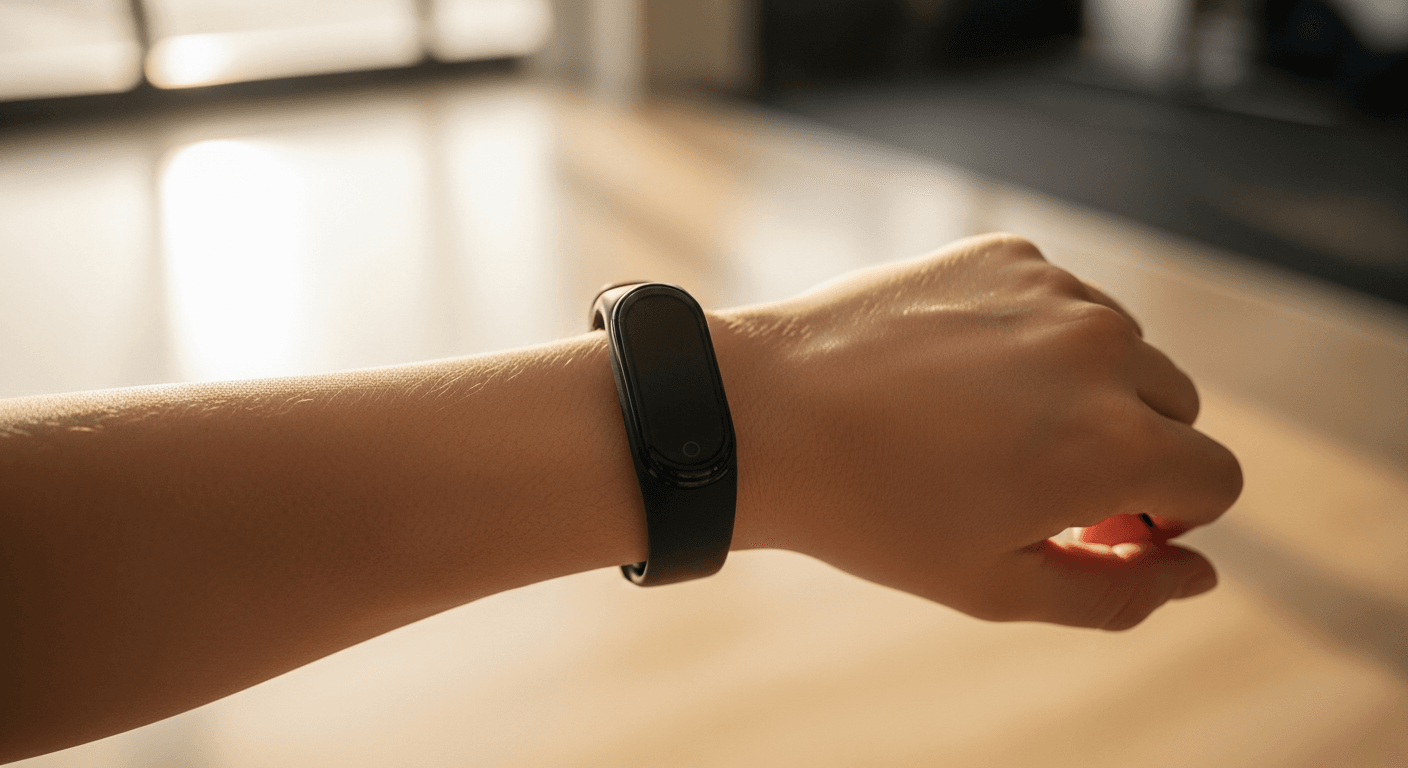
Your wearable is collecting dozens of data points every hour. Heart rate variability, resting heart rate, sleep stages, oxygen saturation, skin temperature, step count, respiratory rate. The list keeps growing with every firmware update. But a new peer-reviewed study published May 6, 2026 by InsideTracker researchers suggests that most of that data is background noise when it comes to predicting real health outcomes. One metric cuts through it all.
Here's what the research found, why it matters for your training, and how it should change the way you actually use your wearable.
What the Study Measured and Why It's Different
InsideTracker's research team analyzed longitudinal data from thousands of users who combined regular blood biomarker testing with wearable tracking through the platform. The peer-reviewed study, published in spring 2026, tracked improvements across a broad panel of health biomarkers, including metabolic markers, inflammation indicators, lipid profiles, and hormonal data.
What separates this from typical wearable validation research is the outcome measure. Most studies ask whether a wearable can accurately measure something. This one asked whether consistent use of integrated health tracking actually moves the needle on clinically relevant biomarkers. That's a harder question, and the answer is more actionable.
The findings confirm that consistent platform engagement, meaning regular biomarker testing combined with wearable data reviewed over time, is directly linked to measurable improvements across multiple health markers. Users who engaged consistently saw statistically significant gains that casual or one-time users did not. Consistency of use wasn't just a behavioral footnote. It was the mechanism of improvement.
The Single Metric That Predicts the Most
Of all the data your wearable generates, the study identifies heart rate variability (HRV) as the metric most reliably associated with downstream health biomarker improvement. Not steps. Not sleep duration. Not resting heart rate, despite its popularity as a recovery proxy.
HRV, which measures the variation in time between consecutive heartbeats, reflects the balance between your sympathetic and parasympathetic nervous systems. A higher, more consistent HRV generally signals better recovery capacity, lower systemic stress, and stronger cardiovascular regulation. The study found that users whose HRV trended upward over time showed the most significant improvements across their broader biomarker profiles, including markers tied to inflammation, metabolic health, and hormonal balance.
This matters for lifters because HRV is one of the few metrics that responds meaningfully to how you're actually living, not just how hard you're training. Sleep quality, nutrition timing, stress load, and alcohol consumption all register in your HRV before they show up anywhere else in your data. It's an early signal, not a lagging one.
If you're not already treating your HRV trend as the primary lens through which you assess your recovery week to week, this study gives you a strong reason to start. Building a real recovery routine in 2026 means anchoring your decisions to the signals that actually predict outcomes, and HRV is now backed by outcome data, not just theory.
Genetics vs. Lifestyle: What the Data Actually Shows
One of the more striking findings in the InsideTracker study is the quantification of genetic influence on wearable-tracked biomarkers versus lifestyle factors. This is a question that gets raised constantly in training communities. If your HRV is low or your recovery metrics are poor, is that just your biology? The research pushes back hard on genetic determinism.
According to the study's findings, lifestyle factors, including sleep consistency, physical activity patterns, nutritional habits, and stress management, account for the substantial majority of variation in wearable-tracked biomarkers. Genetics play a role, but a more limited one than most people assume. The data suggests that heritable factors explain a meaningful but minority share of individual biomarker variation, with lifestyle inputs carrying significantly more predictive weight.
For training program design, this is directly relevant. If you've been accepting a chronically suppressed HRV or elevated inflammatory markers as an immovable genetic baseline, the evidence doesn't support that framing. Your lifestyle inputs have more leverage than your DNA in most cases. This also means that blanket programs designed around genetic predispositions, without accounting for behavioral and nutritional factors, are likely missing the larger variable.
Nutrition is a significant lever here. The research on how dietary patterns influence recovery-related biomarkers continues to build. The evidence connecting gut health to athletic performance is one example of how what you eat shapes markers your wearable is tracking, independent of any genetic predisposition.
Not All Wearable Data Is Created Equal
The study makes a point that deserves more attention in the fitness tracking space: the volume of data your wearable produces does not correlate with the value of that data for health decision-making. Some metrics are strongly predictive. Others are largely decorative at the individual level.
Beyond HRV, the research highlights sleep quality metrics, specifically sleep efficiency and consistency of sleep timing, as carrying meaningful predictive weight. This aligns with broader research on sleep as a recovery variable. Stanford's AI research using sleep data to predict cardiovascular and neurological disease reinforces that sleep architecture carries biological information that goes well beyond feeling rested.
Metrics that tend to generate high engagement but lower predictive value for health biomarker outcomes include raw step counts, calorie burn estimates, and floors climbed. These can be useful behavioral nudges, but the study suggests they shouldn't be driving recovery or programming decisions at the expense of higher-signal data.
Here's a practical hierarchy based on what the InsideTracker findings support:
- Tier 1 (highest predictive value): HRV trends over 7-14 day windows, sleep efficiency, resting heart rate trajectory
- Tier 2 (useful context): Sleep stage distribution, respiratory rate at rest, skin temperature deviations
- Tier 3 (behavioral utility only): Step count, active minutes, calorie estimates
The difference between Tier 1 and Tier 3 isn't that one data type is useless. It's that conflating them leads to poor prioritization. Most lifters spend more time worrying about hitting 10,000 steps than they do analyzing a sustained HRV drop that's been flagging systemic stress for two weeks.
What This Means for Your Training Program
The practical implications of this research aren't complicated, but they do require a shift in how you interact with your data. A few adjustments worth making now:
Track HRV as a primary metric, not a secondary one. Most wearable apps bury HRV in a dashboard. Find it, understand your personal baseline, and monitor your 7-day rolling trend. Drops of more than 10-15% from your individual baseline typically signal a need to modulate intensity or address a recovery variable before adding load.
Pair wearable data with biomarker testing at regular intervals. The InsideTracker study's design makes the case that wearable data alone is incomplete. Blood biomarkers confirm what your device is suggesting. If your HRV trend is improving, your inflammation markers and metabolic data should eventually follow. If they don't, there's something the device isn't capturing.
Take your nutritional inputs seriously as a recovery lever. The lifestyle factor data in this study puts nutrition in the driver's seat alongside sleep. Protein distribution across the day, micronutrient adequacy, and overall dietary quality all affect the biomarkers your wearable is trying to predict. Protein timing and its relationship to muscle recovery is one dimension worth revisiting in this context.
Stop optimizing for metrics that don't move health biomarkers. If you're spending cognitive energy on calorie burn estimates or daily step competitions while your HRV has been suppressed for a month, you're optimizing the wrong layer of your health stack.
The Bigger Picture on Personalized Health Tracking
The InsideTracker study lands at a moment when the wearable industry is pushing hard toward more data, more sensors, more features. The research doesn't argue against more data in principle. It argues that signal clarity matters more than signal volume.
That's a useful corrective for the fitness tracking space, where app complexity and metric proliferation have started to create more anxiety than clarity. The average lifter doesn't need to track 40 variables. They need to understand 4 or 5 deeply, respond to them consistently, and test whether those responses are translating into actual health gains over time.
The finding that lifestyle factors dominate genetic ones in biomarker variation is also worth sitting with. It reinforces something that fitness and wellness research keeps confirming from multiple angles: the fundamentals, sleep quality, stress management, smart nutrition, and consistent training, have more leverage on your biology than most people give them credit for. Building stress resilience through behavioral frameworks is part of that same picture.
Your wearable is a tool. HRV is the metric that most reliably tells you whether you're using it well.