
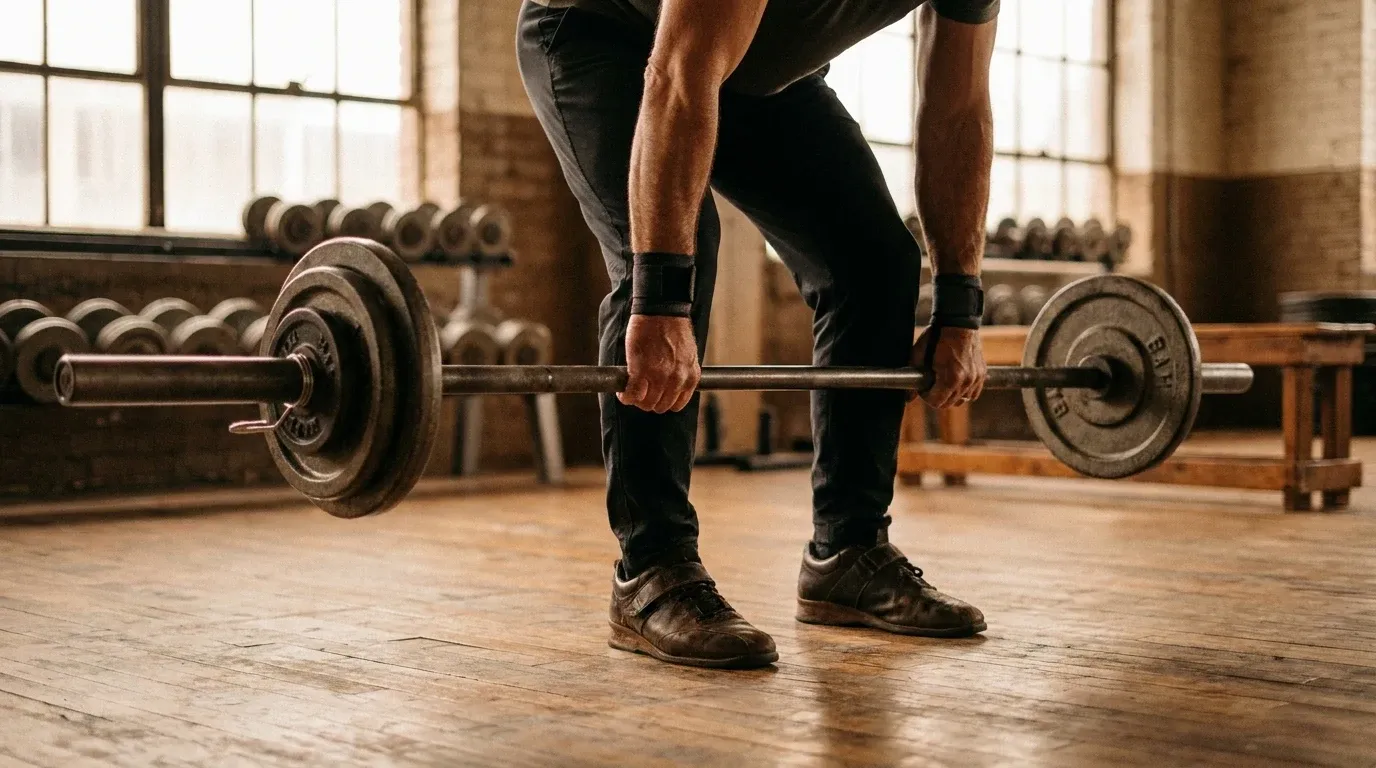
For decades, the gym conversation has been dominated by two questions: how much can you lift, and how do you look? Both are reasonable goals. But a wave of research published in late 2026 is making a compelling case that neither should be the primary framework guiding your training. The new priority is time. Specifically, how many healthy, functional years you can add to your life through resistance training done right.
This isn't a pivot toward lighter weights and gentle movement. It's a more sophisticated reframe. The science is asking you to think differently about what "results" actually means when you zoom out across a lifetime of training.
Resistance Training Is Now a Longevity Tool First
The research community has been building toward this shift for years, but 2026 data has accelerated the conversation significantly. Multiple large-scale longitudinal studies now position resistance training alongside aerobic exercise as a primary driver of healthspan, the portion of your life spent in good health, not just lifespan. The distinction matters enormously.
What the newer research clarifies is that the mechanisms behind this benefit are broader than previously understood. Resistance training improves metabolic function, preserves muscle mass that would otherwise decline at roughly 3 to 8 percent per decade after age 30, supports bone mineral density, and reduces systemic inflammation markers that are closely linked to age-related disease. These aren't aesthetic outcomes. They're biological ones.
A 2026 meta-analysis tracking over 400,000 adults across a 15-year period found that individuals who engaged in regular resistance training had a 23 percent lower risk of all-cause mortality compared to sedentary controls. That's not a marginal finding. That's a number that should reshape how you prioritize your training week.
The emerging consensus is clear: lifting weights isn't supplementary to cardiovascular health. It's foundational to it. And the protocols that support longevity look somewhat different from the ones designed to maximize short-term performance or aesthetics.
Movement Quality Over Maximal Load
One of the most significant protocol shifts coming out of 2026 research is the formal deprioritization of maximal load accumulation as a central training goal. This doesn't mean you should avoid heavy lifting. It means chasing personal records every session, grinding through pain, and accumulating volume without regard for joint health is now understood to be a poor long-term strategy.
The research is pointing toward something practitioners have suspected for years: joint longevity may be the single most important variable in your ability to keep training consistently across decades. Cartilage, tendons, and ligaments adapt more slowly than muscle. When you consistently outpace their capacity to recover, you create a structural deficit that compounds over time.
The new framework prioritizes what researchers call "movement fidelity." This means maintaining high-quality mechanics under load rather than maximizing the load itself. It means incorporating tempo work, controlled eccentrics, and regular deload periods not as optional extras but as core components of any longevity-focused program.
Practically, this translates into training with loads that allow you to maintain full range of motion and clean mechanics on every rep. If your form degrades during a set, that's your ceiling for that session. Not because you're being timid, but because you're playing a longer game.
Working with a qualified coach can help you identify where your movement patterns are creating unnecessary joint stress. If you're not sure where to start, How to Choose a Personal Trainer: A Simple Checklist walks through exactly what to look for when selecting someone to guide your program.
The ACSM Update: What's Actually Sufficient
The American College of Sports Medicine updated its resistance training guidelines in late 2026, and the key takeaway is less dramatic than many expected, but it's important precisely because of that. The updated position stands firmly behind twice-weekly strength training as sufficient for meaningful long-term health outcomes, provided intensity is appropriately high relative to your individual capacity.
This is a meaningful clarification. The fitness industry has long promoted a "more is better" philosophy around training frequency. The ACSM update pushes back on that framing, at least through the lens of longevity. Two well-designed sessions per week, performed at 70 to 85 percent of your one-rep maximum across major muscle groups, produces outcomes that are statistically comparable to four or five sessions for health-related endpoints.
The operative phrase is "high relative intensity." This isn't permission to phone it in twice a week. It's recognition that training hard enough, frequently enough, and recovering fully between sessions is the formula that sustains the body across decades. The ACSM update also reinforces the value of compound, multi-joint movements. Squats, deadlifts, rows, presses. These patterns recruit the most muscle mass, stimulate the most hormonal response, and produce the broadest structural adaptations.
What doesn't appear in the updated guidelines is any endorsement of excessive volume or high-frequency programming as necessary for longevity. If you're currently training five or six days a week and enjoying it, that's fine. But if your schedule or recovery capacity limits you to two serious sessions, the science says that's enough to move the needle on your healthspan in a significant way.
Recovery Is Now Part of the Protocol
You can't separate training outcomes from recovery quality, and longevity-focused research is making this more explicit than ever. Sleep, nutrition, and stress management aren't lifestyle factors that sit adjacent to your training program. They're variables that directly determine whether the work you're doing in the gym translates into structural adaptation or accumulated damage.
Chronic stress in particular undermines the hormonal environment your body needs to rebuild muscle tissue and manage inflammation after training. Elevated cortisol suppresses protein synthesis and accelerates muscle protein breakdown. If you're training hard but sleeping poorly and managing high stress loads without support, the longevity benefits of your gym work are partially offset at the biological level.
The connection between how you eat and how your stress hormones behave is increasingly well-documented. Research covered in Your Breakfast May Be Shaping Your Stress Levels All Day highlights how early nutrition choices can influence cortisol patterns throughout the day, something that has downstream effects on recovery and adaptation. Similarly, specific dietary patterns appear to build genuine stress resilience over time, a topic explored in How Breakfast Could Actually Make You More Stress-Resilient.
The point isn't that breakfast alone will extend your training career. It's that longevity-focused lifting requires a systems-level approach. Your training protocol and your recovery environment need to be designed together.
What This Means for Supplements
The supplement conversation around longevity training has become more nuanced in 2026. There's growing pressure on the industry to support claims with genuine evidence rather than extrapolated data, and researchers are drawing clearer lines between compounds with real mechanistic support and those with marketing momentum.
Creatine monohydrate remains one of the few supplements with consistent, replicated evidence for supporting muscle mass preservation and strength output in aging populations. Newer delivery formats have entered the market, but Stabilized Creatine: Is the New Format Worth It? examines whether those innovations represent genuine improvements over the standard form.
Protein intake remains critical, and the research continues to support higher-end targets for older adults engaged in resistance training. Anywhere from 1.6 to 2.2 grams per kilogram of body weight per day is where the evidence clusters for preserving lean mass during aging. The source of that protein is less critical than consistently hitting the target, though the evidence base for plant-based options is expanding. If you train primarily on plant protein, the current evidence is worth understanding clearly.
Be skeptical of anything marketed specifically as a "longevity" supplement without robust mechanistic evidence. The supplement industry has a documented pattern of amplifying preliminary findings, and longevity claims are particularly susceptible to this. Stick to what the evidence actually supports and revisit your stack with that lens.
Reframing Your Goals for the Long Run
The shift that 2026 research is asking you to make is ultimately psychological as much as physical. It requires replacing the question "how much can I lift?" with "how long can I keep lifting at a high quality?" Those aren't the same question, and they don't always produce the same training decisions.
Longevity-focused lifting looks like this: consistent frequency over months and years rather than intense phases followed by burnout. Load management that respects joint capacity. Recovery treated as non-negotiable. And performance metrics that include mobility, movement quality, and pain-free function alongside strength outputs.
None of this means settling for less. In many cases, the athletes and recreational lifters who adopt this framework in their 30s and 40s end up stronger, more capable, and more structurally resilient in their 50s and 60s than peers who chased short-term performance without a longevity lens. The research supports that trajectory clearly. The only question is whether you're willing to build for it.