
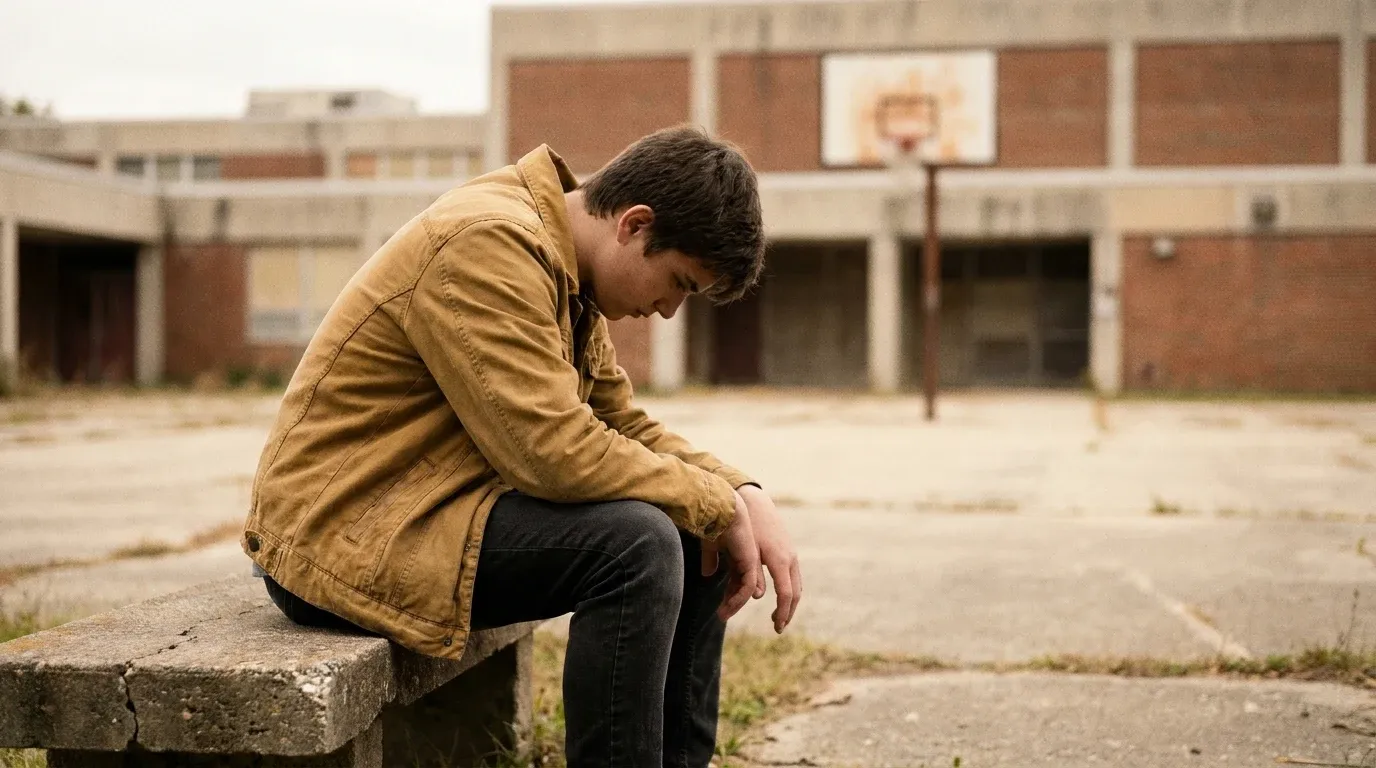
Here's a number worth sitting with: one in four teenagers worldwide reported doing zero exercise in the past week. That's according to data from the World Health Organization, and it's not a rounding error. It's a structural failure playing out across every income bracket, every country, and every demographic that researchers have bothered to measure.
If you work in fitness, care about public health, or simply remember what it felt like to discover movement for the first time, that figure should bother you. Not because teenagers are lazy. But because the systems designed to keep them moving have quietly collapsed around them.
The Numbers Are Worse Than They Look
The WHO recommends that children and adolescents aged 5 to 17 get at least 60 minutes of moderate-to-vigorous physical activity every day. Most teens aren't getting anywhere near that. In high-income countries, the gap is especially stark. Studies across the US, UK, Canada, and Australia consistently show that adolescent activity levels drop sharply around age 12 and keep falling through the late teen years.
The one-in-four benchmark for complete inactivity in a given week is striking precisely because it captures the floor, not the average. These aren't teenagers who are slightly under the guidelines. These are young people for whom structured or recreational movement has essentially disappeared from the weekly calendar.
Girls are disproportionately affected. WHO data shows adolescent girls are consistently less active than adolescent boys across all regions. The gap widens in middle and high school and rarely closes on its own. That pattern has implications well beyond cardiovascular fitness. Bone density, mental health, and long-term metabolic function are all meaningfully shaped by physical activity during adolescence. Research increasingly supports the idea that lifting weights has measurable cognitive benefits, and those benefits are especially relevant during the years when the adolescent brain is still developing.
This Isn't a Motivation Problem
The reflex response to teen inactivity is to frame it as a willpower issue. Teenagers are glued to their screens. They don't want to go outside. They'd rather watch someone else exercise than do it themselves. That narrative is both lazy and inaccurate.
Screen time is a factor, yes. But the more important question is: what else is competing for a teenager's time and energy? In many urban environments, there's nowhere safe to run, no accessible gym, no school sports team with an open roster, and no adult in the household with the schedule or resources to drive anyone to a practice. Physical inactivity in teenagers is heavily correlated with low household income, lack of green space, and reduced access to after-school programs.
Meanwhile, physical education in schools has been progressively squeezed out. In the United States, only about half of high school students attend PE class even once a week. Budget cuts, standardized testing pressure, and shifting curriculum priorities have gutted the one structured daily window where teenagers might have reliably moved their bodies. Other English-speaking countries show similar trends. This is a policy failure, not a character flaw.
Urban design compounds the problem. Neighborhoods built around car dependency don't just make walking inconvenient. They make incidental movement almost impossible. The teenager who would have biked to a friend's house in a more walkable environment instead sits in a passenger seat. These are structural conditions, and they require structural responses.
What This Means for the Next Generation of Gym-Goers
If you're in the fitness industry, the temptation might be to look at a generation of sedentary teenagers and see a future customer base. That's not wrong, exactly. But the opportunity here is more complicated than it first appears.
The teens who are currently inactive aren't going to walk into a commercial gym at 18 without a reason. They haven't built the movement habit. They don't have a reference point for what consistent training feels like. They may have already internalized the idea that fitness spaces aren't for people who look like them. That psychological barrier is real, and it doesn't dissolve when someone turns 18 and signs up for a gym membership.
The fitness industry needs to get upstream. That means youth programming that isn't just adult programming scaled down. It means gym environments that feel welcoming rather than performative. It means pricing structures that don't automatically exclude the families most affected by inactivity. A family in a low-income household isn't going to spend $80 to $120 a month per person on a gym membership. That's not a preference gap. That's an access gap.
There's also a clinical angle worth watching. Physicians and health systems are increasingly looking at exercise as a first-line intervention for adolescent mental health, metabolic risk, and even academic performance. The growing movement toward prescribing strength training as preventive medicine creates a natural bridge between healthcare settings and fitness facilities. If gyms can position themselves as destinations for referred patients rather than just voluntary consumers, the addressable population expands significantly.
Strength Training Specifically Deserves Attention
When people talk about getting teenagers moving, the conversation tends to default to cardio-based activity: running, sports, cycling. Those all have value. But there's a growing body of evidence suggesting that resistance training deserves equal or greater emphasis for adolescents, particularly those who've been sedentary.
Strength training is adaptable. It doesn't require a team, a specific weather window, or a high baseline of fitness. It produces visible results relatively quickly, which matters for the kind of motivation that sustains behavior. It supports bone density during a critical developmental window. And the evidence on mental health outcomes is increasingly compelling.
It also scales. A teenager who starts with bodyweight movements and builds to barbells isn't just getting stronger. They're developing a relationship with progressive effort that transfers to every other area of their life. That's the kind of foundational habit the fitness industry should want to cultivate, not just for commercial reasons, but because it's genuinely useful.
Nutrition literacy matters here too. Many teenagers have distorted, incomplete, or actively harmful ideas about what eating for performance looks like. The cultural visibility of extreme diets, supplement marketing targeted at younger audiences, and social media fitness content that prioritizes aesthetics over function creates a confused landscape for anyone trying to build healthy habits from scratch. For adolescents just entering the world of training, understanding that their protein and activity needs are likely higher than conventional guidelines suggest is a genuinely useful starting point.
Sleep Is Part This Equation
You can't talk about sedentary teenagers without talking about sleep. Adolescent sleep is chronically insufficient across developed countries. Teens are biologically wired to stay up later and wake up later, but school start times haven't adapted to that reality in most districts. The result is a population of young people who are chronically under-slept, which directly undermines both motivation to exercise and the physiological capacity to recover from it.
Poor sleep drives sedentary behavior in a reinforcing loop. Tired teenagers move less. Moving less makes sleep quality worse. Sleep consistency, not just duration, turns out to be one of the strongest predictors of long-term cardiovascular and cognitive health. Intervening on sleep as part of a broader adolescent wellness strategy isn't optional. It's foundational.
The Responsibility Lands on Multiple Shoulders
It would be convenient to assign this problem to one institution. Schools failed. Parents failed. The fitness industry failed. Tech companies failed. In reality, the responsibility is genuinely distributed, and the solutions need to be too.
Schools that want to increase student activity don't always need a full PE expansion. Structured movement breaks, walking-friendly campus design, and active transportation programs can move the needle without a full budget reallocation. Some districts in the US and UK have experimented with brief daily movement sessions integrated into the academic schedule with measurable improvements in both activity levels and classroom focus.
The fitness industry can invest in community-facing programming, reduced-cost memberships tied to school referrals, and genuine outreach in underserved neighborhoods. That's not charity. It's market development with a 10-year horizon.
And parents, where circumstances allow, can prioritize shared physical activity. Not performance, not competition. Just movement. The research on intergenerational physical activity habits is clear: active parents raise more active children, and the effect persists into adulthood.
One in Four Is Not a Fixed Number
The WHO figure is alarming. It's also reversible. Physical inactivity isn't a permanent condition. It's a behavior shaped by environment, access, habit, and culture. All of those things can change.
The question isn't whether the fitness industry, schools, and health systems can reach sedentary teenagers. The question is whether they're willing to redesign their approaches around what teenagers actually need, rather than waiting for teenagers to find their way to systems that weren't built with them in mind.
The next generation of lifters, runners, and gym regulars is currently sitting on a couch somewhere. Some of them are waiting for a reason to move. It's worth giving them one.