
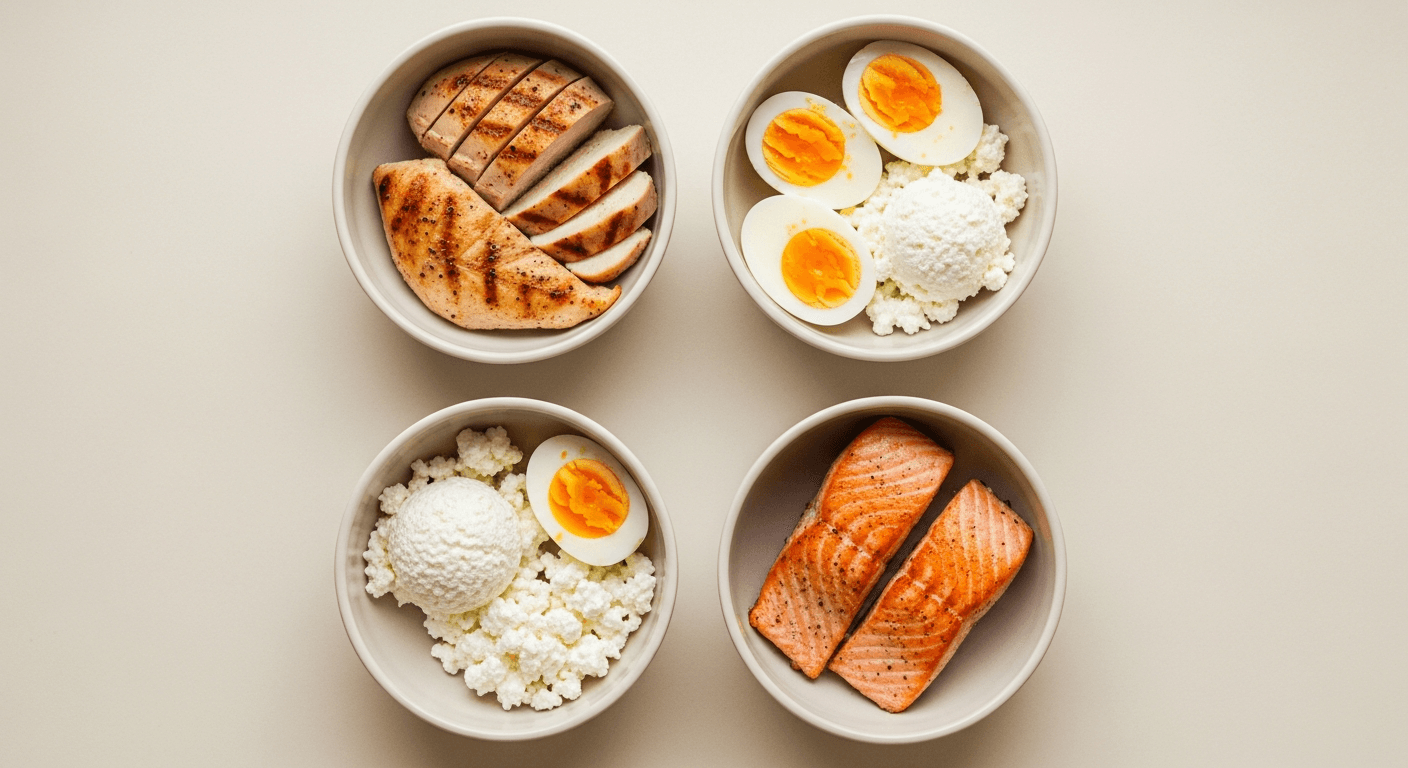
The per-meal ceiling on muscle protein synthesis
The question isn't how much protein you eat per day. The question is how many times you trigger muscle protein synthesis, MPS, throughout the day.
MPS responds to the dose of leucine and essential amino acids available in the bloodstream after a meal. It plateaus at roughly 20-40g of high-quality protein for a 70-80kg adult. Beyond that threshold, additional amino acids are oxidized for energy, not used for muscle building.
The implication is direct: if you eat 160g of protein per day across 2 meals of 80g each, you trigger MPS twice. Spread those 160g across 4 meals of 40g each, and you trigger it four times. Same total intake, double the anabolic stimulus.
What research shows about protein meal frequency
Multiple studies have directly compared evenly distributed versus concentrated protein intake. The findings consistently point the same direction: 4 meals of 20-40g produce higher 24-hour MPS than 2 meals of 40-80g, all else equal.
A 2024 meta-analysis published in Nutrients examined 18 randomized studies on meal frequency and body composition. Subjects who distributed their protein across 4 or more meals gained significantly more lean mass over 8-12 weeks, regardless of total caloric intake or training type.
What separates effective protocols from ineffective ones isn't the precision of the timing window, it's the regularity of distribution across the day.
The distribution problem in practice
Most people who train eat protein asymmetrically: light or skipped breakfast, moderate lunch, heavy dinner. This common pattern triggers MPS once or twice per day, even when total daily intake is technically adequate.
A practical example: 15g at breakfast (eggs and toast), 30g at lunch (chicken and rice), 70g at dinner (large portion of meat plus legumes). Total: 115g. Significant anabolic stimuli: probably 2. The 15g at breakfast doesn't reach the leucine threshold needed to trigger a full MPS response.
Restructuring those same 115g across 4 meals of 25-30g, protein breakfast, lunch, afternoon snack, dinner, multiplies the stimuli without changing total intake.
The specific case of people over 50
Anabolic resistance increases with age. Adults over 50 need a higher per-meal dose to trigger the same MPS response as younger adults, typically 40-50g per meal versus 25-35g.
This is well documented in both geriatric and sports nutrition literature. It's not a reason to eat less frequently, it's a reason to maintain 4-meal frequency while increasing the dose per meal. Distribution remains the key mechanism; the per-meal dose adjusts for age.
Leucine-rich protein sources remain the priority at any age: whey, chicken, tuna, eggs, Greek yogurt. Leucine is the amino acid that triggers the mTOR cascade responsible for initiating MPS.
What this changes about meal planning
The constraint isn't total protein quantity, it's organization. Four meals containing 25-40g of protein each doesn't require eating more. It requires better distributing what you're already eating.
Some practical adjustments: add a structured protein source to breakfast (Greek yogurt, eggs, a shake), include an afternoon protein snack if lunch and dinner are more than 5-6 hours apart, and avoid concentrating more than 50g of protein at dinner, the excess will just be oxidized anyway.
This isn't an additional constraint. It's reconfiguring what you already eat to get a better anabolic return on the same investment.