
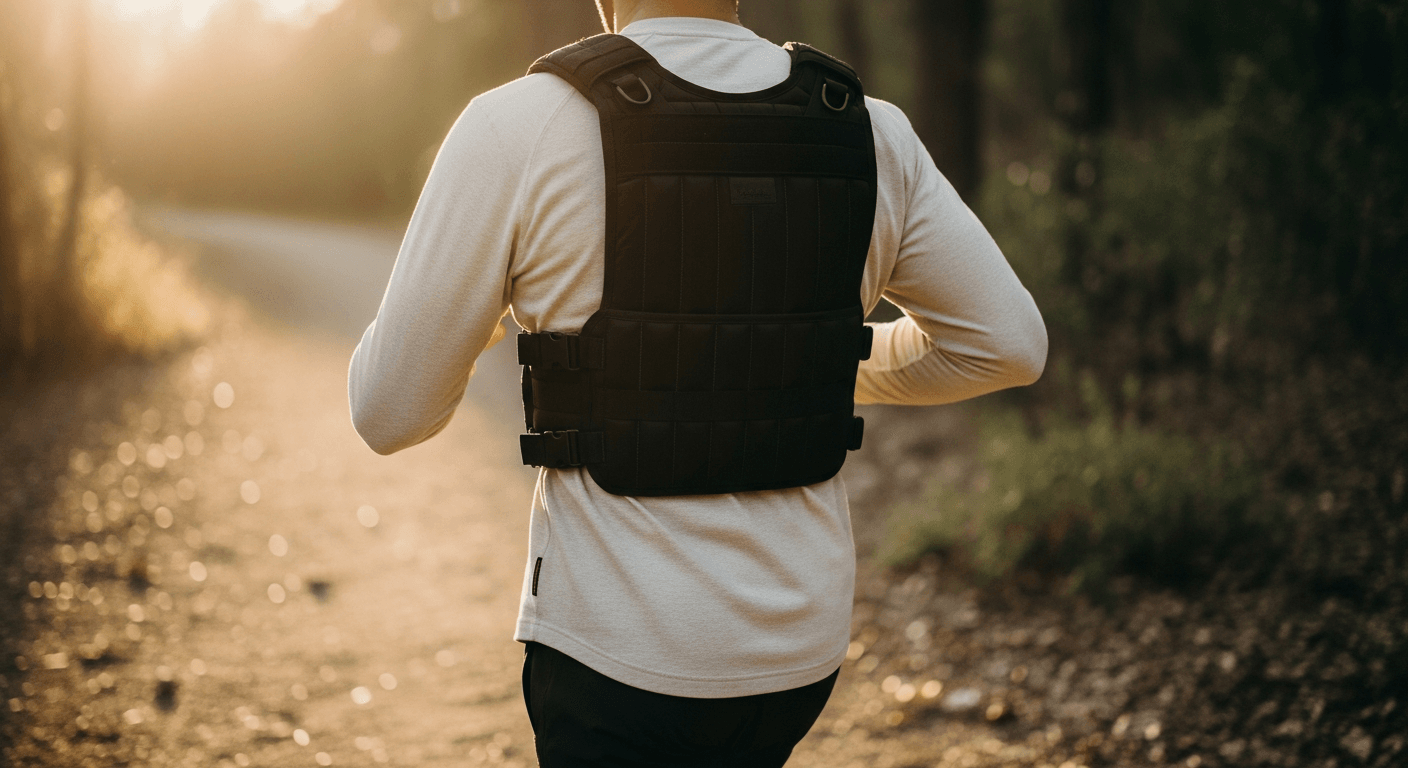
Walk into any gym or scroll through fitness content for five minutes and you'll see them: weighted vests strapped onto influencers doing pull-ups, rucking through parks, or grinding through bodyweight circuits. Sales have surged accordingly. Market data shows the weighted vest category grew by more than 30% year-over-year between 2022 and 2024, driven almost entirely by social media visibility. The question worth asking isn't whether they look impressive. It's whether they actually deliver results for the average recreational athlete, or quietly set you up for injury.
Why Weighted Vests Exploded on Social Media
The appeal is straightforward. A weighted vest promises to make familiar movements harder without requiring new equipment, a gym membership upgrade, or a completely overhauled program. Influencers have leaned into this hard, promoting vests as a shortcut to increased caloric burn, improved cardiovascular conditioning, and faster strength gains from bodyweight training.
The marketing narrative is compelling because it contains a grain of truth. Adding external load to movement does increase metabolic demand. A 2023 study published in Applied Physiology found that walking with a load equivalent to 10% of body weight increased energy expenditure by approximately 12% compared to unloaded walking at the same pace. That's a meaningful difference if you're consistent.
But the influencer version of this story skips the part about appropriate load, progression, and individual readiness. What works for a conditioned athlete with a structured training history doesn't automatically transfer to someone who just started exercising regularly.
What a Doctor Actually Says About the Risk
Sports medicine physicians and orthopedic specialists have grown increasingly vocal about the mismatch between how weighted vests are marketed and how most people end up using them. The core concern isn't the vest itself. It's the absence of any progression logic.
When you add load to movement without adequate preparation, the stress lands on structures that aren't ready for it. Tendons adapt more slowly than muscles, sometimes taking two to three times longer to respond to new training demands. Joints, particularly the knees, hips, and lumbar spine, absorb compressive forces that increase significantly with added weight. Running with a vest that's too heavy, for example, can amplify ground reaction forces to a degree that substantially raises the risk of stress fractures, patellar tendinopathy, and lower back strain.
The lower back deserves specific attention. Wearing a vest shifts your center of mass and changes how load is distributed through the spine. If your posterior chain isn't already strong and you're not moving with solid mechanics, a vest doesn't just add resistance. It amplifies every compensation pattern you already have.
This is also why high-impact cardio, think running, jump training, or high-intensity interval work, is the riskiest application for most recreational vest users. The combination of impact forces and added load creates a stress multiplier that most people underestimate. If you're looking for high-intensity cardio that's genuinely easier on the joints, Trampoline HIIT: Hard Cardio Without Destroying Your Joints offers a useful alternative framework before you consider adding external load to impact-heavy movement.
Where Weighted Vests Actually Deliver Results
Strip away the hype and weighted vests do have a real, evidence-supported use case. The key is matching the tool to the task.
Loaded carries and walking. This is the strongest application for most people. Rucking, which is simply walking with added weight, has a well-documented profile of benefits: improved aerobic capacity, increased caloric expenditure, and meaningful strength stimulus for the posterior chain. The impact forces are low, the movement is natural, and the load is manageable. It's one of the most accessible forms of resistance cardio available.
Calisthenics and bodyweight training. If you've genuinely plateaued on movements like push-ups, pull-ups, or dips, a vest is a legitimate way to progress. Once you can perform 15 to 20 clean reps of a bodyweight movement, adding 5 to 10 pounds of vest weight reintroduces a strength stimulus without requiring you to shift to a different exercise entirely. This aligns with the broader evidence base around progressive overload. Weight Training Beats Every Other Fat Loss Method covers why progressive resistance, in any form, remains the most effective tool for body composition change.
Low-impact conditioning work. Step-ups, sled-adjacent movements, and stair climbing with a vest load the system meaningfully without the joint stress of running or jumping. These are underrated applications that don't get nearly enough attention in the influencer conversation.
What vests are not ideal for, especially early on, is anything that involves rapid deceleration, high impact, or complex movement patterns under fatigue. The nervous system is already managing significant coordination demands in those contexts. Layering in unfamiliar load disrupts motor patterns and increases error risk. Understanding how your nervous system responds to training stress is actually central to this. Training Your Nervous System Like a Muscle Actually Works explains why adaptation isn't just about muscle tissue and how neurological readiness should factor into your load decisions.
How Much Weight Should You Actually Use
The clinical consensus among sports medicine professionals is consistent: start at no more than 5% to 10% of your body weight. For a 170-pound person, that's roughly 8 to 17 pounds. Most people starting out should stay at the lower end of that range for the first four to six weeks before making any adjustments.
Progression should be deliberate. A reasonable framework looks like this:
- Weeks 1 to 3: Use 5% of body weight for walking or bodyweight movements. Focus on maintaining your normal movement mechanics without any visible compensation.
- Weeks 4 to 6: If you've had no joint discomfort and your form has stayed solid, you can consider adding another 2 to 5 pounds.
- Beyond week 6: Continue adding load only when you can comfortably sustain the current level for multiple sessions without soreness that extends past 24 to 48 hours.
Signs you've progressed too fast include persistent lower back tightness after sessions, knee soreness that lingers more than a day, and noticeable changes in your gait or posture during exercise. These aren't signals to push through. They're signals to reduce the load.
Choosing the Right Vest
Not all weighted vests are built the same, and fit matters more than most people realize. A vest that shifts around during movement changes load distribution in ways that compound joint stress. Look for a close-fitting design with adjustable straps and evenly distributed weight plates rather than a single bulk load.
Price ranges vary considerably. Entry-level vests start around $40 to $60 for basic models with fixed weight. Adjustable, higher-quality options from brands like Rogue, 5.11, or Hyperwear typically run $100 to $250. At the premium end, purpose-built rucking vests can reach $350 or more. For most recreational athletes starting out, a mid-range adjustable vest in the $80 to $150 range offers enough quality and flexibility without overcommitting financially.
One practical note: if you're recovering from any joint issue, a recent injury, or dealing with chronic back pain, get clearance from a sports medicine professional before adding vest work to your routine. Recovery tools are part of the equation too. Recovery Gadgets vs. the Basics: What to Prioritize is worth reviewing to make sure your recovery infrastructure can actually support increased training load before you add one more stressor.
The Bottom Line
Weighted vests aren't a gimmick, but they're not a shortcut either. Used correctly, they're a legitimate tool for increasing training stimulus during walking, loaded carries, and calisthenics. Used incorrectly, which is how most people influenced by social media content end up using them, they're an efficient path to overuse injuries and joint problems that sideline you for weeks.
The most effective approach is the least exciting one: start lighter than you think you need to, progress more slowly than feels necessary, and pay attention to what your body tells you. That's not a compelling influencer hook. But it's what actually works.