
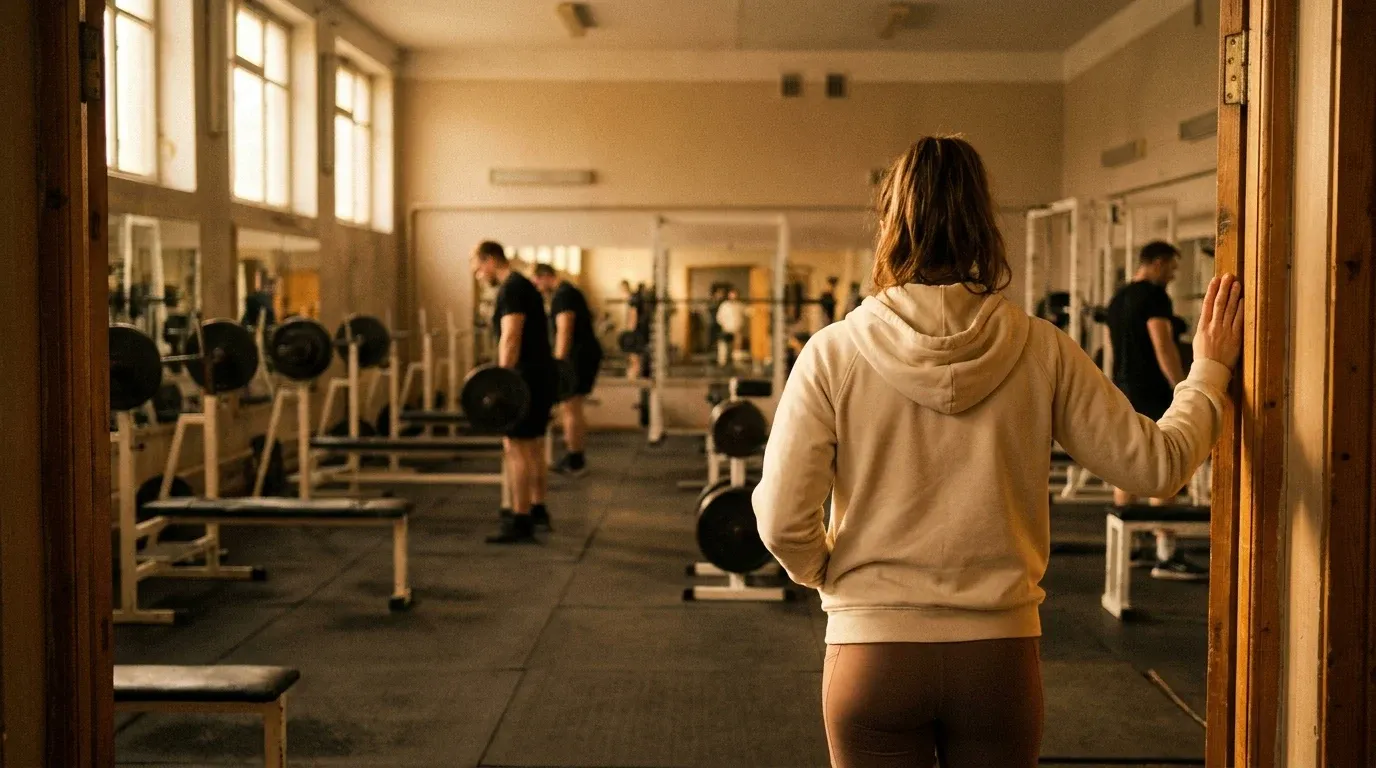
Gym membership is at a record high in 2026. Facilities are opening faster than at any point in the past decade, and participation numbers across the US, UK, Canada, and Australia keep climbing. That growth story sounds like a win for everyone. But behind the headline numbers, a persistent gap remains: a significant share of women still feel uncomfortable, unwelcome, or outright intimidated in mixed gym environments.
This isn't a personality problem or a lack of motivation. It's a documented structural issue. And the fitness industry, however slowly, is responding to it. Here's what's actually going on and what you can do about it today.
The Gym Boom Is Real. So Is the Discomfort.
Facility operators investing in women-only zones in 2026 aren't doing so out of sentiment. They're responding to data. Survey after survey from major gym chains shows that discomfort in mixed-gender spaces is one of the primary reasons women churn after their first few weeks of membership. You sign up, you walk in once, you feel eyes on you, and you stop going.
Industry analysts estimate that improving early-stage comfort for female members could reduce first-year dropout rates by a meaningful margin. That's why purpose-built women's sections, separate cardio studios, and staffed orientation programs are now appearing in mid-range gyms that previously offered none of these things. This isn't a niche amenity anymore. It's becoming standard infrastructure.
The Barriers Are Well-Established. Let's Name Them.
There are three core barriers that research consistently identifies. Understanding them clearly is the first step to working around them.
- Fear of judgment. Studies on gym anxiety show that women report significantly higher levels of self-consciousness in weight-training areas than men do. The perception of being watched, evaluated, or silently criticized while learning a new movement is real and measurable. It doesn't mean your form is actually being judged. It means the environment produces that feeling reliably.
- Unfamiliarity with equipment. Most gym floors were designed around free weights, barbells, and benches. That equipment culture has historically centered male training patterns. If you've never been taught how to use a squat rack or adjust a cable machine, the learning curve feels steep. And nobody wants to look like they don't know what they're doing in front of a room full of people who seem like they do.
- A historically male-centered environment. The aesthetic of most commercial gyms, from the music to the layout to the marketing on the walls, has defaulted to male users for decades. That's shifting, but it shifts slowly. Walking into a space where you don't see yourself reflected tends to produce exactly the kind of low-grade discomfort that makes people leave.
None of these barriers are inevitable. They're environmental and psychological. That means they respond to practical intervention.
What You Can Actually Do Right Now
You don't have to wait for the industry to catch up. These strategies work regardless of which gym you're in.
Go off-peak for your first sessions
Peak hours at most gyms run from 5:30 to 8:00 AM and 5:00 to 7:30 PM on weekdays. Midmorning, early afternoon, and weekend mornings outside of those windows are significantly quieter. Your first two or three sessions will feel completely different in a gym that's running at 30% capacity. You get time on equipment without pressure, you can figure out where everything is, and you can make mistakes without an audience.
This isn't about hiding. It's about removing unnecessary friction during the phase when habit formation is most fragile. Once you have a routine and some familiarity with the space, the crowd stops mattering.
Start with a structured program
Decision fatigue is a real enemy in the early gym-going phase. Walking in without a plan means standing in the middle of the floor trying to figure out what to do next, which is exactly when self-consciousness spikes. A written program removes that entirely. You walk in knowing exactly which exercises you're doing, in which order, with which weights.
You don't need anything complicated. A three-day full-body program built around compound movements is enough to produce real results and give you a clear reason to be in every corner of the gym floor. If you want expert guidance on finding someone to build that plan with you, How to Find a Personal Trainer in 5 Steps walks you through the process without the guesswork.
Use the free floor orientation most gyms now offer
Most commercial gym memberships in 2026 now include at least one complimentary floor orientation with a staff member. This is not a sales pitch. It's a walkthrough of how the equipment works, where everything is, and how to adjust machines to fit your body. Fewer than a third of new members actually take this up, which is a missed opportunity.
A single 30-minute orientation can compress weeks of fumbling around into one structured session. Ask for it at the front desk when you join. If your gym doesn't offer it, ask if a staff member can show you the weight floor. Most will say yes.
Women-Only Zones Are a Legitimate On-Ramp, Not a Compromise
There's sometimes an implied message in fitness culture that using a women-only area is somehow less serious than training in the main gym. That framing is worth rejecting directly. Research on female gym adherence consistently shows that women who start in single-sex environments have higher rates of returning in the first three months compared to those who start in mixed spaces immediately.
That early return rate matters enormously. Habit formation research suggests the first six to eight weeks of consistent gym attendance are the hardest. If a women-only zone reduces the psychological friction enough to get you back through the door three times a week, it's doing exactly what it should do.
Think of it as an on-ramp. You use it to build speed. Then you merge. Many women find that after eight to twelve weeks of consistent training, the mixed floor feels entirely normal. The anxiety that once seemed permanent simply fades with familiarity and competence.
Building Real Confidence Takes Weeks, Not Months
The most consistent finding in gym psychology research is that perceived intimidation drops sharply with repetition. After roughly four to six sessions, most women report feeling significantly more comfortable in the gym environment than they did at the start, provided those sessions were consistent and followed a plan.
Progressive overload is the mechanism here. When you lift a little more weight or do one more rep than you did last week, you have concrete evidence of progress. That evidence is motivating in a way that general fitness goals rarely are. You're not just hoping something is working. You can see it in the numbers.
If you're short on time and wondering whether even one session a week can build real fitness, the answer is yes. Research covered in One Weekly Workout Also Boosts Cardio Fitness, Science Confirms shows meaningful cardiovascular gains from a single structured weekly session. Starting small is not starting wrong.
Supporting Your Training Outside the Gym
Confidence in the gym is partly psychological and partly physical. When your body is recovering well and fueled properly, sessions feel better and progress comes faster. That matters because early progress is the engine of early motivation.
Nutrition is a straightforward place to start. Many women beginning a weight-training program underestimate how much protein supports muscle recovery and adaptation. How Much Protein Do You Actually Need Based on Your Activity Level? gives clear, practical guidance calibrated to training volume without overcomplicating it.
Sleep and stress management matter more than most people acknowledge in the early weeks of a new training routine. A body that's chronically sleep-deprived or running on high cortisol doesn't adapt as efficiently to exercise. The evidence-based strategies in Recovery Done Right: Basics Beat Gadgets Every Time are worth reading before you invest in anything more complicated.
When to Bring in a Coach
A personal trainer isn't a luxury reserved for elite athletes or people with unlimited budgets. A few sessions with the right coach at the start of your training journey can compress months of trial and error into a week or two. You learn proper movement patterns, you get a program that matches your actual goals, and you have someone who can correct your form before bad habits set in.
Rates vary widely, from around $50 to $150 per session depending on location and experience level. Even four sessions spread over a month can give you enough of a foundation to train independently with confidence. If weight loss is a specific goal alongside gym confidence, How to Pick a Personal Trainer for Weight Loss covers exactly what to look for.
The Discomfort Is Temporary. The Habit Is Not.
The intimidation that keeps women out of gyms, or hovering near the cardio machines while avoiding the weight floor, is real. It's produced by real environmental factors and reinforced by an industry that was slow to design spaces with women in mind. Acknowledging that clearly matters.
But it's also temporary. The women who push through those first few sessions consistently report that the discomfort was front-loaded. It doesn't compound over time. It fades. What replaces it is something that's hard to replicate anywhere else: the specific confidence that comes from knowing you can walk into a challenging environment, follow a plan, and get stronger every week.
You already have access to that. You just need a structured entry point and a few sessions to prove it to yourself.