
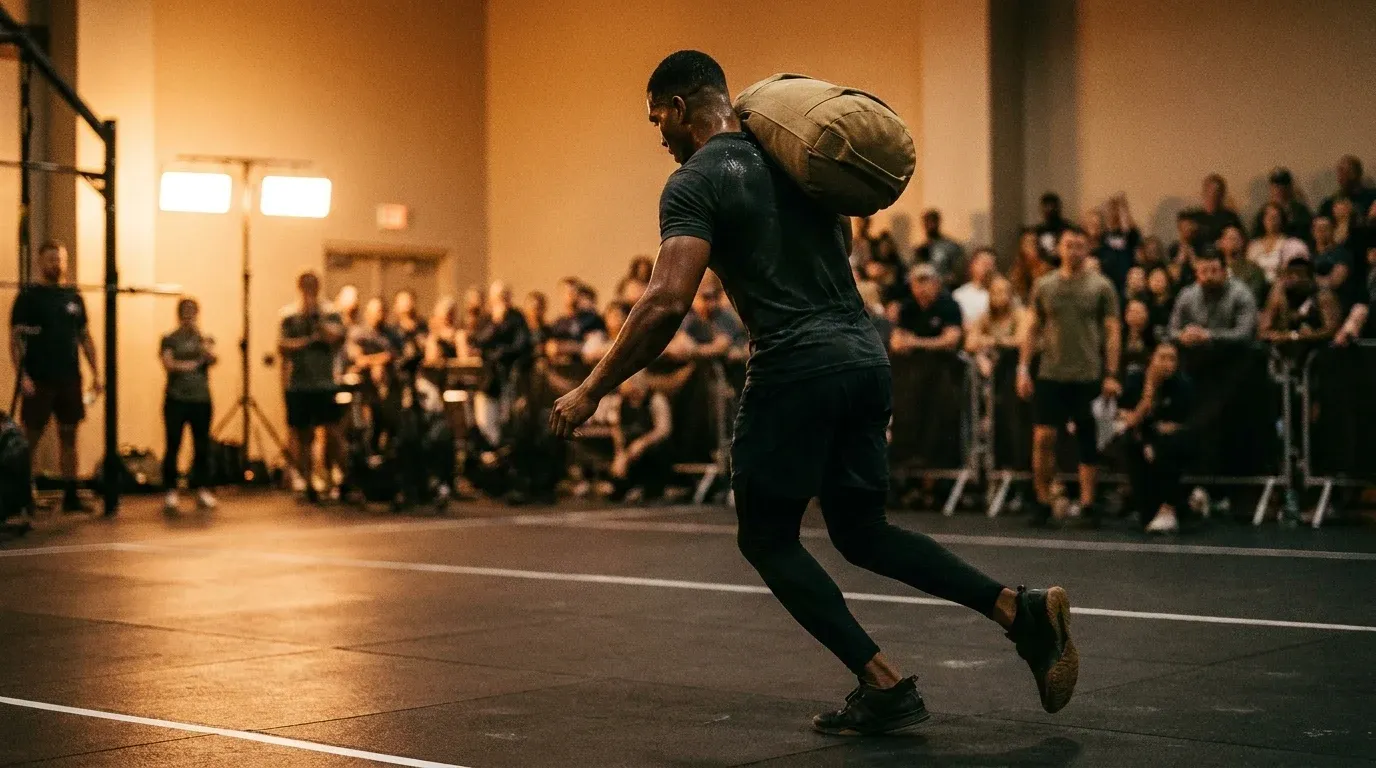
A bronze medal at a regional HYROX event might not make global headlines. But when that medal is won by Guyanese athletes competing in Suriname, it signals something worth paying attention to. HYROX is no longer just a European circuit with a North American outpost. It's pushing into South America and the Caribbean, and local athletes are showing up ready to compete.
The result is a small but meaningful marker for a sport that has built its identity on accessible, standardized competition. And it raises a real question: how does a fitness race format born in Hamburg spread its roots all the way to the Guiana coast?
What Happened in Suriname
Guyanese athletes traveled to neighboring Suriname to compete in a HYROX event and returned with a bronze medal finish. For a country with no established HYROX scene of its own, that result carries weight. It shows that athletes in the region are training seriously for the format, not just showing up for the experience.
HYROX events follow a fixed structure wherever they're held: eight one-kilometer runs, each followed by a functional workout station. Those stations include ski ergs, sled pushes and pulls, burpee broad jumps, rowing, farmer's carries, sandbag lunges, and wall balls. The format doesn't change by country. That consistency is part of what makes results like this comparable and credible.
For Guyana specifically, this kind of result matters because HYROX infrastructure there is essentially grassroots. There's no official national affiliate, no dedicated HYROX gym ecosystem, and no local race series. Athletes are preparing for the format on their own terms, using the tools available to them.
Why This Region Matters for HYROX's Global Ambitions
HYROX crossed the 2.2 million registered participant mark globally, and much of that growth has come from its core markets: Germany, the United Kingdom, the United States, and Australia. But the next phase of growth requires going somewhere new. South America and the Caribbean represent an enormous untapped pool of fitness-oriented athletes who are already training hard and looking for structured competitive outlets.
Suriname is a logical early foothold. The country sits at the intersection of South American geography and Caribbean cultural influence, with Dutch colonial ties that connect it loosely to HYROX's European origins. Hosting an event there isn't just about filling a race slot. It's about planting a flag in a region where functional fitness culture is growing fast.
If you want to understand what this kind of scale means for the sport and for athletes who participate in it, 2.2 Million Participants: What HYROX's Scale Means for You breaks down how the sport's expansion affects training standards, event availability, and competitive benchmarks across all levels.
Grassroots Expansion: How HYROX Actually Grows
HYROX doesn't grow the way a traditional sporting league does. There's no team ownership model, no franchising in the conventional sense, and no TV broadcast deal driving awareness. The sport spreads through a combination of affiliate gyms, regional organizers, and athletes who carry the format back home after competing abroad.
That last mechanism is what you're seeing play out in Guyana. Athletes compete in Suriname. They medal. They go home and talk about it. Other athletes in Georgetown hear the story, look up the format, and start training for it. The sport replicates itself through participant enthusiasm more than through top-down marketing.
This is the same pattern HYROX used to break into markets like Canada and Australia, where early adopters created local demand before official infrastructure caught up. The timeline from "first regional event" to "established national scene" can be surprisingly short when athletes are motivated and the format is clear enough to train for independently.
Preparation for HYROX at any level demands a base of cardiovascular endurance layered with functional strength. For athletes training without a dedicated coach or structured program, understanding the fundamentals of pacing is critical. The lessons from endurance sport apply directly here. How to Fade Less in Your Next Ultramarathon covers pacing and energy management strategies that translate well to the repeated run-and-work structure of a HYROX event.
What It Takes to Compete From a Country Without a HYROX Scene
Competing in a sport when your home country has no formal infrastructure for it requires a particular kind of self-sufficiency. You're sourcing your own programming, finding equipment to simulate the workout stations, and often paying your own travel costs to reach events held across a border.
For athletes based in Guyana, that likely means improvising on equipment. Sled pushes on a loading dock. Sandbag lunges in a parking lot. Ski ergs borrowed from a local gym that may or may not have one. The functional fitness community in smaller markets tends to be resourceful by necessity.
The physical demands of the format are also non-trivial. Completing eight rounds of one kilometer each, broken up by loaded carries, burpees, and rowing, puts real stress on the cardiovascular system over an extended period. Athletes who want to compete seriously need to understand what sustained training actually does to their bodies at a physiological level. What Training Actually Does to Your Heart Over Time is worth reading if you're building toward that kind of event load.
Nutrition also becomes a key differentiator when training intensity rises. Athletes in developing HYROX markets often don't have access to the same supplement ecosystems common in the US or UK. But the fundamentals remain the same. Getting enough protein from whole food sources matters more than any specific product. Every Protein Source Builds Muscle, Not Just Whey is a useful reference for athletes working with whatever is available locally.
The Broader Signal for Functional Fitness in the Region
Guyana and Suriname aren't the only countries in the region developing a functional fitness culture. Trinidad and Tobago, Jamaica, and several other Caribbean nations have active CrossFit communities that could convert into HYROX audiences with minimal friction. The format is structured enough to feel like a real competition, but accessible enough that a strong CrossFit athlete can pick it up quickly.
South America presents a larger opportunity. Brazil, Colombia, and Argentina all have mature fitness cultures and a growing appetite for organized endurance-based competition. HYROX events have appeared in Brazil, and the reception has been strong. If the Caribbean corridor from Suriname to Trinidad develops into a reliable regional circuit, it connects logically to South America's larger markets.
For HYROX as an organization, the strategic value of events like Suriname goes beyond participant counts. Every regional event generates data. Who's competing. Where they're traveling from. What their finish times look like relative to global benchmarks. That information shapes where future events get placed and what the regional competitive standard looks like as the sport matures.
What This Means for Athletes Outside the Core Markets
If you're training for HYROX in a country that doesn't have a well-developed scene yet, the Guyana result is worth taking seriously as a model. You don't need a local race series to get competitive. You need consistent training, a clear understanding of the format, and the willingness to travel for events.
The sport rewards preparation that's specific to its demands. Athletes who train broadly for fitness but don't practice the actual stations tend to underperform relative to their general fitness level. Running your kilometers at race pace while managing the accumulated fatigue from functional work is a skill that requires deliberate practice.
Regional events like the one in Suriname are also more accessible than the flagship races in Frankfurt or Chicago in terms of logistics and, often, cost. Entry fees at regional events tend to run lower than the flagship events, which can approach $150 to $200 or more per athlete depending on division and location. For athletes just entering the competitive scene, a regional event is often the smarter starting point.
HYROX's expansion into markets like Suriname and the Caribbean isn't a soft story about participation for its own sake. It's a structural development in how the sport is building a truly global competitive base, one regional bronze medal at a time. If you're watching where functional fitness competition is heading over the next five years, this is one of the places to watch.