
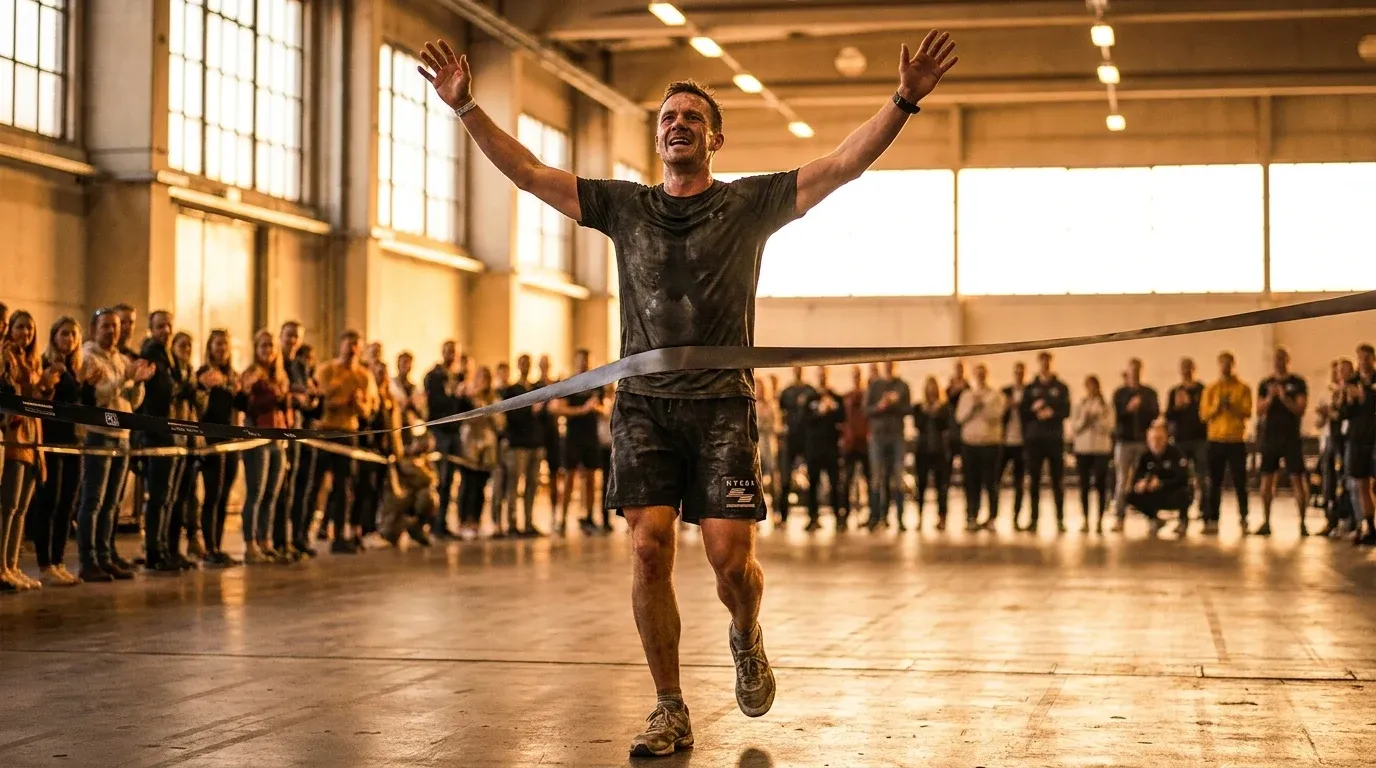
Something structural is shifting inside HYROX. The sport that turned functional fitness racing into a global phenomenon isn't just growing anymore. It's reorganizing itself around a new reality: elite athletes who compete at the top of the HYROX field are starting to get paid for it, and the organization itself is angling for a place at the biggest sporting event on the planet.
These two developments, Olympic pursuit and professional status for top performers, aren't separate stories. They're the same story told from different angles. HYROX is making a deliberate push to be taken seriously as a competitive discipline, not just a popular fitness format.
The Olympic Bid and What It Would Actually Mean
HYROX has formally begun positioning itself for Olympic inclusion. That's a significant declaration. Olympic recognition isn't granted quickly or easily. The International Olympic Committee evaluates sports on criteria including global reach, anti-doping compliance, governance standards, and the ability to attract a broad, non-specialist audience. HYROX, by most of those measures, is already further along than many sports that have spent decades lobbying.
The format helps. A HYROX race consists of eight one-kilometer runs alternated with eight functional fitness stations, all completed indoors in a ticketed arena environment. It's compact, televised naturally, and legible to anyone watching for the first time. You don't need to understand periodization or CrossFit methodology to follow a HYROX race. You watch someone run, then do something physical, then run again. The scoreboard is simple. The drama is real.
That accessibility matters enormously in an Olympic context. The IOC has spent years trying to attract younger, urban audiences to the Games, which is part of why skateboarding and sport climbing landed in Paris 2024. HYROX fits that same demographic profile almost exactly. Its athlete base skews toward 25 to 45-year-olds with high fitness engagement and strong social media presence. If the IOC is looking for a sport that brings its own built-in audience, HYROX is a credible candidate.
The timeline for any realistic Olympic inclusion would likely target the 2032 Brisbane Games or beyond. These processes move slowly. But the fact that HYROX is pursuing this path publicly signals that the organization believes its infrastructure is ready for that kind of scrutiny.
Professional Athletes: A New Tier Above the Field
Parallel to the Olympic push, something more immediate is happening on the competitive side. The top performers in the 2026/27 season are making the transition to full professional status. That means contracts, prize money structured around season performance, and in some cases dedicated sponsorship arrangements.
This is a meaningful line to cross. Until recently, even the fastest HYROX athletes in the world were competing as serious amateurs, fitting training around jobs and funding their race schedules out of pocket. The emergence of a professional tier changes the incentive structure entirely. Athletes who once had to balance elite preparation with professional obligations can now justify treating HYROX as their primary occupation.
What does that look like in practice? Coaches working with professional-tier endurance and fitness athletes in the US typically charge between $400 and $800 per month for full programming support. Add travel to international races, equipment, nutrition protocols, and physiotherapy, and a serious HYROX athlete's annual training budget easily reaches $15,000 to $25,000 or more. Prize money and sponsorship at the professional level need to at least offset those costs to make the model sustainable. The 2026/27 structure appears to be moving in that direction.
The physiological demands of competing at that level are substantial. What HYROX training actually does to your heart and muscles includes significant cardiac adaptations and sustained muscular stress across multiple energy systems simultaneously. Professional athletes will need to manage recovery at a level that amateurs simply can't prioritize when work and family life compete for the same hours. That's another reason the professional tier changes things. Recovery becomes a full-time job, and environmental factors like heat matter more than most athletes realize. Research shows that extreme heat can wreck recovery for up to 72 hours, a consideration that becomes critical when athletes are racing across time zones and climates on an international circuit.
Scale Is What Makes This Possible
None of this would be viable without the numbers to back it up. The 2026/27 season is operating at a scale that would have seemed implausible just a few years ago. HYROX's 2026/27 season spans 107 races and 2 million athletes, a reach that puts it in the same conversation as major running series and endurance circuits that have existed for decades.
That scale creates the financial foundation for everything else. Entry fees from 2 million athletes across 107 events generate substantial revenue. Sponsorship value scales with audience size. Broadcast and streaming rights become meaningful when the athlete base is large enough to drive consistent viewership. The economics of professional sport require volume, and HYROX now has it.
Compare that to the trajectory of trail and ultra running, where serious organizational structures took much longer to develop. Platforms like the partnership described in RacePace and ITRA's collaboration for trail and ultra racing show how endurance sports are gradually building more sophisticated competitive infrastructure. HYROX is moving faster, partly because it controls a standardized format that makes scaling easier than trail running's inherently variable terrain and conditions.
What This Means for the Amateur and Age-Group Field
If you race HYROX at the open, doubles, or age-group level, the professionalization of the elite tier doesn't directly change your experience on race day. The structure is designed to keep mass participation central. HYROX built its brand on the idea that regular fitness-minded people and world-class athletes share the same event, the same stations, the same format.
But there are indirect effects worth understanding.
- Competition quality at the top will rise sharply. Professional athletes with full training loads will push performance standards higher, making elite results more visible and more inspiring for the broader field.
- Coaching and programming resources will improve. As the sport professionalizes, the knowledge base around HYROX-specific training will deepen. That filters down to recreational athletes through coaches, content, and community.
- Event production will keep improving. Revenue from a growing athlete base, combined with sponsor interest driven by elite competition, tends to get reinvested into event quality. Better timing systems, stronger athlete support, more consistent programming.
- Olympic status would expand the athlete pool dramatically. If HYROX reaches the Games, national governing bodies in dozens of countries would begin developing athletes from youth levels upward. That changes the long-term landscape of participation entirely.
For anyone already competing, now is a genuinely interesting time to be inside the sport. The competitive structure you're training within is being rebuilt in real time.
The Challenges Ahead
The Olympic path comes with real obstacles. HYROX would need to establish a recognized international federation with standardized anti-doping programs aligned with WADA regulations. It would need to demonstrate governance structures that satisfy IOC requirements. And it would need to navigate the political complexities of an Olympic committee that already faces pressure over the size and cost of the Games.
The professional circuit also has to prove it can retain athletes. Prize money needs to be competitive enough that top performers don't defect to better-paid alternatives in CrossFit, functional fitness, or mainstream running events. The cost of building a professional life around HYROX is high, and the margin for underpaying athletes in the early years is narrow. Other emerging sports have lost momentum at exactly this stage by failing to pay elite competitors enough to justify full commitment.
None of these are insurmountable. But they're real, and HYROX's leadership knows it. The 2026/27 season is as much a test of organizational capacity as it is a celebration of growth.
A Sport Redefining Its Own Ceiling
HYROX started as a format. It's becoming an institution. The move toward professional athlete status and Olympic recognition isn't a marketing announcement. It's a structural commitment to building something that lasts beyond the current fitness trend cycle.
For athletes already in the ecosystem, that's worth paying attention to. The sport you're training for today looks meaningfully different from what it will look like in five years. If the Olympic bid succeeds, and if the professional tier establishes itself sustainably, HYROX won't just be one of the fastest-growing fitness events in the world. It will be a recognized competitive discipline with professional careers, national programs, and a place in the global sporting calendar that nobody can ignore.
That's not where it is yet. But it's clearly where it's headed.