
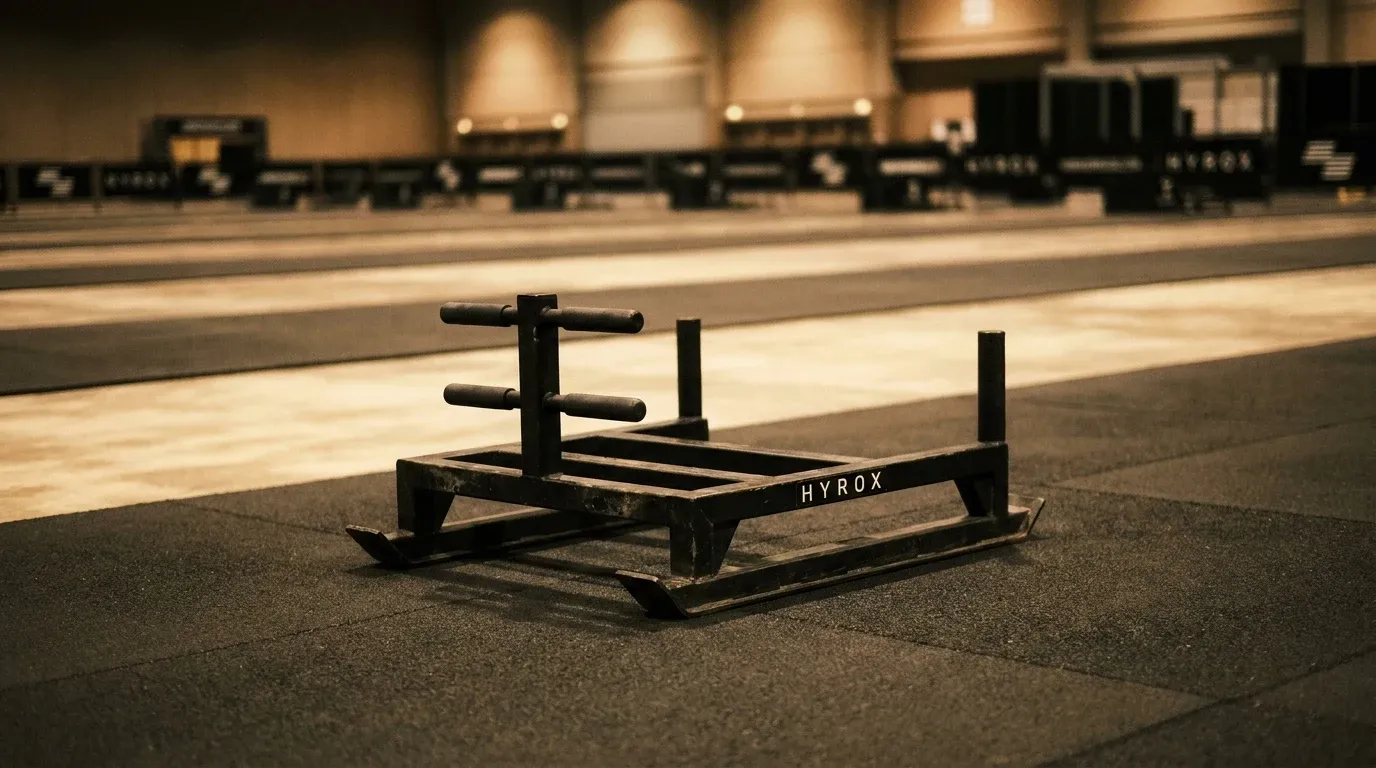
HYROX has spent the last several years building one of the most scalable competitive fitness formats in the world. Now it's making moves that suggest it wants something bigger. The partnership with World Triathlon, public statements about broadcast television, and quiet conversations around Olympic inclusion have shifted from background noise to genuine structural developments. If you compete in HYROX, or you're thinking about it, here's what these changes actually mean for you.
The World Triathlon Partnership Is More Than a Marketing Move
When HYROX formalized its relationship with World Triathlon, the fitness community largely read it as a credibility play. It's more than that. World Triathlon is a recognized federation under the International Olympic Committee, and aligning with it is one of the clearest pathways for a new sport to begin meeting IOC recognition criteria.
IOC recognition doesn't happen overnight. It requires demonstrated global reach, anti-doping compliance through WADA, standardized governance, and typically a multi-year track record under a recognized multi-sport body. The World Triathlon partnership positions HYROX to begin checking those boxes in a formal, documented way. That's the actual significance of the announcement.
What it doesn't mean, at least not yet, is Olympic inclusion. That's a longer road involving IOC votes, program reviews, and the kind of political maneuvering that takes years to play out. But the foundation is now in place in a way it wasn't before.
Broadcast TV Would Force Format Changes. Here's How.
Live broadcast television has specific demands that fitness competitions haven't always had to meet. Production windows, ad breaks, viewer attention curves, and the need for predictable pacing all shape how a sport looks on screen. If HYROX secures a meaningful broadcast deal, the format will likely need to adapt to those pressures.
The most probable adjustments involve the Elite category and Elite15 events specifically. Station sequencing, which currently follows a fixed eight-station structure, could be reordered or compressed to create more concentrated viewing moments. Race durations might be capped to fit broadcast slots. Commentary and on-screen graphics would need to explain the sport to viewers who have never heard of a SkiErg or a Farmers Carry.
None of this necessarily changes what happens in the general competitive waves. The mass-participation format that most athletes experience, running 1km and completing a functional station, repeating eight times, is the product's commercial engine. Broadcasters would almost certainly want to preserve that as a distinctive visual identity, even if the elite version gets restructured around it.
Understanding the race structure matters here. If you're preparing for your first or fifth HYROX, knowing where time actually accumulates in the format helps you train smarter. RoxZone Transitions: Where Your Race Time Really Goes breaks down exactly how transition management affects your finishing time, something that becomes even more relevant if elite formats start tightening around efficiency.
Olympic Inclusion Would Split the Athlete Pathway in Two
This is the structural change that matters most for competitive athletes to understand. If HYROX reaches Olympic inclusion, the sport will almost certainly develop two distinct competitive tracks running in parallel.
The first is an elite Olympic pathway. Athletes on this track would likely need to meet qualification standards set through World Triathlon, compete at designated ranking events, and operate within an anti-doping framework similar to what professional triathletes and runners face today. This pathway would involve limited fields, high performance benchmarks, and a career structure more comparable to traditional elite sport.
The second is the mass-participation circuit that currently defines the brand. This is where the vast majority of HYROX athletes compete. Tens of thousands of people race globally each season across dozens of cities. That community-driven model is what made HYROX viable in the first place, and it's not going away. How London Became the World's HYROX Capital illustrates how deeply embedded the event circuit has become in specific cities, and that kind of local infrastructure doesn't dissolve when elite programming expands.
The bifurcation is worth taking seriously because it affects how you think about your own trajectory. If you're a competitive amateur who currently races in the Pro or Elite divisions within the general circuit, that pathway continues. But if you have genuine elite aspirations and want to compete on the Olympic track one day, the qualification and training demands will look fundamentally different from what they are now.
Prize Money and Sponsorship at Elite15 Events Are Set to Scale
Elite15 events, HYROX's flagship high-performance competitions, currently offer meaningful but not transformative prize structures. As of recent seasons, top finishers have earned prize pools that reflect a sport in its early commercial phase. That's about to change if broadcast deals close.
When a sport lands consistent television coverage, sponsor activation costs increase and so does prize money. The logic is straightforward: brands pay more for association when audiences scale. If a HYROX Elite15 final reaches hundreds of thousands of live broadcast viewers, the commercial math for title sponsorship changes significantly. Prize pools that currently sit in the low five figures could move toward six figures at flagship events within a few seasons.
This matters for elite athletes who currently have to piece together training budgets from multiple sources. It also matters for the broader ecosystem. Larger prize money attracts stronger fields, which improves competitive standards, which makes the broadcast product more compelling. That's the cycle every emerging professional sport is trying to trigger.
For athletes focused on performance rather than prize money, the training implications remain constant regardless of commercial scale. Running accounts for half of your total race time, and that doesn't change whether the event is broadcast on a streaming platform or watched by a few hundred people at a local venue. HYROX Running Makes Up Half Your Race. Train It That Way. remains one of the most consequential pieces of training advice for anyone at any level of the sport.
For Amateur Athletes, the Race Experience Stays the Same. The Entry Experience Might Not.
If you're an amateur athlete who races HYROX two or three times a year, the core event experience is unlikely to change meaningfully. The eight stations, the 1km runs, the sled, the wall balls, the burpee broad jumps. That format is the product, and it's been iterated carefully enough that wholesale changes would risk undermining the brand's core appeal.
What will change is everything around the event. Field sizes are likely to grow as mainstream visibility increases demand for entry spots. HYROX already manages waitlists at major city events. If broadcast exposure brings in a new wave of participants, competition for entries will intensify. That may push organizers toward lottery systems or tiered registration windows similar to what large marathons use.
Entry costs are also likely to increase. Current HYROX entry fees range from roughly $130 to $200 depending on location and timing. As operational costs rise with event scale and venue requirements, and as the brand commands higher premiums based on perceived prestige, that range will probably shift upward. A $200 to $250 baseline for major city events within the next few years is a reasonable projection.
The athlete community itself will also change character. Right now, HYROX draws a self-selected population of fitness-committed individuals who sought the sport out before it had mainstream recognition. As it grows through broadcast exposure, the participant mix will broaden. That's not a negative development, but it does shift the social environment at events, particularly in the competitive waves where field depth and average finishing times will become harder to predict.
What You Should Actually Be Watching For
The developments worth tracking aren't the press releases. They're the operational signals that indicate real change is underway. Watch for these specifically:
- Qualification criteria updates for Pro and Elite divisions. If HYROX introduces mandatory ranking event participation or time standards for elite wave entry, that's a structural shift in how competitive pathways work.
- Anti-doping program expansion. A move toward WADA-compliant testing at more events would signal serious progress toward IOC recognition, not just aspirational language.
- Broadcast partnership announcements. A deal with a major sports broadcaster, even a streaming platform with live sports rights, would immediately change the commercial context of elite events.
- Elite15 prize pool disclosures. If prize money starts appearing in pre-event marketing rather than post-event announcements, that's a sign the numbers are large enough to function as a recruitment tool.
- Entry fee changes at flagship events. Price increases signal rising demand. If London, New York, or Sydney events move above $200 for standard entry, the commercialization cycle has begun in earnest.
HYROX has built something genuinely rare: a fitness competition format that works at both the elite and amateur level simultaneously. The Olympic push and broadcast ambitions are attempts to formalize and scale what already exists. For most athletes, the race you're training for today will feel very similar to the race you'll run in three years. The business around it, and the competitive pathways above it, are where the real changes are coming.
Focus on the training. The structure will sort itself out.