
If you've raced HYROX more than once, you've probably noticed something feels off between venues. The sled push at one event grinds like concrete. At another, it glides. You chalk it up to nerves or fatigue, adjust mid-race, and move on. But the variance is real, and it's been quietly distorting results across the global circuit for years.
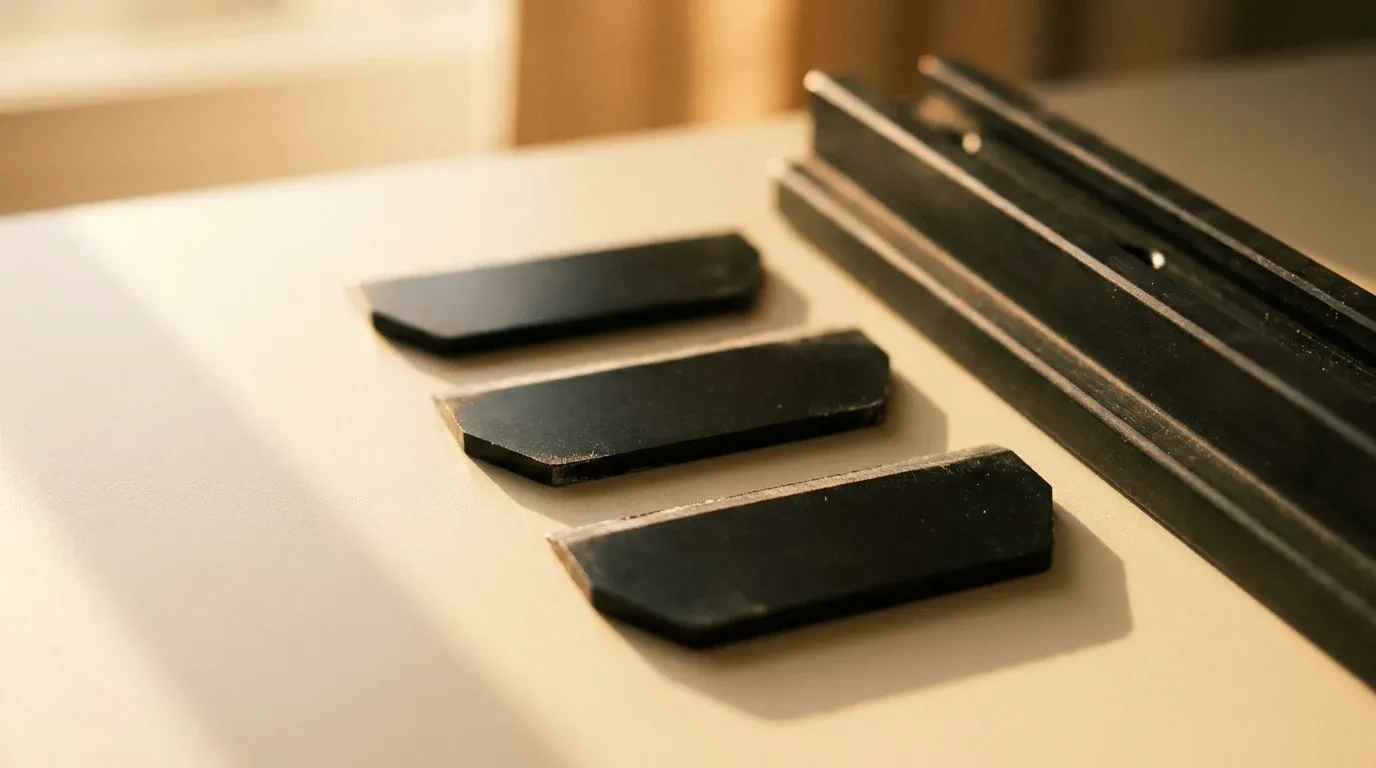
On November 2, 2026, Centr, HYROX's official equipment partner, launched Sled Blades: a replaceable blade system designed specifically for the Power Sled. The premise is straightforward. Worn sled surfaces create unpredictable friction. Swap the blades on a regular maintenance cycle, and every athlete at every venue pushes against the same resistance. Simple in theory. Long overdue in practice.
Why Sled Friction Has Been a Hidden Variable
HYROX now runs dozens of events per year across multiple continents, with a participant base that has grown to 2.2 million athletes globally. That scale is impressive. It also means the same Power Sled is getting dragged across convention center floors in Chicago, Dubai, Sydney, and London, event after event, with varying maintenance standards between venues.
Friction on a weighted sled is not a fixed value. It depends on the condition of the sled's contact surface, the type of flooring, the weight loaded, and how long the equipment has been in service. As the sled's underside wears down, the drag profile changes. A well-maintained sled at a major flagship event will behave differently than an older unit at a regional qualifier. The athlete has no way of knowing which they're getting until they're already pushing.
This isn't a minor inconvenience. The sled push in HYROX covers 50 meters and is repeated twice across the race. It's one of the most physically demanding stations and one where pacing decisions directly affect your performance on the run segments that follow. Inconsistent resistance means inconsistent energy expenditure. At an event level, that's frustrating. At an elite level, it's a structural fairness problem.
What Sled Blades Actually Do
Centr's Sled Blades system replaces the contact surface of the Power Sled with modular, replaceable blade components. Venues can swap worn blades before events, bringing the sled back to a standardized friction baseline. The system is designed for straightforward installation, which matters when you're managing equipment logistics across dozens of international stops on a tight schedule.
The key word here is standardized baseline. Sled Blades don't eliminate all variation. Floor surfaces still differ between venues, and loaded weight still affects drag. But they remove the single largest source of uncontrolled variance: the degradation of the sled's own surface over time. That's the variable that athletes couldn't account for and couldn't measure. Now it's taken off the table.
For Centr, this is also a product designed to extend equipment lifespan. Replacing a blade is significantly cheaper than replacing an entire sled unit. For event organizers managing global inventories, that's a real operational benefit layered on top of the competitive integrity argument.
What This Means for Elite Results and Rankings
The stakes here are highest for athletes competing in HYROX's Elite 15 format, the invitation-only division where qualification is determined by overall rankings. When placement and seeding depend on race times, the integrity of those times matters enormously. A two-minute personal best at one venue means nothing if the sled at that event happened to be brand new while the equipment at your rival's qualifier was two seasons old.
Standardized resistance makes race times genuinely comparable across cities for the first time. An athlete who runs a strong result in Toronto can be measured against one who raced in Berlin without the nagging question of whether the equipment was equivalent. That comparability is the foundation of a credible ranking system, and it's been missing from the circuit at scale.
The broader participant field benefits too. HYROX has built much of its appeal around personal records and time-based progress. If you set a sled push split at a training facility and then race on compromised equipment, your race-day numbers won't reflect your actual fitness. That gap erodes the feedback loop that makes structured training meaningful.
For athletes building a serious structured strength and conditioning block around their HYROX calendar, reliable equipment data is a genuine training asset. You can finally trust that the resistance you're programming against in the gym will show up on race day.
How This Changes Your Sled Push Pacing Strategy
Here's the practical shift for competitive athletes. Before Sled Blades, smart HYROX racers carried two mental models for the sled push: the training split and the race-day adjustment. You'd go in with a target, feel the sled in the first few meters, and recalibrate. That reactive approach burns mental bandwidth and often leads to either overcooking the station early or leaving time on the floor.
With a standardized friction baseline, your gym-tested splits become usable race targets. If you've dialed in a specific effort level for the sled push during training on a well-maintained Power Sled, that effort level should now translate to a predictable time at any HYROX venue. Your race plan gets sharper. Your pacing decisions become proactive rather than reactive.
This matters especially for athletes who race frequently across multiple cities. Elite Doubles competitors at HYROX Hamburg demonstrated how much team-level coordination depends on predictable splits at every station. When one athlete's sled push goes longer than expected because of equipment variance, it disrupts the entire race plan for both partners.
The adjustment in approach is simple but meaningful:
- Lock in your training split on a well-maintained sled. Use that as your actual race target, not just a rough reference.
- Stop reserving mental energy for equipment uncertainty. Put that cognitive load toward run pacing and station transitions instead.
- Track your sled push data more rigorously. Now that resistance is controlled, your times have more signal and less noise.
- Build sled-specific capacity with more confidence. Progressive overload on the push makes sense when you know the race-day conditions will be consistent.
The Bigger Picture for HYROX's Global Credibility
HYROX has grown faster than almost any other competitive fitness format in recent years. That growth has been built on a specific promise: a standardized race format that lets athletes compare themselves to others anywhere in the world. Eight workouts, eight runs, same stations, same distances. The sled friction variable has always been the asterisk on that promise.
Removing it doesn't just improve fairness. It strengthens the entire competitive architecture. Rankings become more credible. Qualifications become more defensible. And the athlete community's trust in the format deepens, which is what sustains long-term participation at 2.2 million strong.
There's a parallel here with how other endurance sports have had to grapple with equipment standardization as they scaled. Course certification in road running, wheel specification in triathlon, timing system accuracy in track events. Every sport that takes competitive integrity seriously eventually has to close the gaps between what the format promises and what athletes actually experience. HYROX is closing one of its own.
Nutrition and recovery still matter enormously for your race-day performance, of course. Optimizing your fueling strategy and understanding what your supplements are actually doing, covered in detail in this breakdown of magnesium, biotics, and shatavari, is still part of the equation. Equipment standardization doesn't replace preparation. It makes preparation more accurate.
And if you're training across multiple disciplines alongside your HYROX work, the principle applies broadly. Athletes who've followed elite marathon competitors' approach to race-day strategy know that controllable variables deserve to be controlled. Equipment is one of them.
What to Watch Going Forward
The November 2 launch positions Sled Blades ahead of the major winter and spring HYROX events, where Elite 15 qualification pressure is highest. Watch for any official communication from HYROX about maintenance protocols tied to the new system. If blade replacement schedules are standardized across all licensed venues, that's when the competitive integrity argument is fully realized.
For athletes, the immediate action is straightforward. If your training facility uses the Centr Power Sled, confirm whether it's been updated with the Sled Blades system. Train on calibrated equipment. Track your splits. And for the first time in HYROX's history, trust that those splits will mean the same thing when you cross the start line anywhere in the world.
The sled push has always been one of HYROX's defining tests. Now it's finally a fair one.