
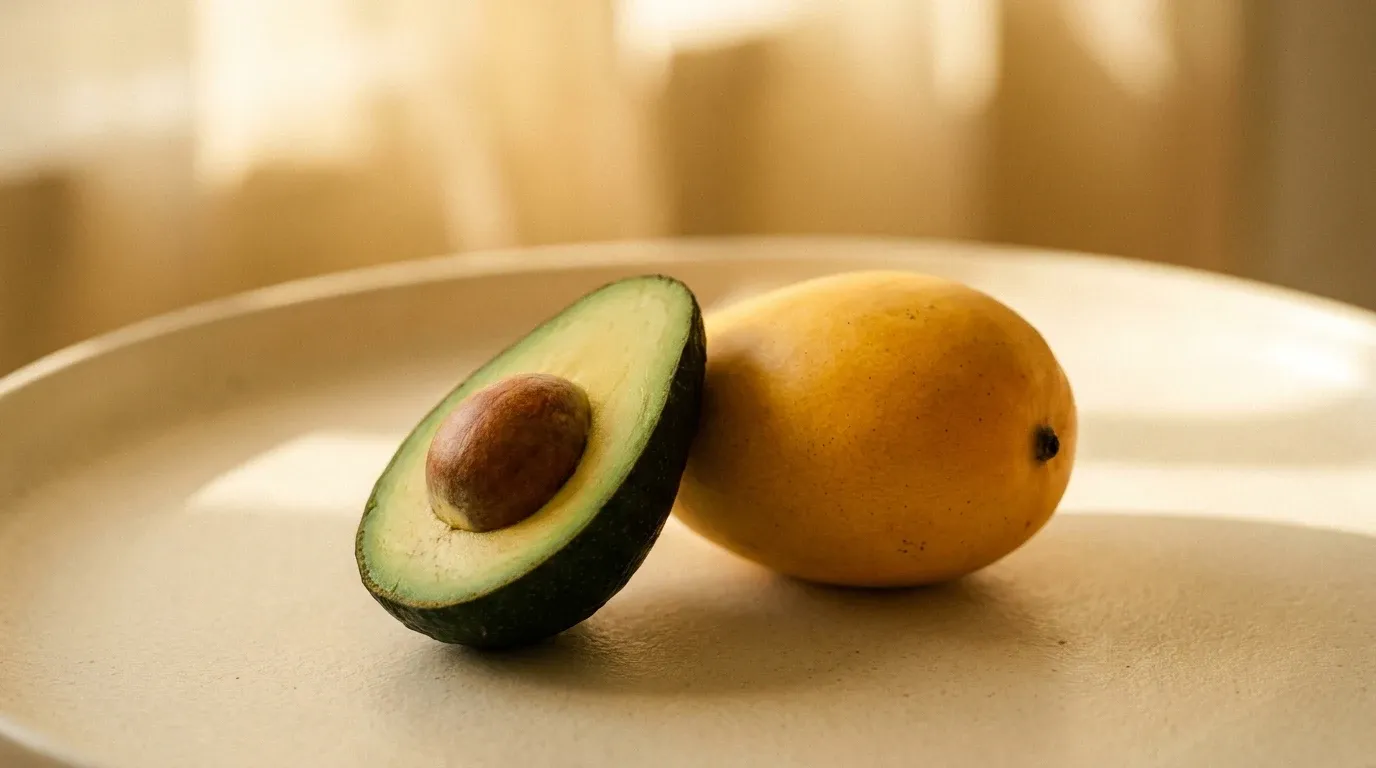
Most conversations about heart-healthy eating circle back to olive oil, salmon, and leafy greens. But a growing body of research is expanding that list in a direction that's both more accessible and, for many people, more appealing. Daily consumption of avocado and mango. a combination that's cheap, widely available, and genuinely enjoyable. is now linked to measurable improvements in cardiovascular markers.
That's not a minor footnote. It's a direct challenge to the assumption that heart health belongs exclusively to the Mediterranean diet playbook.
What the Research Actually Found
A newly published study examined the cardiovascular effects of eating one serving of avocado and one serving of mango every day over a sustained period. Participants showed significant improvements in several key markers, including LDL cholesterol levels, blood pressure readings, and markers of systemic inflammation. These weren't marginal shifts. They were the kind of numbers that would prompt a physician to notice.
What makes the findings particularly useful is their specificity. Rather than broad claims about "fruit consumption" improving health outcomes, this research isolates two particular whole foods and tracks their effects with precision. That's valuable data for anyone trying to build a diet that actually moves the needle on heart health, rather than one that just sounds healthy.
The study also controlled for other lifestyle factors, which strengthens the case that the cardiovascular benefits were driven by the foods themselves, not by incidental behavioral differences between participants.
Why Avocado Works for Your Heart
Avocado's cardiovascular reputation isn't new, but it's often misunderstood. The fruit is high in fat. around 15 grams per 100-gram serving. but the dominant fat type is oleic acid, a monounsaturated fatty acid that consistently shows up in research as beneficial for lipid profiles.
Specifically, monounsaturated fats are associated with reductions in LDL ("bad") cholesterol without lowering HDL ("good") cholesterol. That's a meaningful distinction. Many dietary interventions that reduce LDL also reduce HDL, which limits their net benefit. Avocado appears to avoid that tradeoff.
Beyond fat composition, avocado is a significant source of potassium, delivering more per gram than bananas. Potassium is directly tied to blood pressure regulation. It counteracts the effect of sodium on arterial walls, helping vessels remain relaxed and reducing the mechanical stress that contributes to hypertension over time. For anyone managing or trying to prevent high blood pressure, this matters.
Avocado also contains beta-sitosterol, a plant sterol that competes with dietary cholesterol for absorption in the gut. The practical effect is a modest but consistent reduction in circulating LDL. When you eat avocado daily, these effects compound.
What Mango Brings to the Picture
Mango is often treated as a dessert fruit or a smoothie ingredient. Its cardiovascular potential tends to get overlooked. That's a mistake.
A single cup of mango provides roughly 3 grams of dietary fiber, about 10 percent of a typical daily target. Fiber, particularly soluble fiber, binds to bile acids in the digestive tract and forces the liver to draw cholesterol from the bloodstream to produce more. The net result is lower circulating LDL. It's a slow, consistent mechanism that works best when fiber intake is reliable and daily.
Mango is also one of the more concentrated whole-food sources of vitamin C available year-round. One cup delivers around 60 milligrams, roughly two-thirds of the standard daily recommendation. Vitamin C plays a structural role in vascular health. it's essential for collagen synthesis in arterial walls, and it functions as an antioxidant that reduces oxidative damage to endothelial cells. Those cells line the interior of blood vessels, and their integrity is central to cardiovascular function. Research has linked higher vitamin C status to lower rates of arterial stiffness and reduced cardiovascular event risk.
The antioxidant profile of mango extends beyond vitamin C. The fruit contains mangiferin, a polyphenol with demonstrated anti-inflammatory properties, as well as beta-carotene and quercetin. Chronic low-grade inflammation is a primary driver of atherosclerosis. the buildup of plaque inside arteries. Foods that reduce inflammatory load are genuinely heart-protective, not just incidentally healthy.
Beyond the Mediterranean Default
The Mediterranean diet remains the most evidence-supported dietary pattern for cardiovascular health. That status is deserved. But it creates a blind spot: foods outside that framework tend to get treated as second-tier options, regardless of their actual nutrient profiles.
Avocado and mango are both native to tropical and subtropical regions. They're central to culinary traditions across Latin America, South Asia, Southeast Asia, and sub-Saharan Africa. For people in those communities, they're not "superfoods." They're just food. The fact that research is now documenting their cardiovascular effects should expand the conversation about what heart-healthy eating looks like globally, not narrow it to a single regional model.
This also matters for dietary adherence. The best diet is one you'll actually follow. If avocado and mango are foods you already enjoy and eat regularly, the data now gives you reason to feel good about that habit rather than wonder whether you should be eating more salmon instead.
How Oxidative Stress Fits In
One mechanism connecting both foods to heart health is their shared capacity to reduce oxidative stress. Oxidative stress occurs when reactive oxygen species accumulate faster than the body can neutralize them. In the cardiovascular system, this damages endothelial cells, oxidizes LDL cholesterol (making it more likely to form arterial plaques), and promotes inflammation.
Both avocado and mango supply antioxidants that work at different stages of this process. Vitamin E from avocado protects lipid membranes from oxidation. Vitamin C from mango regenerates vitamin E after it's been used, essentially recycling it. Together, they form a complementary antioxidant system. That synergy may partly explain why the combination appears more effective in research than either food studied in isolation.
It's also worth noting that oxidative stress doesn't operate in a vacuum. Poor sleep, chronic stress, and sedentary behavior all increase oxidative load. If you're eating well but neglecting other health levers, the benefits of a strong diet are partially offset. Research on how stress quietly spikes your blood sugar offers useful context for understanding how metabolic and cardiovascular risks interact.
Practical Integration: Making It Actually Happen
The practical case for these two foods is as strong as the nutritional one. Avocados are available year-round in most English-speaking markets. A single avocado typically costs between $1 and $2 at most grocery stores, less when bought in bulk or at markets with strong produce sections. Mango is similarly affordable. fresh mangoes average around $1 to $2 each, and frozen mango is often cheaper and nutritionally equivalent.
One serving of avocado is roughly half a medium fruit. That gets you approximately 160 calories, 7 grams of fiber, and 15 grams of monounsaturated fat. One cup of fresh or frozen mango runs about 100 calories and delivers fiber, vitamin C, and a solid antioxidant load. Together, that's a meaningful daily cardiovascular investment for under $3.
Some simple ways to build both into your daily routine:
- Breakfast: Mango chunks in Greek yogurt or oatmeal, with half an avocado on whole grain toast.
- Lunch: Avocado sliced into a salad or grain bowl, mango added to a salsa or dressing.
- Snack: Frozen mango blended into a smoothie, with avocado added for creaminess and fat.
- Dinner: Avocado as a topping for tacos, grilled fish, or rice dishes. Mango in a tropical salsa alongside lean protein.
One often-overlooked point: how much of the fruit you use matters. Avocado skins and mango peels contain concentrated nutrients that most people discard. If you're interested in extracting more nutritional value from your produce, the parts of produce you throw away are often the most nutritious. worth knowing before you peel anything.
What This Means for Your Overall Heart Strategy
No single food prevents cardiovascular disease. That's not how nutrition works, and it's not what this research claims. What the evidence does support is that daily consumption of avocado and mango produces real, measurable improvements in the specific markers that predict cardiovascular risk over time: LDL cholesterol, blood pressure, inflammation, and oxidative stress.
These two foods work through distinct but complementary mechanisms. monounsaturated fat and potassium from avocado, fiber and antioxidants from mango. and they're affordable enough to eat every day without restructuring your budget.
Heart health also extends beyond diet. Research tracking what 110,000 Americans teach us about aging and exercise consistently shows that physical activity and nutrition work together as a system, not in isolation. And cardiac risk factors like those addressed by emerging data on energy drink-related cardiac events remind us that what you consume daily shapes your cardiovascular baseline in ways that accumulate quietly over years.
Avocado and mango are not a replacement for a broadly healthy lifestyle. But they're a genuinely effective addition to one. and that's a more concrete, useful conclusion than most nutrition headlines offer.