
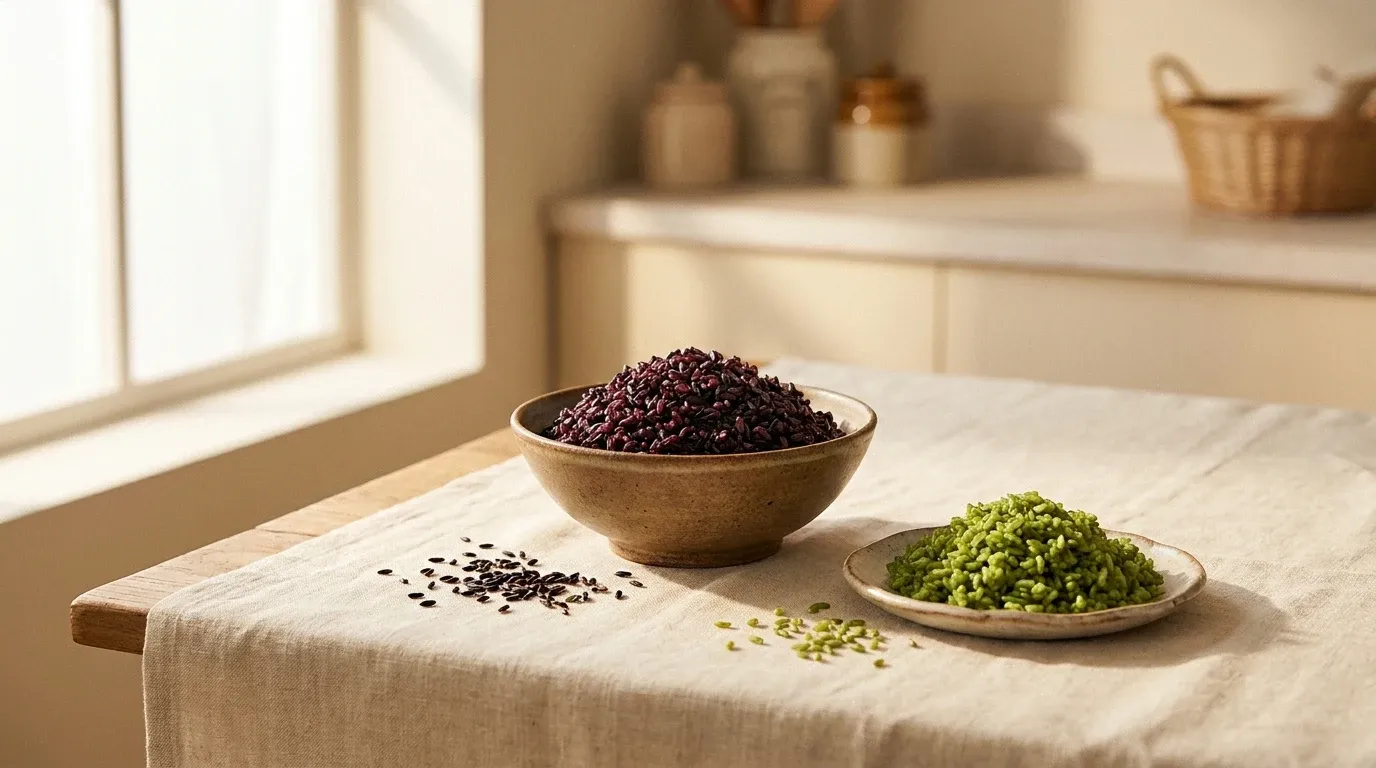
Most athletes and health-focused eaters treat rice as a single ingredient. White for quick digestion, brown for fiber. That's roughly where the conversation ends. But there are two other varieties sitting at the edge of mainstream nutrition that carry measurably different biochemical profiles: black rice and green rice. New research suggests you've been leaving real performance and health benefits on the table by ignoring them.
This isn't about chasing superfoods. It's about understanding what your staple carb source is actually doing inside your body, and whether a simple swap could work harder for you.
What Makes Black and Green Rice Different
The color tells you something real. Black rice gets its deep purple-black hue from anthocyanins, the same class of polyphenols found in blueberries, blackberries, and red cabbage. These pigments aren't cosmetic. They're biologically active compounds with documented antioxidant and anti-inflammatory properties.
Research published in food science journals consistently shows that black rice contains significantly higher anthocyanin concentrations than white or brown rice, which contain virtually none. One comparative study found that the bran layer of black rice had anthocyanin levels comparable to blueberries, gram for gram. For anyone training regularly and generating oxidative stress as a byproduct of exercise, that matters.
Green rice works through a different mechanism. Depending on how it's produced, green rice retains chlorophyll-related compounds that are largely destroyed during conventional milling and polishing processes. Some varieties are harvested earlier in the growth cycle to preserve these compounds, while others are processed with green tea or plant extracts. Either way, the result is a rice that carries chlorophyll derivatives linked to antioxidant activity, as well as a higher retention of B vitamins and minerals compared to white rice.
Both varieties also retain their outer bran layers, which means higher fiber content than white rice and a nutrient density profile closer to brown rice, but with a distinct phytochemical advantage brown rice doesn't offer.
The Glycemic Response Argument
Body composition management often comes down to how precisely you're controlling blood sugar. White rice is a high-glycemic food. It digests quickly, spikes blood glucose, triggers a sharp insulin response, and if you're eating it in volume at the wrong time, it can push you toward fat storage rather than fuel use.
Black rice consistently tests lower on the glycemic index than white rice. Studies measuring postprandial blood glucose responses show that black rice produces a significantly more moderate glucose curve. The reasons are structural: black rice's intact bran and higher fiber content slow digestion, and its anthocyanin content appears to inhibit certain enzymes involved in carbohydrate breakdown, further moderating glucose absorption.
This matters most if you're managing body composition over the long term, not just athletic performance on a single training day. If you've read about 5 Weight Loss Mistakes Your Trainer Sees Every Day, you'll recognize that chronic blood sugar mismanagement is one of the quieter forces working against fat loss, even in people who train hard and eat relatively well.
The practical implication is straightforward. Swapping white rice for black rice in your regular meal rotation doesn't require you to eat less or change your macros dramatically. The same volume of food produces a gentler metabolic response, which supports better insulin sensitivity over time. That's a meaningful edge for anyone serious about body composition.
Anti-Inflammatory Effects and Recovery
Exercise-induced inflammation is a normal physiological process. Short-term inflammation drives adaptation. Chronic, unresolved inflammation is a different problem. It impairs recovery, disrupts sleep quality, elevates cortisol, and over time contributes to a range of metabolic and cardiovascular issues.
Anthocyanins in black rice have been studied for their ability to reduce markers of systemic inflammation, including C-reactive protein and certain pro-inflammatory cytokines. While no single food is going to resolve chronic inflammation on its own, the cumulative effect of consistently choosing anti-inflammatory foods over neutral or pro-inflammatory ones adds up across weeks and months of training.
If you're currently in a structured hypertrophy phase. Fall Is the Best Time to Bulk. Here's How to Do It Right outlines why seasonal training blocks matter. Managing dietary inflammation during a bulk is part of optimizing recovery and muscular adaptation, not just hitting calorie targets. Black rice as your primary carb source during that phase is a smarter default than white rice.
How to Cook Black and Green Rice Without the Hassle
The main objection people raise is practical. Black rice takes longer to cook than white rice. Green rice is harder to find. Neither fits as neatly into a rushed weeknight routine. These are real friction points, but they're all solvable.
Black rice cooking basics: Black rice typically requires a 2:1 water-to-rice ratio and about 35 to 45 minutes on the stovetop. The straightforward fix is batch cooking. Cook a large portion at the start of the week, portion it into containers, and refrigerate. It keeps well for up to five days and reheats without losing texture. A rice cooker or Instant Pot reduces the active time to near zero. You add the rice, set it, and walk away.
Flavor profile: Black rice has a slightly nutty, earthy taste with a chewier texture than white rice. It works well with savory proteins, roasted vegetables, and grain bowl-style meals. It holds up to sauces without turning mushy, which makes it more forgiving in meal prep than white rice.
Green rice sourcing: Green rice is less standardized as a category. You'll find it in specialty grocery stores, Asian food markets, and online retailers. Japanese hatomugi blends, Korean nokcha rice (green tea rice), and some Southeast Asian early-harvest varieties fall under this umbrella. Read labels carefully. Some products marketed as "green rice" are simply rice mixed with dried vegetables, with minimal chlorophyll content. Look for products that specify the source of the green component.
Meal prep integration: Both varieties work easily in the kind of structured weekly prep that serious athletes rely on. For a deeper look at how to align your food prep with a shifting training schedule, Fall Meal Prep: Eating Right When Your Training Shifts covers the strategic side of building a nutrition system that adapts as your training demands change.
What to Pair with Black and Green Rice
These rice varieties don't need elaborate recipes. Here's a practical framework for pairing them effectively:
- Post-workout meals: Black rice with lean protein (chicken, fish, tempeh) and a fat source like avocado or olive oil. The moderate glycemic response still replenishes glycogen without the sharp insulin spike of white rice.
- Pre-workout meals (2 to 3 hours out): Black or green rice with a moderate protein portion and minimal fat. The slower digestion means you want more lead time than you'd need with white rice.
- Grain bowls: Both varieties hold up well cold, making them ideal for assembled bowls with roasted vegetables, legumes, and dressings. Prep once, eat across multiple meals.
- Asian-inspired dishes: Green rice integrates naturally into Japanese, Korean, and Southeast Asian flavor profiles. Black rice works well in Thai-style dishes and with coconut-based sauces.
The Cost and Availability Reality
Black rice is widely available in most US grocery stores, often in the grains or international foods aisle. Expect to pay roughly $3 to $6 per pound depending on the brand and sourcing, compared to $1 to $2 per pound for white rice. That's a real price difference, but in the context of total food spending, it's unlikely to be a meaningful budget factor for most people reading this.
Green rice is more variable in availability and pricing. Specialty varieties can run $5 to $10 per pound, and you may need to order online if you're not near a store with a strong Asian foods section. Buying in larger quantities typically brings the per-serving cost down to a manageable level.
Should You Make the Switch
If white rice is your default, you're not making a catastrophic nutritional error. But you are choosing a carb source with fewer active benefits when better options are readily available at similar cost and with minimal additional effort.
Black rice, in particular, offers a combination of lower glycemic impact, meaningful antioxidant content, and practical cookability that makes it an easy upgrade for anyone taking nutrition seriously. Green rice adds a distinct phytochemical profile that most rice-eating populations in the US and UK have no regular exposure to.
The broader principle here is that small, consistent upgrades to your nutritional defaults compound over time. You don't need to overhaul your diet. You need to be deliberate about the choices that are easy enough to sustain but different enough to move the needle. Swapping your rice is exactly that kind of decision.
If you're thinking carefully about how each element of your nutrition supports your training output, What Will Actually Define the Next Era of Supplements is worth reading alongside this. The same logic of bioavailability and compound specificity that's reshaping the supplement space applies equally to whole food choices. Your staple carbs are no exception.