
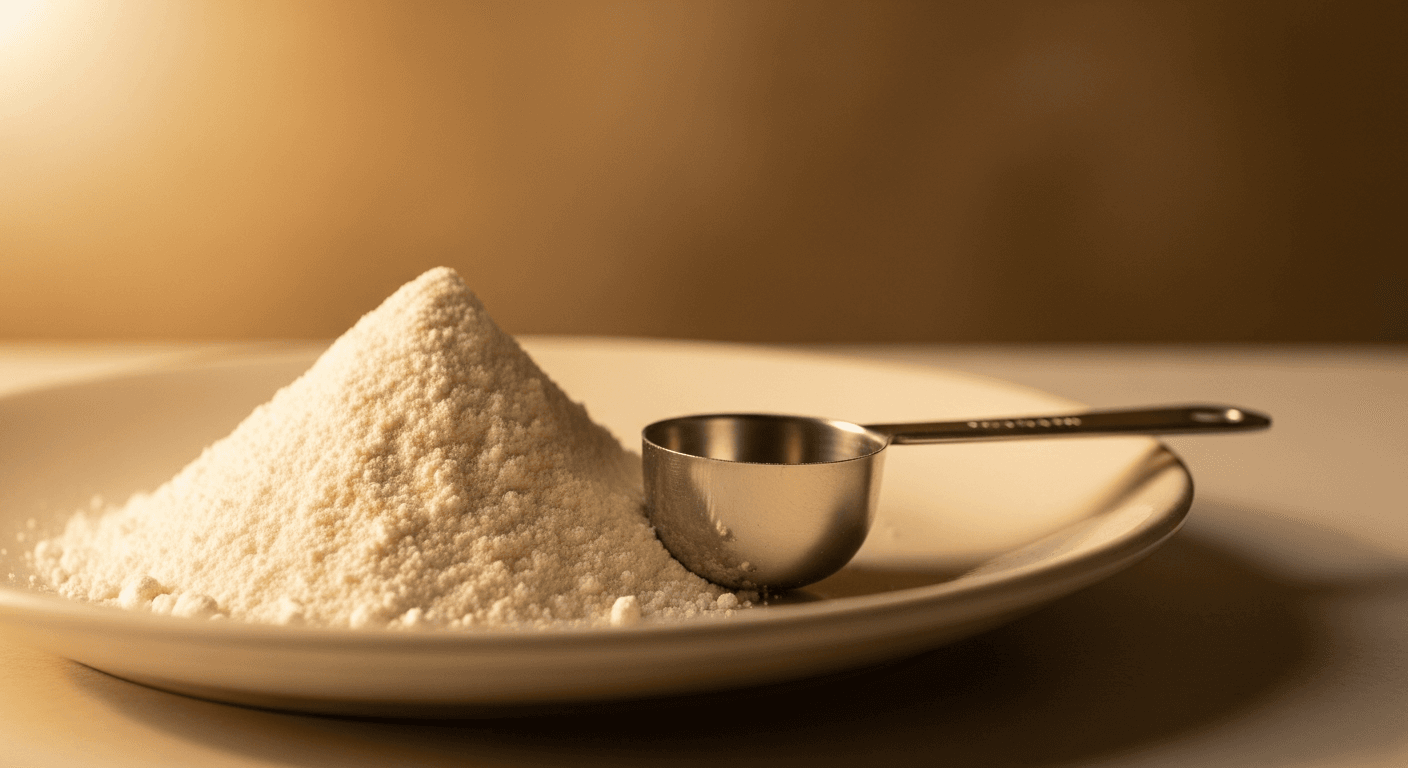
If you've read anything about sleep and muscle recovery, you've probably seen casein protein mentioned. It gets brought up as the obvious pre-sleep supplement, the slow-digesting option you take before lights out. But does the science actually back that up, or is it just good marketing from dairy companies?
Key Takeaways
- Casein digests over 6 to 8 hours, providing a steady flow of amino acids overnight
- Studies show a modest effect on overnight muscle protein synthesis, especially if daily intake is already sufficient
- Taking 30 to 40 g of casein before bed helps those who struggle to hit their daily protein target
Here's what the research says, and what it means for your nightly routine.
What Makes Casein Different From Whey
Both casein and whey come from cow's milk, but they behave very differently once you consume them. Whey is fast-digesting. It spikes amino acid levels in your blood quickly, making it well-suited for post-workout windows when your muscles need immediate fuel.
Casein is the opposite. It forms a gel-like clot in your stomach and releases amino acids gradually over several hours. Studies show that casein can sustain elevated blood amino acid levels for up to seven hours after ingestion. That slow, steady release is exactly why researchers started looking at it as a nighttime protein source.
The Pre-Sleep Protein Research
The most cited work in this area comes from studies published in Medicine and Science in Sports and Exercise. Researchers found that consuming 40 grams of casein protein 30 minutes before sleep significantly increased whole-body protein synthesis overnight compared to a placebo. Muscle protein synthesis rates were measurably higher in the casein group throughout the night.
A follow-up study went further. Participants who supplemented with casein before bed over a 12-week resistance training program showed greater gains in muscle mass and strength compared to those who didn't. The casein group added more lean body mass and saw larger increases in leg press strength by the end of the trial.
These aren't fringe results. Multiple independent studies have replicated the core finding: your body can effectively use protein consumed before sleep to support muscle repair and growth during overnight recovery.
ILLUSTRATION: stat-card | Key data and figures from the article
Why Nighttime Is Actually a Critical Window
You spend roughly a third of your life asleep. During that time, your body is doing significant repair work. Growth hormone secretion peaks during deep sleep, and your muscles are actively recovering from training stress. The problem is that most people fast for eight or more hours overnight, which limits the raw material available for protein synthesis.
Research published in the Journal of Nutrition confirmed that protein ingested before sleep is effectively digested, absorbed, and incorporated into muscle tissue during sleep. Your digestive system doesn't shut down at night. It's still processing nutrients, which means the overnight fast you're running could be limiting your recovery without you realizing it.
This is particularly relevant if you train in the evening. Your muscles are primed for protein synthesis after a workout, and that window doesn't close the moment you finish your cool-down. Feeding that process before bed makes physiological sense.
How Much Casein You Actually Need
The studies that showed clear benefits typically used 30 to 40 grams of casein protein before bed. That's a meaningful dose, not a token scoop. Lower amounts may still offer some benefit, but the strongest evidence clusters around that 30 to 40 gram range.
For context, a standard scoop of casein protein powder usually delivers around 24 to 28 grams of protein. To hit the studied doses, you'd either need a larger serving or pair it with a small food source like Greek yogurt or cottage cheese, both of which are naturally high in casein.
Your total daily protein intake still matters more than timing alone. If you're not hitting your overall targets, optimizing the pre-sleep window will have limited impact. Aim for 0.7 to 1 gram of protein per pound of bodyweight daily before you start stressing about when exactly you consume each serving.
Food Sources vs. Supplements
ILLUSTRATION: tip-box | Practical takeaways
You don't have to use a casein powder to get these benefits. Whole food sources work just as well when it comes to supporting overnight protein synthesis. Here are the most practical options:
- Cottage cheese: One cup provides roughly 25 grams of protein, mostly from casein. It's low in calories and easy to eat before bed.
- Greek yogurt: A thick, strained variety delivers 15 to 20 grams per cup and digests more slowly than regular yogurt.
- Milk: A large glass contributes around 8 grams of protein with a casein-dominant profile.
- Casein protein powder: The most concentrated and convenient option, particularly if you're targeting the higher end of the dose range.
If you prefer whole foods, cottage cheese is probably your best bet. It's high in protein, easy to prepare, and doesn't require any mixing or cleanup. Add a small amount of berries or honey if plain cottage cheese doesn't appeal to you.
Who Benefits Most
Pre-sleep casein isn't a universal requirement for everyone. But it's likely worth considering if you fall into one of these categories:
- You train in the evening and finish your last session within a few hours of sleep.
- You're in a muscle-building phase and want to maximize every anabolic opportunity across the day.
- You struggle to hit your daily protein targets and need an additional high-protein meal to close the gap.
- You're in a caloric deficit and want to protect lean muscle mass during a cut. Research suggests pre-sleep protein can help reduce muscle breakdown even in energy-restricted states.
If you're a casual exerciser who trains a few times per week and already eats plenty of protein, the marginal benefit of adding casein before bed is likely small. The fundamentals matter more.
What the Research Doesn't Confirm
Most of the strong evidence comes from resistance-trained individuals doing structured programs. The findings don't necessarily apply to sedentary people or those doing very light activity. Protein timing benefits also tend to be more pronounced in people who are already training consistently and eating enough total protein.
There's also the question of sleep quality. Some people find that eating close to bed disrupts their sleep, particularly if the meal is large or heavy. If that applies to you, a smaller 20 to 25 gram serving may be a better starting point. Sleep quality affects muscle recovery too, so don't sacrifice one for the other.
The Bottom Line
The evidence supporting pre-sleep casein is solid. It's not hype. Studies consistently show that consuming casein before bed increases overnight protein synthesis and, over time, contributes to greater gains in muscle mass and strength. If you're training hard and recovery matters to you, it's a strategy worth adding to your routine.
Start with cottage cheese or a casein shake around 30 minutes before sleep. Keep your portion in the 30 to 40 gram protein range. Track how your body responds over a few weeks, and adjust from there.
Frequently Asked Questions
Is casein essential for building muscle?
No. Casein is useful for supplementing protein intake, but if you're already meeting your targets through food, its effect will be marginal.
Which casein form is best: micellar or caseinate?
Micellar casein is the slowest-digesting form, ideal before bed. Calcium caseinate absorbs faster and behaves more like whey.
Related articles
- GLP-1 Drugs and Muscle Loss: What the 2026 Research Actually Shows
- Creatine: everything you need to know before taking it
- Sleep and Muscle Recovery: What the Science Actually Says