
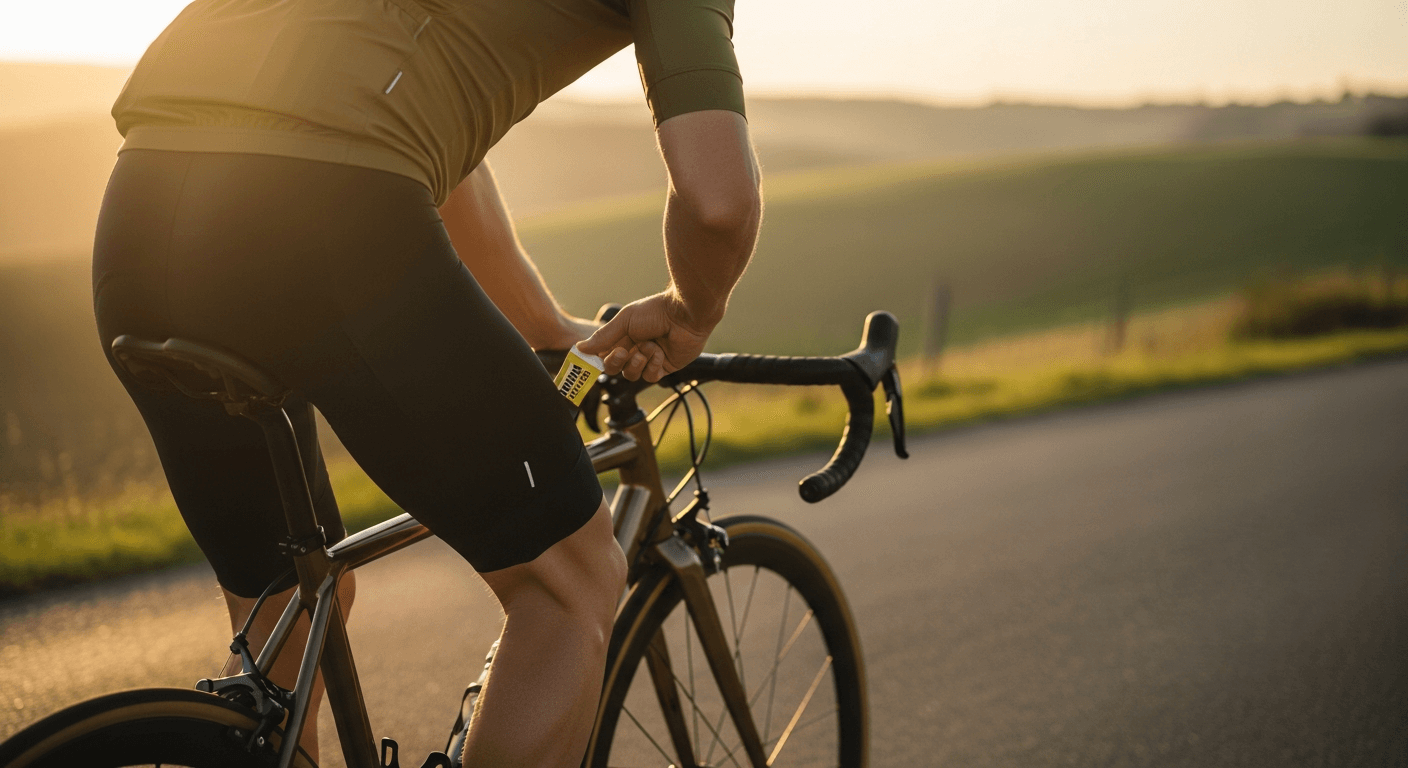
You've trained for months. You've logged the kilometers, climbed the elevation, and booked your place in a major sportive. Now race week is here, and the single biggest variable left in your control isn't your fitness. It's what you put in your body on the day. For amateur cyclists tackling 140 to 170km events, nutrition is where races are won or quietly abandoned at the side of a mountain road.
Drawing on endurance cycling event protocols, including the kind of structured guidance that surrounds events like the Etape du Tour 2026, this guide translates elite-level fueling frameworks into a practical, executable plan for the amateur rider who wants to finish strong.
Start Fueling in Hour One, Not Hour Three
One of the most persistent and damaging myths in amateur cycling is that you should wait until you feel hungry or tired before eating. By the time fatigue signals register, you're already in a deficit that takes 45 to 90 minutes to correct, and on a mountain stage, you don't have that kind of margin.
The evidence-based target for cyclists in events lasting more than three hours is 60 to 90 grams of carbohydrate per hour, starting from the first hour of riding. That's not a midpoint guideline. It's a from-the-gun protocol. At moderate race pace, your muscles are burning through glycogen faster than most riders realize, and your liver stores are already partially depleted from the overnight fast before the start.
For context, 60 grams of carbohydrate per hour means roughly two standard energy gels, or one gel plus a banana, or a rice cake plus a small bottle of carbohydrate drink. These are not dramatic quantities, but they require discipline to execute when adrenaline is high and you feel strong in the opening kilometers.
Research consistently shows that combining glucose and fructose sources allows absorption rates above 60g per hour, reaching up to 90g when the ratio is approximately 2:1. That's why many professional sportive riders use a carbohydrate drink alongside solid food rather than relying on a single source. For a deeper breakdown of how carbohydrate timing interacts with performance output, Carb Timing for Endurance Athletes: What Actually Works covers the mechanistic detail behind these protocols.
Stomach Distress Is the Race You Actually Need to Win
Ask any sports physician who works at major cycling events what the number one cause of DNFs and underperformance is among amateur riders. The answer is almost always gastrointestinal distress. Nausea, bloating, cramps, and the desperate need to stop are not signs of bad luck. They are almost entirely the result of consuming foods, drinks, or concentrations on race day that the gut has never encountered at race intensity.
Your digestive system is trainable, but it does not adapt quickly. The gut's ability to absorb carbohydrates at high rates, tolerate concentrated solutions, and function under the stress of sustained effort requires weeks of consistent practice. If you've been training on water and a couple of gels, your gut is not ready for the six-gel, two-bar, high-concentration drink protocol you read about on Friday night.
The rule is absolute: nothing new on race day. Not a new gel brand. Not a new electrolyte tablet. Not the energy bars at the feed station that you've never tried. Every product and every concentration you plan to use should have been tested in training at a similar intensity level, preferably on a long ride of three hours or more in the weeks before the event.
This also applies to the feed stations at events like the Etape du Tour, which typically offer a range of foods including fruit, bread, and local products. If you haven't practiced eating bread or dried fruit at 75% of maximum heart rate, treat the feed station as a morale stop and stick to what's in your jersey pockets.
Hydration Is Not a Single Number
The "drink 500ml per hour" recommendation is a starting point designed for flat, temperate conditions. It is not a protocol for mountain stages with 4,000 meters of elevation gain, temperature swings between a cold summit descent and a hot valley floor, and sweat rates that vary enormously between individual riders.
A rider sweating heavily in warm conditions can lose 1.2 to 1.5 liters per hour. The same rider on a cold alpine descent may lose less than 300ml. Hydrating aggressively during a cold descent and then arriving at a sun-exposed valley climb already bloated is a real pattern that affects race performance and comfort.
A more practical framework is to drink to thirst on climbs and cooler sections, increase intake proactively as temperatures rise, and match electrolyte intake to sweat rate rather than to a fixed volume. Sweat sodium concentration varies widely between individuals, typically between 200 and 1,000mg per liter, which is why one rider can ride comfortably on plain water while another develops cramping on the same course under the same conditions.
If you're preparing for a mountain sportive, it's worth calculating your personal sweat rate in training and adjusting your carry strategy accordingly. The principles behind personalized hydration planning are detailed in Endurance Hydration: Why Generic Rules Are Costing You, which outlines how to estimate individual fluid needs before a target event.
The Night Before: Boring Is Correct
Social media has created an epidemic of pre-race experimentation. High-fat protocols, ketogenic loading, protein-heavy dinners, and elaborate pre-sleep supplementation routines circulate every spring as cyclists prepare for their target events. Almost all of it is noise, and some of it is actively harmful on race week.
Your pre-race dinner has one job: top off glycogen stores without causing digestive disruption. That means familiar, moderate-fiber carbohydrates in a meal you've eaten many times before. Pasta, rice, potatoes, bread. Lean protein in a moderate portion. Vegetables that don't cause bloating for you specifically. A small amount of fat.
What it doesn't mean is a high-fat meal because you read about fat adaptation, a very high-protein meal because someone said it protects muscle, or an enormous portion because you're trying to "load" the night before a morning start. Glycogen synthesis from the previous two to three days of moderate carbohydrate intake matters more than a single pre-race dinner.
If you're tempted to try something new the night before a major event, consider that the gut microbiome responds to dietary changes over days, not hours. Introducing unfamiliar foods or macronutrient ratios 12 hours before a 140km effort is a straightforward path to race-morning discomfort. Keep it familiar. Keep it moderate.
Solid Food After Hour Four: Why Gels Alone Will Break You
Gels are efficient. They're easy to carry, precisely dosed, and require almost no chewing. For events lasting two to three hours, a gel-only strategy is defensible. For events lasting five, six, or seven hours, relying exclusively on gels is one of the most reliable ways to blow up your nutrition compliance in the back half of the ride.
Flavor fatigue is real and well-documented. After repeated exposure to the same sweet, concentrated flavor profiles, the sensory system actively reduces palatability. What was acceptable at hour two becomes genuinely repellent at hour four. Riders stop eating not because they don't need fuel, but because they can't face another gel.
Solid foods, including rice cakes, banana portions, small sandwiches, and similar options, activate different satiety pathways, provide textural variety, and support appetite maintenance over long efforts. They also digest more slowly, which helps manage blood glucose fluctuations and reduces the spike-and-crash pattern that affects some riders on high-glycemic gel protocols.
The practical approach is to plan for gels in the first two to three hours when appetite is high and intensity is more variable, then transition to a mix of solid food and gels in hours three through completion. Pack rice cakes or banana halves in your jersey alongside your gels. Use feed stations for solid food if you've verified the options are familiar to your gut.
It's also worth noting that the ability to keep eating under sustained physical stress has a neurological component. Your perception of effort and your appetite regulation are both influenced by central fatigue mechanisms. Your Brain Builds Your Endurance: New Neuron Study explores how the brain's hypothalamic circuits interact with physical performance, which helps explain why some riders can maintain fueling discipline late in a race while others hit a wall that feels impossible to eat through.
Building Your Race-Day Fueling Plan
Here's how to structure your nutrition for a 140 to 170km sportive:
- Pre-race meal (3 hours before start): 100 to 150g of familiar carbohydrates, moderate protein, low fiber, low fat. Coffee if you tolerate it and use it in training.
- 30 minutes before start: A small carbohydrate snack (banana or half a bar) if tolerated. Sip fluids but don't over-drink.
- Hours 1 to 3: 60 to 90g of carbohydrate per hour from a mix of gels and carbohydrate drink. Drink to thirst, with electrolytes if you're a heavy sweater.
- Hours 3 onward: Introduce solid food. Alternate rice cakes or banana portions with gels. Maintain 60 to 90g per hour. Prioritize drinking on hot, exposed sections.
- Feed stations: Use for water top-up and familiar solid foods only. Don't experiment.
- Final 30 to 45 minutes: Easier-to-digest carbohydrates, gels or chews, as digestion slows with high effort near the finish.
Test this structure in training before race day. A four-hour training ride at moderate intensity is the minimum rehearsal needed to validate your gut's tolerance for your planned products and quantities.
The Variable Most Riders Ignore: Race Stress
Race-day adrenaline, poor sleep the night before, and the psychological pressure of a target event all affect digestion and appetite. Stress hormones suppress gastric motility, meaning food moves through the gut more slowly, and high-intensity efforts compound this effect.
This is one reason why riders who eat perfectly in training still develop stomach issues on race day. The physiological environment is different. Knowing this in advance allows you to adjust: start conservatively with quantities in the first 30 minutes, prioritize fluids early, and trust that appetite often normalizes after the first hour once the initial surge of adrenaline settles.
Sleep quality in the days before the event also matters more than most riders account for. Poor pre-race sleep affects glycogen storage, appetite regulation, and perceived exertion. Too Little or Too Much Sleep Both Hurt You outlines the performance implications of disrupted sleep patterns, which is relevant for anyone managing pre-race anxiety in the nights leading up to a major sportive.
Your nutrition plan is only as good as your ability to execute it under real race conditions. Practice it, protect your sleep, eat what you know, and start fueling from kilometer one. That's the protocol that gets amateur cyclists to the finish line.