
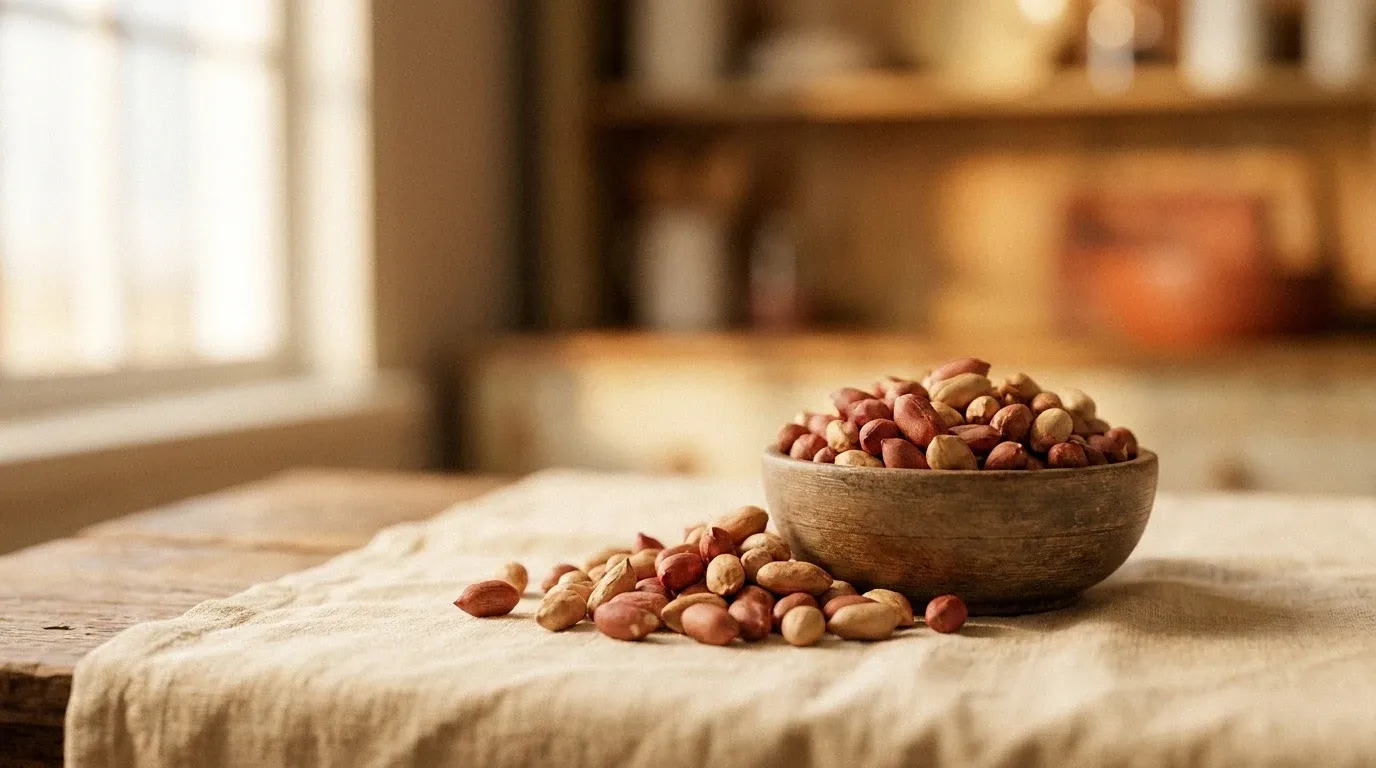
Most conversations about brain health eventually land on expensive supplements, exotic nootropics, or elaborate lifestyle protocols. But a clinical trial out of Maastricht University Medical Center suggests the answer might be sitting in a bowl on your kitchen counter. Eating a daily handful of unsalted, skin-roasted peanuts for 16 weeks measurably improved brain insulin responsiveness in older adults, particularly in the regions most responsible for memory.
That's not a minor footnote. It's a finding that reframes how you might think about accessible, everyday foods and their potential to slow the neurological clock.
What the Trial Actually Measured
The Maastricht University Medical Center study followed older adults over a 16-week period. Participants consumed a daily portion of unsalted, skin-roasted peanuts. Researchers used functional MRI combined with an intranasal insulin protocol, a technique that delivers insulin directly to the brain without affecting blood glucose levels, to measure how responsive brain tissue was to insulin signaling.
The results showed improved insulin responsiveness specifically in memory-critical brain regions. These aren't random areas. They include structures involved in encoding and retrieving information, the same regions that show early deterioration in age-related cognitive decline and Alzheimer's disease progression.
Brain insulin resistance, meaning the brain's reduced ability to respond to insulin signals, is now considered a central mechanism in neurodegeneration. When those signaling pathways break down, neurons struggle to regulate energy metabolism, clear waste proteins, and maintain synaptic function. Improving that responsiveness, even modestly, matters.
Why Peanuts, Specifically
Peanuts aren't nutritional wildcards. They carry a dense profile of compounds that researchers believe interact with metabolic and inflammatory pathways in meaningful ways.
- Polyphenols: Peanut skins are particularly rich in resveratrol and other polyphenols with known anti-inflammatory and antioxidant activity. This is worth noting because most people discard the skin. It's worth remembering that the parts of produce you throw away are the most nutritious, and peanut skins are a clear example of that principle.
- Oleic acid: The predominant fat in peanuts is monounsaturated, the same fat associated with Mediterranean dietary patterns linked to reduced cognitive decline.
- Arginine and B vitamins: These support vascular function and neurochemical production, both relevant to brain health at the cellular level.
- Magnesium: Consistently associated with improved insulin sensitivity in peripheral tissue, and emerging evidence points to similar effects centrally.
The trial specifically used skin-roasted, unsalted peanuts. That distinction matters. Roasting with the skin intact preserves the polyphenol content that processing and blanching tend to strip away. The absence of added salt removes a confounding variable that could affect vascular outcomes in older participants.
The Insulin Connection Most People Miss
When people hear "insulin," they typically think about blood sugar management and type 2 diabetes. But insulin plays a parallel and largely independent role inside the brain. It regulates synaptic plasticity, supports the clearance of amyloid beta proteins, and modulates neurotransmitter systems tied to mood and memory.
Critically, the brain can become insulin resistant independent of what's happening in the rest of the body. You don't need a diabetes diagnosis for your neurons to be struggling with impaired insulin signaling. Age alone is a driver. So is chronic stress, which is one reason understanding how stress quietly spikes your blood sugar matters beyond just weight management. The hormonal and metabolic disruptions that come with elevated cortisol reach the brain too.
What makes the Maastricht findings particularly useful is that they suggest a dietary intervention, not a pharmaceutical one, can shift brain insulin sensitivity in a clinically meaningful direction. That's significant, because the drug pipeline for Alzheimer's prevention remains difficult and largely disappointing.
Memory Regions at Stake
The specific brain regions showing improvement in the trial are the same ones that tend to go first in age-related decline. The hippocampus, which handles spatial navigation and episodic memory, is among the most insulin-sensitive structures in the brain and among the most vulnerable to neurodegeneration.
Adjacent structures involved in working memory and executive function also showed responsiveness. These areas underpin your ability to recall names, maintain focus, and sequence tasks. When insulin signaling degrades in these regions, cognitive performance follows. The fact that a 16-week dietary change produced detectable shifts there is not trivial.
Aging research increasingly recognizes that the window for intervention is earlier than previously thought. By the time memory symptoms are obvious, structural changes are already substantial. Protective habits adopted in your 50s and 60s, before significant decline sets in, carry more leverage than those adopted reactively.
Peanuts Versus Boutique Brain Supplements
Walk into any supplement retailer, online or physical, and you'll find nootropic stacks priced at $60 to $120 per month promising cognitive enhancement with varying degrees of clinical support. Some contain lion's mane mushroom extract, phosphatidylserine, or bacopa monnieri, compounds with genuine research interest but inconsistent human trial results.
A bag of unsalted, skin-roasted peanuts costs roughly $4 to $6 per pound at most grocery stores. A daily serving of around 25 to 30 grams, the range consistent with trial protocols, runs you well under $1 per day. For a 16-week course matching the trial duration, you're spending roughly $25 to $35 total.
That accessibility changes who can benefit. Brain health interventions that require disposable income or health literacy to navigate supplement markets don't scale. A food that's available at nearly every grocery store globally, that doesn't require refrigeration, and that most people already recognize as a snack removes most of the friction between evidence and action.
The economics of prevention matter. Cognitive decline is expensive in human and financial terms. Any strategy that can be adopted widely and cheaply deserves serious attention, particularly when it has trial data behind it rather than just mechanistic theory.
How This Fits Into a Broader Brain Health Strategy
Peanuts aren't a standalone solution. Brain resilience is multi-factorial, and the evidence base is clear that no single food or supplement operates in isolation.
Exercise remains one of the most robust tools available. What 110,000 Americans teach us about aging and exercise reinforces that consistent movement over years produces measurable neurological benefits, including hippocampal volume preservation and reduced dementia risk. The mechanisms overlap with what peanuts appear to influence, including insulin sensitivity, inflammation, and vascular function.
Sleep is equally non-negotiable. The brain clears metabolic waste, including amyloid proteins, during deep sleep. Irregular patterns disrupt that process significantly, and the consequences compound over time. Research on irregular sleep and death risk makes clear that consistency matters as much as duration.
Diet quality more broadly shapes the metabolic environment that brain tissue operates in. A handful of peanuts sitting on top of a diet high in ultra-processed foods, refined sugar, and poor-quality fats won't fully counteract that substrate. But peanuts fit naturally into eating patterns associated with better brain outcomes, and they can serve as an easy, habitual addition without major dietary overhaul.
Practical Notes on Buying and Eating Them
Not all peanuts deliver the same profile. Here's what to look for to match the conditions of the trial:
- Skin-roasted: The skin must be intact. Look for "redskin peanuts" or "skin-on roasted peanuts." Blanched or dry-roasted varieties that have had skins removed lose a substantial portion of the polyphenol content that likely drives the effect.
- Unsalted: Sodium loads complicate vascular outcomes, particularly in older adults managing blood pressure. The trial used unsalted peanuts, and that's the version to replicate.
- No added oils or coatings: Flavored varieties, honey-roasted, spiced, or oil-processed products add calories and compounds that weren't part of the protocol.
- Daily consistency: The 16-week timeline suggests chronic exposure drives the benefit. This isn't a once-a-week snack strategy. Build it into your daily routine the same way you would a supplement.
Around 25 to 30 grams per day, roughly a small palmful, aligns with what the trial used and keeps the caloric contribution manageable. Peanuts are calorie-dense, so slotting them into your existing intake rather than adding on top of it makes sense if weight stability is a goal.
A Cheap Food Earning Serious Scientific Attention
Nutritional research often gravitates toward novel, expensive, or difficult-to-source compounds. The peanut findings cut against that tendency. Here's a legume that's been a staple food across cultures for centuries, that costs almost nothing, and that now has trial-level evidence linking it to improvements in one of the most critical and vulnerable aspects of brain physiology.
That doesn't mean peanuts cure anything. The trial was 16 weeks, with a specific population and a specific preparation. Longer follow-up data, larger sample sizes, and replication across diverse populations will determine how strong this effect truly is. But the mechanistic rationale is sound, the safety profile is excellent for most people, and the cost of acting on this evidence is essentially zero.
If you're in your 40s, 50s, or beyond and thinking about what practical steps you can take today to protect your cognitive future, adding a daily handful of skin-roasted, unsalted peanuts to your routine is about as low-risk and low-effort as nutritional strategies get.