
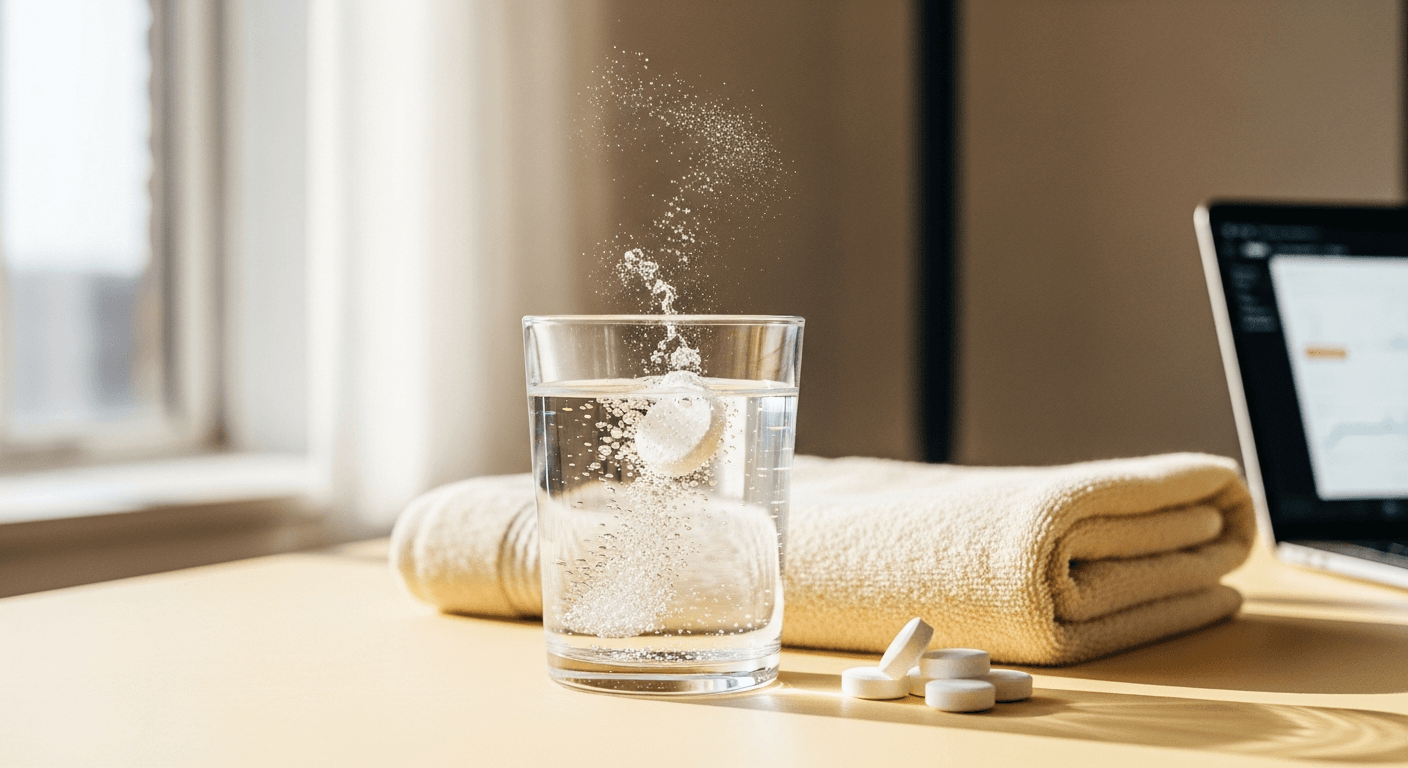
Walk into any supplement store or scroll through a fitness account, and you'll find electrolyte products marketed to every person who lifts a weight or runs a mile. The messaging is consistent: sweat means you need electrolytes, and electrolytes mean better performance. That framing is partly true and largely oversimplified. Whether you actually need them depends on variables most marketing conveniently ignores.
Here's the honest framework for figuring out where you fall.
What Electrolytes Actually Do
Electrolytes are minerals that carry an electrical charge in your body's fluids. The main players are sodium, potassium, magnesium, calcium, and chloride. They regulate fluid balance, support nerve signaling, and drive muscle contraction. When you sweat, you lose all of them to varying degrees, with sodium being the dominant loss by a significant margin.
The idea that any gym session depletes your electrolytes enough to require supplementation is where the marketing diverges from the physiology. Your body is surprisingly good at maintaining electrolyte balance across a broad range of conditions. It's only when you push past certain thresholds that active replacement becomes meaningful.
The Thresholds That Actually Matter
Research consistently points to session duration and sweat rate as the two most reliable predictors of whether electrolyte replacement is warranted. A 2024 review in the Journal of the International Society of Sports Nutrition found that for sessions under 60 minutes at moderate intensity, plain water is sufficient for the majority of individuals exercising in temperate conditions.
The calculus shifts when you cross certain lines:
- Session length of 60 to 90 minutes or more: Beyond this window, cumulative sweat losses start to affect plasma sodium concentration in ways that plain water doesn't fully address.
- High-intensity or high-volume training: Think circuit training, back-to-back compound lifts, or conditioning blocks with minimal rest. These sessions generate significantly more heat and fluid loss than steady-state moderate work.
- Hot or humid environments: Training in a gym without air conditioning in summer, exercising outdoors, or doing any form of heated fitness class amplifies sweat rate substantially. Studies estimate sweat rates in hot conditions can be two to three times higher than in cool, controlled environments.
- High individual sweat rates: Some people are simply heavy sweaters regardless of conditions. If your shirt is completely soaked after 30 minutes, that's data worth paying attention to.
- Two-a-day training or back-to-back sessions: Recovery between sessions depends partly on rehydration quality. If you're training twice in a day, electrolyte-containing fluids between sessions can support faster fluid retention than water alone.
If none of those conditions apply to your training, you're likely spending money solving a problem you don't have.
The Sodium Priority: Why You Don't Need a Cocktail
Most commercial electrolyte products lead with the idea that you need a full spectrum of minerals. The reality is more targeted. Sodium is responsible for the majority of electrolyte loss through sweat, and it's the primary driver of thirst, fluid retention, and plasma volume maintenance during exercise.
Potassium and magnesium losses through sweat are relatively minor during typical gym sessions. Both are better addressed through your overall diet than through intra-workout supplementation. A banana, a handful of nuts, or a diet with adequate whole foods will cover those bases for most people.
This means your priority during a long or intense session is sodium-containing hydration, not a broad multi-electrolyte formula. Practically, that looks like:
- Water with a sodium-forward electrolyte tablet or powder (aim for 300 to 600 mg of sodium per serving for sessions over 75 minutes)
- A lightly salted pre-workout meal if you're training hard in a hot environment
- Sports drinks that lead with sodium content, not sugar masquerading as an electrolyte product
Many premium electrolyte products on the US market cost between $1.50 and $3.00 per serving. If you're doing three 45-minute sessions per week and none of the threshold conditions apply, that's potentially $20 to $40 per month on something water handles just as well.
Who Can Skip Them Entirely
The recreational gym-goer doing 45 to 55 minutes of moderate resistance training three to four times per week in a climate-controlled facility is the most over-marketed segment in the electrolyte space. For this population, plain water before, during, and after training covers hydration needs completely.
Your kidneys are highly efficient at conserving sodium when losses are low. In the absence of prolonged sweating, the body simply doesn't lose enough sodium to warrant replacement during the session. Drinking a flavored electrolyte drink in this context isn't harmful, but it's not doing anything water wouldn't do.
The same logic applies to people doing lower-intensity cardio, yoga, Pilates, or short HIIT sessions in cool environments. If you're curious how different training formats actually compare in terms of physiological demand, Weight Training Beats Every Other Fat Loss Method provides a useful breakdown of how different modalities stack up.
When Electrolytes Become Non-Negotiable
There are training contexts where skipping electrolyte replacement is a genuine performance and safety issue, not just a missed optimization.
Endurance-oriented gym work, CrossFit-style high-volume training, or long resistance sessions exceeding 90 minutes all create conditions where hyponatremia risk becomes relevant if you're drinking large volumes of plain water without sodium replacement. Hyponatremia, or low blood sodium, can develop when sweat sodium losses are significant and diluted further by excessive plain water intake. Symptoms range from fatigue and nausea to, in severe cases, neurological impairment.
Athletes doing two-a-day sessions or training in hot conditions should treat sodium replacement as a training input, not an optional add-on. This is also relevant for anyone doing outdoor fitness activities in summer heat, including low-impact formats. Trampoline HIIT: Hard Cardio Without Destroying Your Joints is a good example of a format that's easy to underestimate in terms of sweat output, particularly outdoors.
What the Marketing Gets Wrong
Electrolyte products are often bundled with recovery narratives that don't hold up under scrutiny. The idea that drinking a magnesium-potassium blend during your 40-minute lift will meaningfully improve muscle function or reduce soreness isn't supported by the current evidence base for healthy, well-nourished individuals.
It's worth applying the same skepticism you'd bring to any supplement claim. The supplement industry is not uniformly regulated, and marketing claims don't require the same evidence bar as pharmaceutical products. If you're interested in how funding and industry relationships can shape nutrition advice, Does Meat Industry Funding Skew Nutrition Research? is a good reference for understanding how those dynamics operate more broadly.
Recovery, including how well you rehydrate post-training, is a legitimate performance variable. But it's worth separating what's genuinely evidence-backed from what's commercially motivated. Recovery Gadgets vs. the Basics: What to Prioritize covers this tension well across the wider recovery landscape.
A Practical Decision Framework
Rather than defaulting to marketing or peer habit, use this as your starting point:
- Under 60 minutes, moderate intensity, temperate environment: Water only. No electrolyte product needed.
- 60 to 90 minutes, moderate to high intensity: Consider a sodium-forward electrolyte drink if you're a heavy sweater. Otherwise, water with a post-workout meal covering sodium is sufficient.
- Over 90 minutes, high intensity, or hot conditions: Sodium-containing hydration during your session is worth prioritizing. Aim for 300 to 600 mg of sodium per hour of training.
- Two-a-day sessions or outdoor summer training: Electrolyte replacement between sessions is a genuine performance input, not optional.
- Salt-heavy sweaters (visible salt residue on skin or clothes): You may need sodium replacement at shorter durations than average. Pay attention to whether you feel flat or get headaches post-training without it.
Your diet also plays a role. If you're eating a relatively whole-food diet that includes adequate sodium, you're partly pre-loading your electrolyte baseline before you even start training. Restricting sodium aggressively while training hard is where some people quietly create problems they attribute to other causes.
The Bottom Line
Electrolytes are real, the physiology behind them is real, and there are genuine use cases where they improve performance and safety. But the industry has successfully collapsed the nuance between "marathoner in July heat" and "person doing a Tuesday afternoon bench press session." Those are not the same situation.
Know your training variables. Match your hydration strategy to your actual output. And if you're spending $30 a month on electrolyte packets for 45-minute gym sessions in an air-conditioned building, that budget probably works harder somewhere else in your nutrition stack.