
The Nutrition Lab: Fiber Is the New Protein and the Science Behind the 2026 Shift
In October 2025, PepsiCo's CEO told investors: 'fiber will be the next protein.' By February 2026, PepsiCo had launched Smartfood Fiber Pop with 6 grams of fiber per serving and SunChips Fiber with whole grains. Coca-Cola already had a prebiotic soda in the market. On March 31, 2026, InfiniFiber launched: a 12-ingredient synbiotic system combining 11 distinct fiber types with a targeted probiotic.
This isn't just a marketing move. There's real science behind the trend. And it's more interesting than simply counting grams per day.
Key Takeaways
- PepsiCo's CEO declared in October 2025 that "fiber will be the next protein" and launched Smartfood Fiber Pop by February 2026.
- Fiber diversity correlates with greater microbiome diversity and better health markers (NutraIngredients 2026).
- A 6-week University of Nottingham study shows measurable anti-inflammatory effect from combining kefir with diverse prebiotic fibers.
- InfiniFiber (launched March 31, 2026) combines 11 distinct fiber types to simulate natural dietary diversity.
Why the Conversation Changed: From Quantity to Diversity
For years, the fiber message was simple: eat 25-30 grams per day. That's still true. But microbiome research over the past several years has added important complexity: not all fibers are equivalent, and quantity alone doesn't determine health effects.
Different fiber types ferment at different rates in the colon and produce different short-chain fatty acid (SCFA) profiles. Butyrate, propionate, and acetate, the 3 main SCFAs, have distinct effects on gut health, inflammation, insulin sensitivity, and even the central nervous system. Pectin (fruit fiber) doesn't have the same effects as inulin (chicory fiber), which doesn't have the same effects as beta-glucan (oat fiber).
The 2026 trend identified by NutraIngredients is exactly this: experts are shifting from 'eat more fiber' to 'eat diverse fibers,' because studies show dietary fiber diversity correlates with greater microbiome diversity. And that microbial diversity is associated with better health markers.
The University of Nottingham Study
A 6-week study from the University of Nottingham explored the combination of fermented kefir and a diverse prebiotic fiber mix. The result: a measurable reduction in systemic inflammation markers in the intervention group compared to controls.
What makes this finding relevant is the documented synergy between live probiotics (kefir) and the substrates they ferment (diverse prebiotic fibers). Feeding your microbiome with varied fibers can optimize the effect of good bacteria already present, or introduced through fermented foods.
InfiniFiber and the New Product Wave
InfiniFiber's March 31, 2026 launch illustrates how the supplement sector is translating this science into products. The system combines 11 distinct fibers with a targeted probiotic to produce a controlled spectrum of fermentation speeds and SCFA profiles.
That's a different approach from a basic psyllium or inulin supplement. The goal is to simulate the dietary diversity that most people don't naturally achieve.
What This Means for Your Diet
The practical takeaway isn't to replace protein with fiber. Both have distinct and complementary roles. It's to diversify your fiber sources rather than just counting total grams.
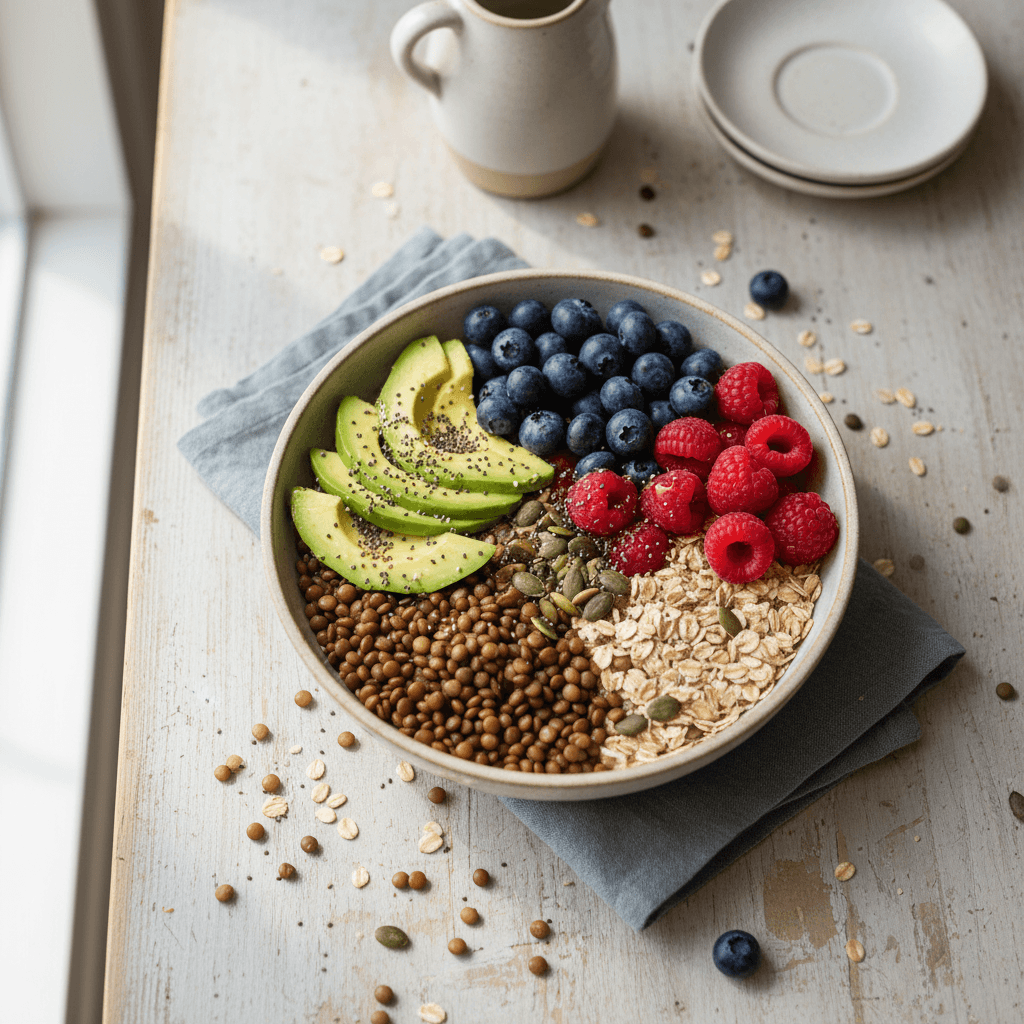
In practice: varied vegetables (not just carrots and green beans), regular legumes, oats, whole fruits with skin, seeds, and if you want it, fermented foods (kefir, plain yogurt, sauerkraut, kimchi) alongside. Plate diversity is the most accessible variable.
Fiber supplements can close a deficit, but they don't replace dietary variety. The science points to fiber type diversity as the driver of benefits. Not just more grams from a single source.
Also read: Your Gut Bacteria Change Every Time You Train Hard