
Iron for Athletes: Which Form, What Dose, and Who Actually Needs It
Iron deficiency is the most common nutritional deficiency on the planet. It affects roughly a third of the global population in some form. But within that statistic sits a specific, high-risk group that rarely gets targeted advice: endurance athletes, particularly female runners, who face compounding depletion mechanisms that a standard diet often can't outpace.
This isn't a simple "take iron if you're tired" conversation. Iron supplementation done wrong carries real risks. This article gives you the framework to make a smart, evidence-based decision before you open a bottle.
Why Athletes Lose More Iron Than Everyone Else
Endurance athletes face iron losses through pathways the general population doesn't. The most studied is foot-strike hemolysis: the mechanical destruction of red blood cells from repeated impact with the ground. Every stride creates micro-trauma in the capillaries of the foot, rupturing red blood cells and releasing hemoglobin into circulation. Over thousands of steps per training session, that adds up.
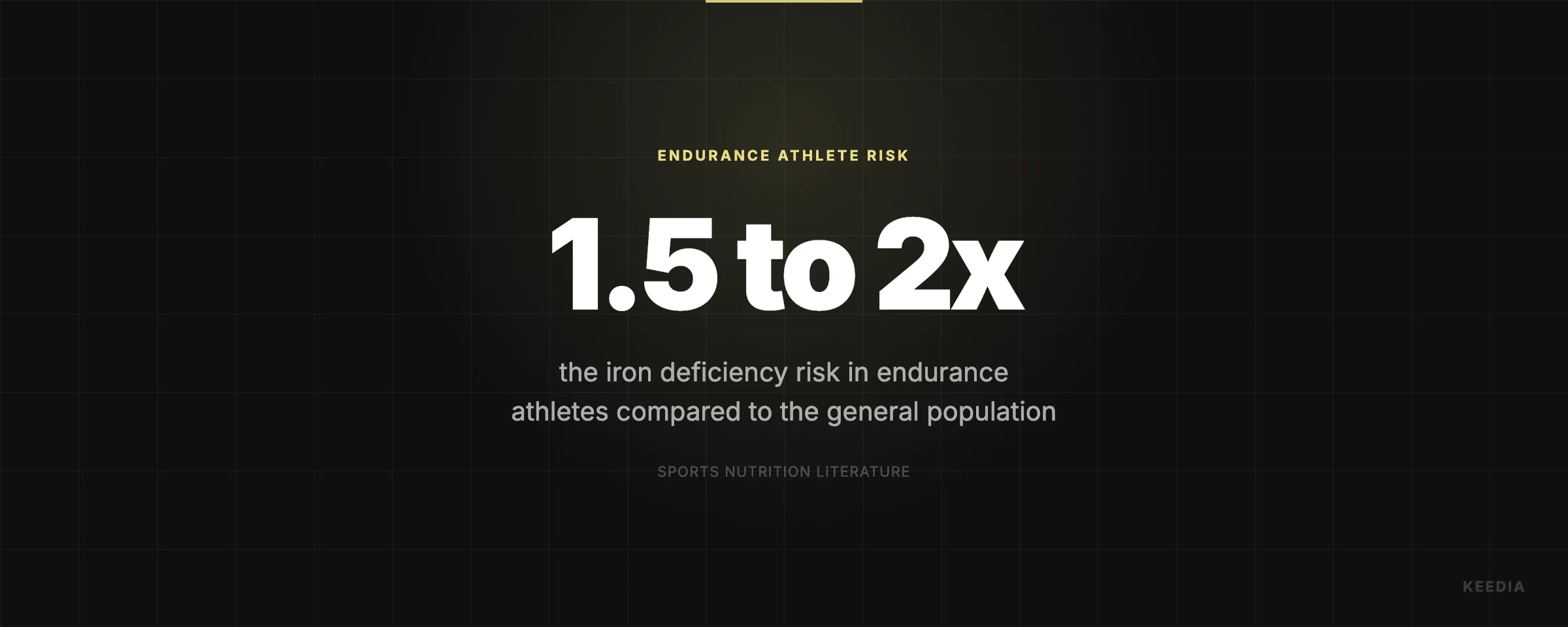
Beyond that, athletes lose iron through sweat, GI microbleeding (common in distance runners), and the hormonal stress response to heavy training blocks. Research consistently places endurance athletes at 1.5 to 2 times the iron deficiency risk of sedentary individuals. For cyclists, swimmers, and rowers, foot-strike hemolysis is less of a factor, but sweat losses and GI losses remain relevant.
If you're training for a marathon, an Ironman, or logging more than 60 miles per week on foot, your iron turnover is meaningfully higher than what general nutrition guidelines account for.
Female Runners: The Highest-Risk Group by a Wide Margin
The convergence of menstrual blood loss with high training volume creates a depletion scenario that's genuinely difficult to offset through diet alone. A typical menstrual cycle costs between 0.5 and 1 mg of iron per day averaged across the month. Add training-related losses, and you're looking at a daily requirement that can exceed 20 mg of elemental iron for some female endurance athletes during heavy training blocks.
The dietary reference intake for premenopausal women is 18 mg per day. For athletes with high volume and significant menstrual loss, that ceiling often isn't enough. Studies show that female runners have ferritin depletion rates several times higher than female non-athletes, even when caloric intake is adequate and meat is consumed regularly.
Vegetarian and vegan athletes face an additional layer of difficulty. Plant-based iron (non-heme iron) has absorption rates of 2 to 20 percent, compared to 15 to 35 percent for heme iron from animal sources. Phytates in grains and legumes further inhibit absorption. If you're plant-based and training hard, you need to be proactive, not reactive, about iron status.
Test Before You Supplement. Full Stop.
This is where many athletes get it wrong. Fatigue, flat training sessions, and sluggish recovery are real symptoms of iron deficiency. They're also symptoms of overtraining, poor sleep, and a dozen other issues. Taking iron because you're tired is not a reasonable protocol.
The test you want is a full iron panel: serum ferritin, serum iron, transferrin saturation, and ideally hemoglobin. Ferritin is the most useful single marker for athletes because it reflects stored iron, not just what's currently circulating.
Most sports dietitians and sports medicine physicians now use ferritin below 30 ng/mL as the threshold for considering supplementation in athletes, even if it technically falls within "normal" lab ranges. Frank deficiency is defined as ferritin below 12 ng/mL. Between 12 and 30, you're in a functional deficiency zone where performance impact is real but anemia hasn't yet developed. That's actually when intervention is most effective.
Above 30 ng/mL, supplementing with iron offers no performance benefit. Above 100 ng/mL, repeated unnecessary supplementation can begin to raise hemochromatosis risk, a condition of iron overload that damages the liver, heart, and joints. This is not a theoretical concern. Hemochromatosis is the most common inherited metabolic disorder in populations of Northern European descent, affecting roughly 1 in 200 people. If you have a family history of it, testing becomes even more essential before you consider iron supplementation.
Ferrous Sulfate vs. Iron Bisglycinate: Which Form Is Actually Worth Taking
If your ferritin is low and supplementation is warranted, form matters more than most people realize. The two most common options are ferrous sulfate and iron bisglycinate (also called ferrous bisglycinate or iron chelate).
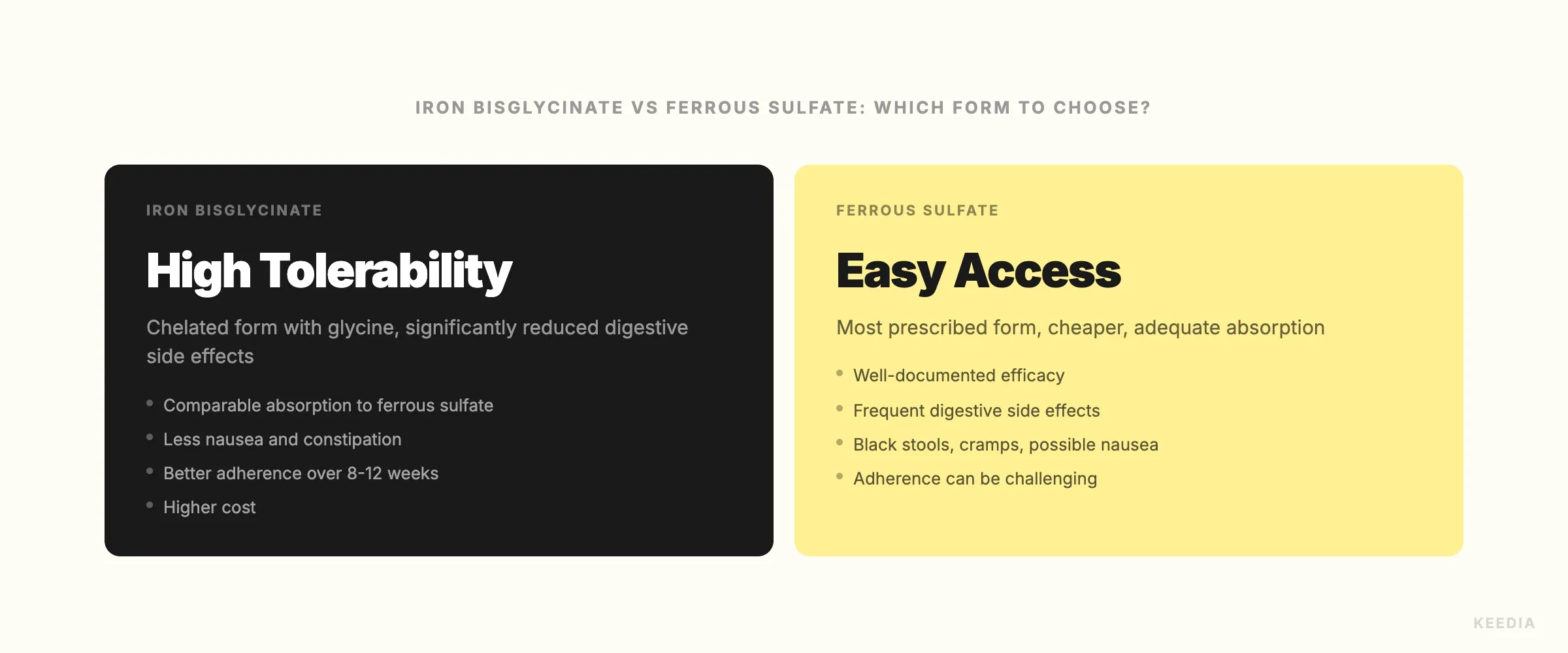
Ferrous sulfate has been the clinical standard for decades. It's inexpensive (typically $8 to $15 for a 90-day supply), widely available, and has solid absorption data behind it. The problem is tolerability. GI side effects, nausea, constipation, and stomach cramping affect a significant portion of users, with some trials reporting GI complaints in 20 to 40 percent of participants. Poor tolerability is the primary reason people stop taking iron before their stores recover.
Iron bisglycinate is iron chelated to two molecules of the amino acid glycine. This structure protects the iron from interacting with food components that inhibit absorption and allows it to pass through the gut wall more efficiently. Clinical comparisons show comparable or slightly superior absorption versus ferrous sulfate at lower elemental iron doses, with significantly fewer GI side effects. If you've abandoned iron supplementation in the past because it made you feel sick, bisglycinate is worth trying.
Typical therapeutic doses for athletes with low ferritin range from 25 to 100 mg of elemental iron per day. With bisglycinate, effective doses often fall at the lower end of that range. With ferrous sulfate, standard doses run 65 to 100 mg of elemental iron. It's worth noting that "300 mg of ferrous sulfate" contains roughly 60 mg of elemental iron. Labels can be confusing, so always check the elemental iron content, not the compound weight.
Timing also matters. Iron absorption peaks when taken on an empty stomach, but this also maximizes GI discomfort. A practical middle ground is taking it with a small amount of food, avoiding calcium-rich foods, coffee, or tea within 90 minutes of your dose. Vitamin C alongside iron supplementation meaningfully enhances absorption. A glass of orange juice with your supplement is genuinely useful, not just a folk remedy.
What Happens to Your Performance When Deficiency Is Corrected
The performance impact of correcting iron deficiency is one of the more clearly documented effects in sports nutrition. When ferritin rises from below 30 to an optimal range, the downstream effects are measurable and often significant.
Hemoglobin synthesis recovers, which increases oxygen-carrying capacity. VO2max improves. Lactate threshold shifts upward. And critically, perceived effort at a given pace drops. Athletes who've corrected deficiency consistently describe feeling like they suddenly have access to a gear they forgot they had.
Most studies report meaningful changes in 4 to 8 weeks of consistent supplementation. Full ferritin recovery typically takes 3 to 6 months. Don't expect to feel dramatically different after 10 days. The process is biochemical and takes time. If you're targeting a key race, build testing and supplementation (if needed) into your preparation timeline, not your taper.
Improving VO2max through iron repletion is one of the most overlooked levers in endurance performance. For context on how VO2max responds to other interventions, How to Improve Your VO2max: The Research-Backed Protocols breaks down the full landscape of evidence-based approaches.
What the Research Pipeline Looks Like Right Now
Iron supplementation in athletic populations is an active area of research. A 2026 supplement research tracking database identified over 750 recruiting studies examining dosing, form, timing, and population-specific outcomes for iron in athletes. Several large RCTs are currently examining whether alternate-day dosing (which some evidence suggests improves absorption by allowing hepcidin levels to reset) is superior to daily dosing for athletes.
There's also growing interest in how iron interacts with other micronutrients that athletes commonly supplement. Magnesium, for example, plays its own distinct role in recovery and sleep quality independent of iron. Magnesium and Sleep for Athletes: Which Form, What Dose, What Results is worth reading alongside this piece if you're building out a broader micronutrient protocol.
The emerging consensus in the research community is that population-level supplementation recommendations for athletes are too blunt. Individual ferritin response to a given dose varies significantly based on genetics, baseline status, training load, and gut microbiome composition. This is an argument for personalized testing, not guessing.
A Practical Decision Framework
- Step 1. Get tested. Request a full iron panel including ferritin, serum iron, transferrin saturation, and hemoglobin. Don't rely on symptoms alone.
- Step 2. Interpret your results in athletic context. A ferritin of 22 ng/mL may be "within range" on a standard lab report but is functionally low for a distance runner.
- Step 3. If ferritin is below 30 ng/mL, choose your form. Iron bisglycinate is the better starting point for anyone with a history of GI sensitivity. Ferrous sulfate is a reasonable option if cost is a primary concern and you've tolerated it before.
- Step 4. Optimize absorption. Take iron away from calcium, coffee, and tea. Add vitamin C. Consider alternate-day dosing if daily dosing causes persistent GI issues.
- Step 5. Retest at 8 to 12 weeks. Don't supplement indefinitely without monitoring. Once ferritin reaches an optimal range (typically 50 to 100 ng/mL for athletes), reassess whether ongoing supplementation is needed or whether dietary adjustments can maintain status.
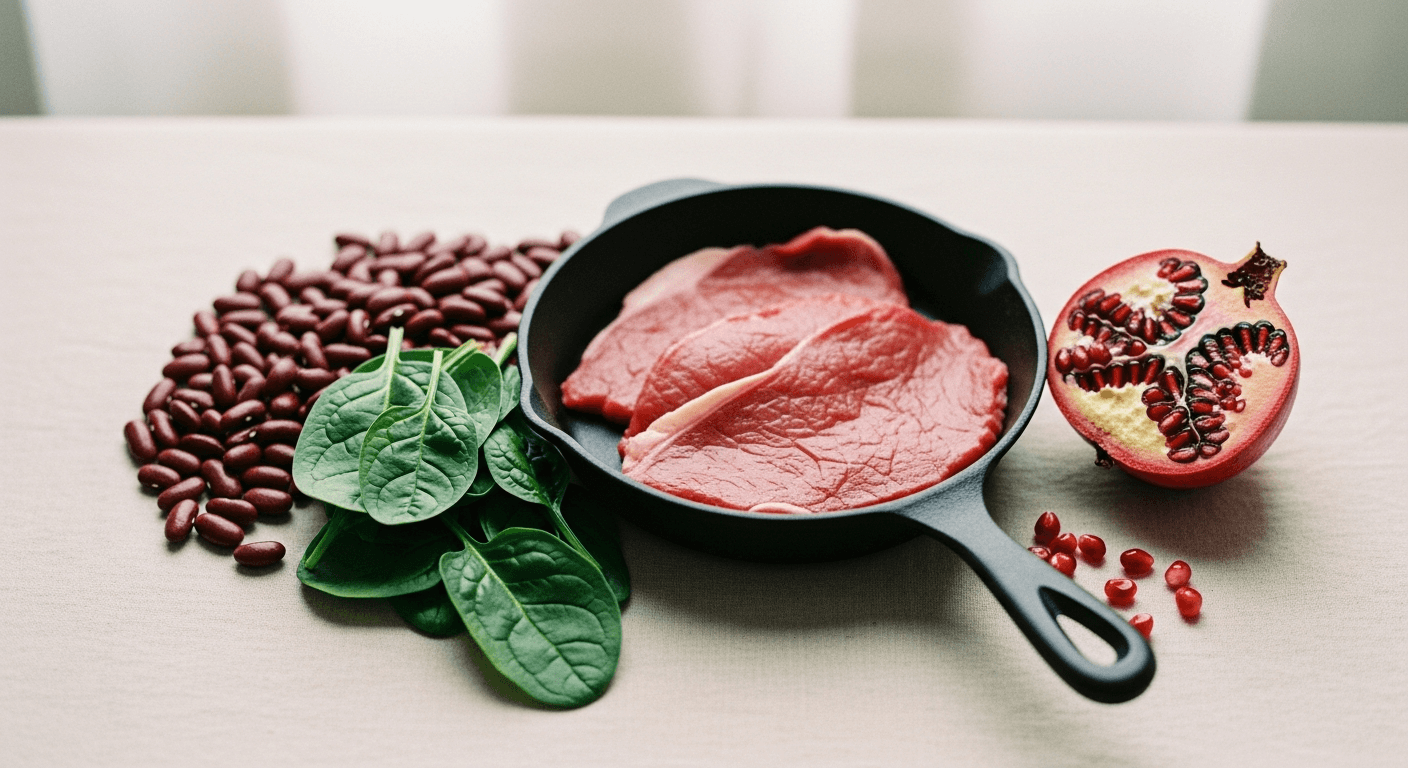
- Step 6. Revisit dietary iron sources. Red meat 2 to 3 times per week, legumes with vitamin C-rich foods, and reducing tea consumption around meals can all shift your baseline meaningfully over time.
Iron is not a performance supplement in the way creatine or caffeine are. It's a micronutrient that, when deficient, becomes a ceiling on everything else you're trying to build. Correcting a real deficiency isn't optimization. It's removing a physiological brake. That distinction matters for how you approach testing, supplementation, and expectations.
If you're building a comprehensive performance nutrition stack and want to understand how other evidence-based supplements fit alongside iron, Creatine Forms: Monohydrate vs HCl vs Buffered offers the same decision-framework approach for one of the most widely used and misunderstood supplements in sport.
Get the bloodwork. Make the decision on data. Then give the intervention enough time to actually work.