
The Nutrition Lab is keedia's weekly series that examines supplements and foods against the available evidence. This week: omega-3.
Omega-3 is one of the best-selling supplements in the world. The sports nutrition industry promises you more strength, less soreness, better endurance, and sometimes sharper focus. The reality is more nuanced — and more interesting — than the marketing suggests.
What We Know for Certain
The omega-3 fatty acids EPA (eicosapentaenoic acid) and DHA (docosahexaenoic acid) play a role in modulating inflammation. That's the documented foundation beneath most of the effects measured in athletes.
Muscle recovery: strong evidence. Multiple randomized controlled trials show that EPA+DHA supplementation reduces delayed onset muscle soreness (DOMS) after intense exercise. The mechanism is documented: omega-3s partially inhibit the production of pro-inflammatory prostaglandins, slowing the post-exercise inflammatory cascade. Practically, that means less stiffness and a faster return to training after hard sessions.
Insulin resistance: a recent and promising signal. A study published in May 2026 in Nutrients found that omega-3 supplementation reduced insulin resistance even in non-obese subjects. All measured parameters improved: blood glucose, LDL cholesterol, triglycerides, and inflammatory markers. For athletes, better insulin sensitivity translates to more efficient glycogen replenishment after training — relevant for recovery between training sessions.
Cardiovascular health: moderate evidence. Studies in endurance athletes show reduced resting heart rate and improved arterial compliance with 2-3g of EPA+DHA per day. The effect is modest but consistent across studies.
What the Science Doesn't Prove
Direct gains in strength or VO2max: weak evidence. Despite dozens of studies, no direct and reproducible effect on maximal strength or aerobic capacity has been established. Omega-3's impact on performance is indirect: better recovery lets you train better, which improves performance over time. But the supplement doesn't directly make you stronger or fitter.
Body composition: mixed data. Some studies suggest omega-3s may support a slight increase in lean mass, but the effects are small and heavily dependent on the overall dietary context. A diet rich in fatty fish delivers the same benefits without supplementation.
The Dosing That Matters
Most studies showing effects in athletes use 2-4g of EPA+DHA per day. That's not the standard dosing in pharmacy-grade capsules, which typically contain 1g of fish oil providing around 300mg of EPA+DHA. To reach 2g of EPA+DHA, you need 6-7 standard capsules, or a high-concentration product.
The EPA:DHA ratio matters too. For inflammation modulation, a ratio of approximately 2:1 in favor of EPA appears most effective. For cognitive function, DHA plays the dominant role. A recent study comparing EPA vs DHA in endurance athletes found meaningful differences between the two forms beyond heart rate alone.
Timing: studies show effects after 4-8 weeks of continuous supplementation. A single dose before training does nothing. This is a chronic supplement, not an acute one.
Food Sources First
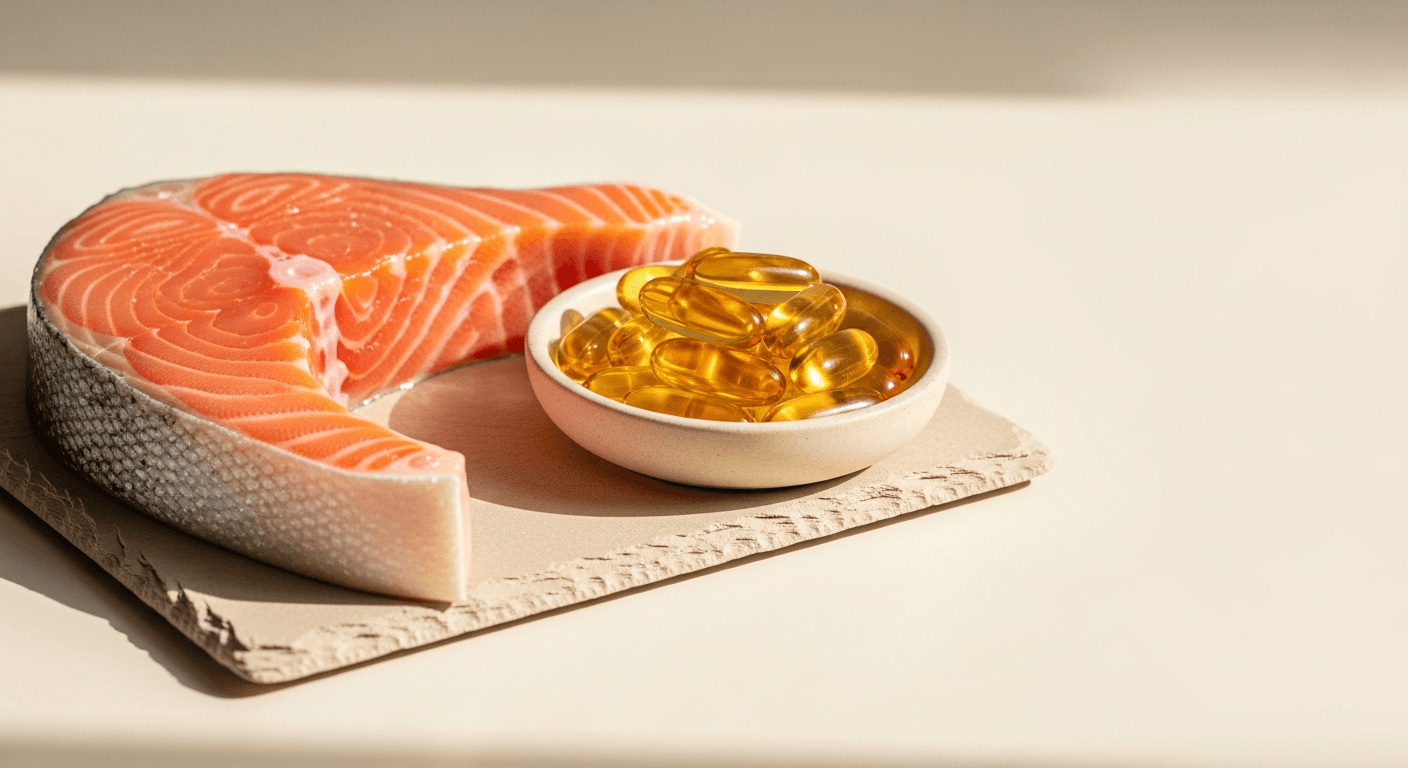
Two to three servings of fatty fish per week — salmon, mackerel, sardines, herring — covers EPA+DHA needs for most athletes without supplementation. Plant-based sources (chia seeds, flaxseed, walnuts) provide ALA, a precursor omega-3, but the conversion to EPA and DHA in humans is poor (under 10%).
If you don't eat fatty fish regularly — which is the case for many athletes — a quality supplement at 2-3g of EPA+DHA per day is justified.
Our Verdict
Omega-3 is one of the better-documented supplements for athletes, but its effect is specific: it improves recovery, reduces inflammation, and can improve insulin sensitivity. It doesn't directly boost strength or endurance. For most athletes who don't regularly eat fatty fish, supplementation makes sense. For those who eat it 2-3 times a week, the marginal impact is small.