
You crossed the finish line. You got the medal, the foil blanket, the applause. And then, like most of the tens of thousands of runners who just completed NYC Marathon 2026, you probably ate a banana, drank some Gatorade, and called it a day nutritionally. That's a problem. The decisions you make in the next two weeks will determine how fast your body actually rebuilds, how long you stay sore, and whether you bounce back or drag through the next month feeling hollowed out.
Here's what the research actually says you should be eating, and when.
The 30-60 Minute Window Is Real — and Most Runners Waste It
Post-exercise nutrition science has a well-established anabolic window, and marathon finishing lines are one of the worst environments for taking advantage of it. You're nauseous, overwhelmed, shuffling through crowds, and the last thing you want is a structured meal. But the biology doesn't care about logistics.
Within 30 to 60 minutes of finishing, your muscles are primed to absorb nutrients at an accelerated rate. Research supports consuming 20-30 grams of protein alongside 1.0 to 1.2 grams of carbohydrate per kilogram of body weight to initiate both glycogen replenishment and muscle protein synthesis simultaneously. For a 70kg runner, that's roughly 70-84g of carbohydrate combined with a solid protein source, all within the first hour.
What most finishers actually eat: a banana (27g carbs, 1g protein) and maybe half a bagel. It's better than nothing, but it leaves significant recovery capacity on the table. Chocolate milk, Greek yogurt with fruit, or a rice-based recovery bowl are far more effective choices you can prepare in advance or buy at most convenience stores near the finish area.
Inflammation Peaks at 24-72 Hours. Feed It Accordingly.
The soreness you feel the morning after a marathon is not the worst of it. Inflammatory markers, including creatine kinase and interleukin-6, peak between 24 and 72 hours post-race. That means days two and three are often harder than day one, and what you eat during that window directly influences how long the inflammation lasts.
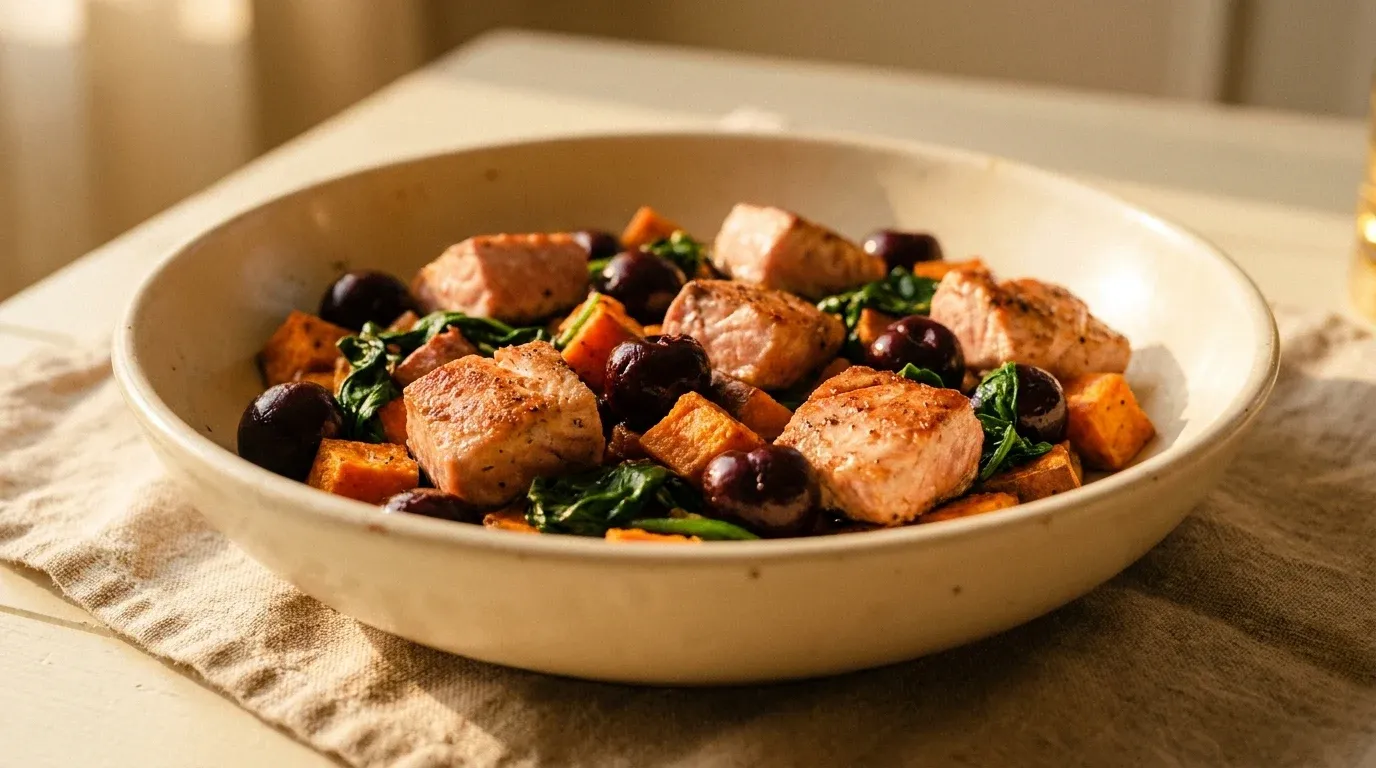
Specific foods have genuine evidence behind them here. Tart cherry juice has been studied in endurance runners and shown to reduce markers of muscle damage and accelerate strength recovery. Oily fish (salmon, sardines, mackerel) provide EPA and DHA, omega-3 fatty acids with well-documented anti-inflammatory effects. Colorful vegetables, particularly those rich in anthocyanins and polyphenols like beets, blueberries, and purple cabbage, support the body's own antioxidant response.
Many runners reach for ibuprofen or naproxen during this window. The problem: NSAIDs carry meaningful gastrointestinal risks in the post-marathon period, when your gut lining is already compromised (more on that below). Food-based anti-inflammatory strategies are both safer and more effective for recovery over days, not just hours.
Iron Loss After a Marathon Is Larger Than Most Runners Realize
Every footstrike during a marathon physically destroys red blood cells in the soles of your feet, a process called foot-strike hemolysis. Add to that the iron lost through sweat and the inflammatory response itself, and you're looking at significant iron depletion after 26.2 miles. For female runners, who already have higher baseline iron requirements, the week after a marathon is a genuinely critical window.
Low iron doesn't just cause fatigue. It impairs oxygen transport, slows tissue repair, and can depress immune function at exactly the moment your body needs all three systems working well. Prioritize heme iron sources (red meat, lamb, liver, canned sardines) for absorption efficiency, and pair plant-based iron sources like lentils and spinach with vitamin C to improve uptake. Avoid drinking coffee or tea with iron-rich meals for at least an hour, as polyphenols in both significantly reduce absorption.
If you've been training for months and racing hard, it's worth getting a full blood panel in the weeks after your race. Iron, ferritin, and hemoglobin levels tell a more complete story than how you feel on any given day.
Your Gut Is More Vulnerable Than You Think
Marathon running causes a measurable increase in gut permeability, sometimes called "leaky gut," due to reduced blood flow to the intestines during sustained exertion and elevated core body temperature. This isn't a marginal effect. Studies have found significant increases in intestinal permeability markers in endurance athletes immediately post-race, and this vulnerability persists into the first 48 hours of recovery.
What that means practically: highly processed foods, high-fat meals, and alcohol in the first two days aren't just poor choices for performance reasons. They actively worsen GI permeability, increase systemic inflammation, and prolong GI symptoms that most runners incorrectly attribute to the race itself. The post-race pizza and beer tradition is understandable, but it's contributing to the symptoms you'll complain about on Monday.
Stick to easily digestible whole foods: cooked grains, broths, steamed vegetables, eggs, and fermented foods like kefir or yogurt that support the gut microbiome. This is also worth keeping in mind when it comes to how stress affects digestion. How stress quietly spikes your blood sugar outlines the cortisol-gut connection that compounds post-race GI disruption for many athletes.
The Two-Week Phased Nutrition Plan
Recovery from a marathon isn't a single meal. It's a structured progression. Here's how to approach the two weeks after race day.
Days 1-3: Repair and Anti-Inflammation
- Priority: Protein at every meal (aim for 1.6-2.0g per kg body weight daily), anti-inflammatory foods, and gut-friendly choices.
- Focus foods: Salmon or sardines, tart cherry juice (240-480ml daily), cooked beets, blueberries, bone broth, Greek yogurt, eggs, cooked oats.
- Avoid: Alcohol, ultra-processed snacks, fried foods, high-fat restaurant meals.
- Hydration: Electrolyte drinks with sodium and potassium alongside water. Don't rely on thirst alone — you're likely still behind on fluids.
- Iron note: Include at least one iron-rich meal daily starting day one. Pair with vitamin C sources.
Days 4-7: Restore Glycogen and Micronutrients
- Priority: Increase carbohydrate intake to replenish muscle and liver glycogen. Broaden your micronutrient range through whole foods.
- Focus foods: Sweet potatoes, brown rice, whole grain pasta, lentils, dark leafy greens, pumpkin seeds, citrus fruit, legumes.
- Protein: Maintain elevated intake. Don't drop it prematurely just because acute soreness has eased.
- Gut: Introduce fermented foods more deliberately. Kefir, plain yogurt, kimchi, and miso support microbiome recovery.
- Movement: Light walking is beneficial and supports circulation. The question of how much movement actually helps at this stage is worth thinking through carefully. Rest vs. movement: how to read your recovery signals offers a practical framework for knowing when to push gently and when to hold back.
This is also a good week to pay attention to sleep quality. Recovery happens during sleep, not despite its absence, and irregular sleep and death risk: what the science says is a sobering reminder of how much systemic damage disrupted sleep cycles cause at the cellular level.
Days 8-14: Return to Normal Training Diet Progressively
- Priority: Normalize eating patterns while maintaining quality. Begin reintroducing pre-training nutrition strategies.
- Focus foods: Return to your regular training diet, but keep anti-inflammatory staples in rotation. Don't abandon the habits that served you well in recovery.
- Protein: You can taper slightly toward 1.4-1.6g per kg as activity levels remain lower, but don't go below that if you're beginning light runs.
- Carbohydrates: Calibrate to actual activity. If you're only walking and doing yoga, you don't need marathon-level carbohydrate intake. Adjust portions to match output.
- What to watch: Appetite dysregulation is common in this phase. Some runners are ravenous; others lose their appetite entirely. Both responses are normal post-marathon hormonal patterns. Don't use either as a signal to overeat or restrict.
A Note on What You're Probably Under-Eating
Most runners are surprised to learn that micronutrient gaps are as much of a recovery barrier as macronutrient ones. Zinc, magnesium, B vitamins, and vitamin C are all depleted by sustained endurance effort and are essential to tissue repair and immune function. Rather than defaulting to supplements, the most effective approach is widening your food variety significantly in the two weeks post-race.
Many of the most nutrient-dense components of common foods are the parts people habitually discard. The parts of produce you throw away are the most nutritious is a practical reminder that recovery eating doesn't have to be expensive or elaborate. It just has to be intentional.
If you're returning to structured training in the weeks ahead and working with a coach to plan your next cycle, the nutritional framework you establish now carries forward. Your first session with a coach: what to expect covers how smart coaches integrate recovery nutrition into your overall periodization, not as an afterthought but as a foundation for the next block of work.
The Bottom Line
You ran 26.2 miles. Your body is in a state of significant physiological stress that requires a targeted, phased nutritional response over the next two weeks, not just the first hour. Get protein and carbohydrates in within 60 minutes of finishing. Prioritize anti-inflammatory foods through days three. Protect your gut, address iron losses, and restore micronutrients systematically before you think about your next training block. The runners who recover fastest aren't the ones who rest the most. They're the ones who eat the smartest.