
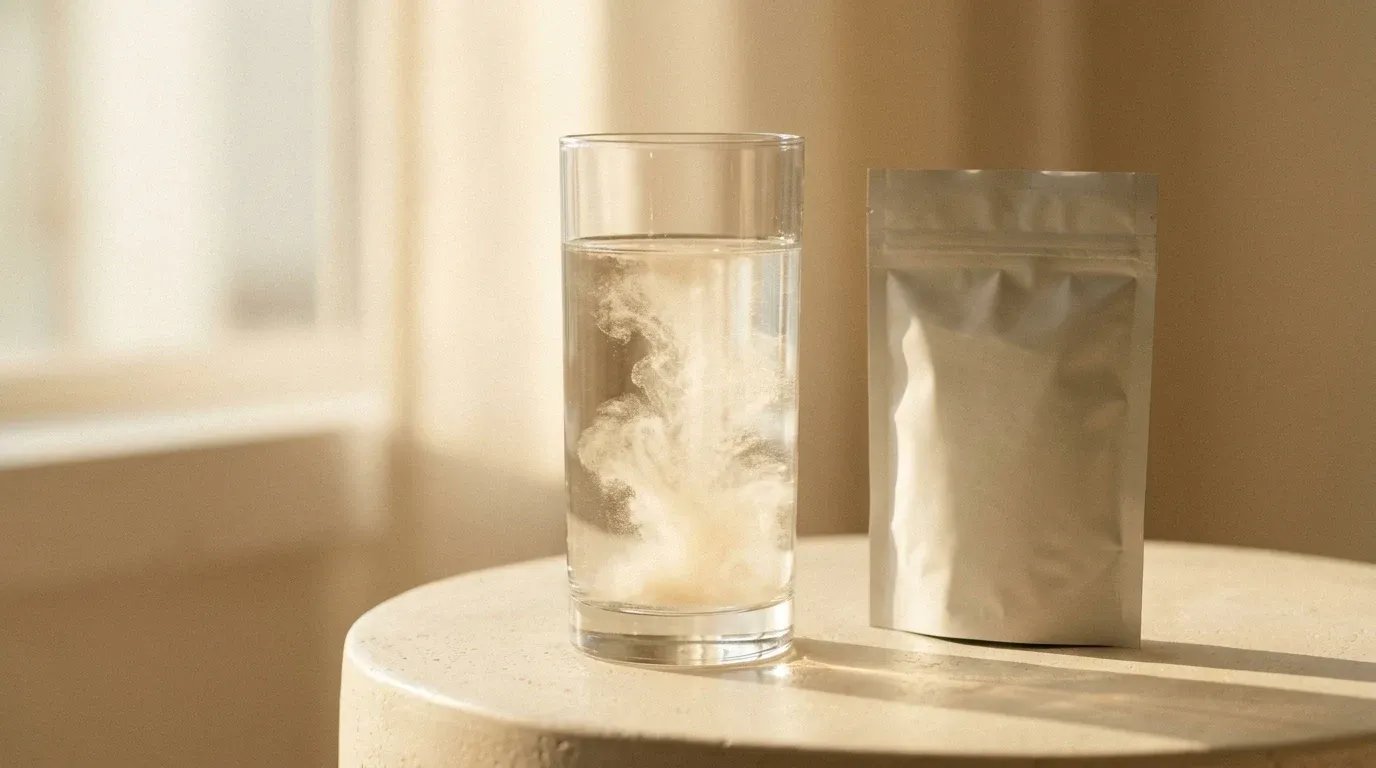
Most people reach for water during a workout or chug a recovery drink afterward. That timing makes intuitive sense. But the physiology tells a different story. Your hydration status at the moment you begin training has already locked in a significant portion of your performance ceiling. What you do in the final hour before your first rep matters far more than most training protocols acknowledge.
This isn't a minor optimization. Arriving at the gym even mildly dehydrated triggers measurable drops in cardiovascular efficiency, thermoregulation, and neuromuscular output. The research on this is consistent and increasingly hard to ignore. And now, a new wave of pre-workout formulations is being built specifically around this pre-exercise loading window, signaling a clear industry shift in where the real hydration opportunity lies.
What Dehydration Actually Does Before You've Lifted a Single Weight
Dehydration doesn't have to be severe to impair performance. Studies consistently show that a body water deficit of just 1 to 2 percent of body weight is enough to reduce aerobic capacity, increase perceived exertion, and compromise strength output. For a 180-pound athlete, that's roughly 29 to 58 ounces of fluid. That's not an extreme scenario. That's most people after a night of sleep.
When plasma volume is reduced, your heart has to work harder to deliver oxygen to working muscles. Stroke volume drops. Heart rate climbs faster for the same workload. Your body also starts losing its ability to dissipate heat efficiently, which accelerates fatigue. This is why pre-workout hydration isn't only relevant to endurance athletes grinding through two-hour sessions. It applies equally to anyone doing 45 minutes of strength work in a warm gym.
Thermoregulation is a particular blind spot. Most gym-goers associate overheating with hot weather running or outdoor sport. But internal core temperature rises during any high-intensity session, and a poorly hydrated body struggles to move heat away from working muscles through sweat and circulation. The practical result is earlier fatigue, reduced power output, and a higher rate of perceived exertion throughout the session.
Neuromuscular function is also sensitive to hydration status. Research on resistance training shows that even modest dehydration reduces peak torque production, slows motor unit recruitment, and increases the likelihood of muscle cramping. If you're following a structured program, whether it's for general fitness or specific to strength training after 40 where every effective dose counts, walking in under-hydrated systematically undermines the output you need to drive adaptation.
Why the Pre-Workout Window Has Become the Priority Timing Target
For years, sports nutrition brands concentrated their hydration innovation on intra-workout products: electrolyte tablets, hydration powders, and drinks meant to be consumed during activity. That made sense when endurance athletes were the primary audience. But the market has broadened. Strength athletes, recreational gym-goers, and competitive team sport players all have distinct hydration needs. And most of them aren't reaching a state of significant sweat loss until well into a session, by which point any in-session correction is running behind the performance curve.
The shift now happening in product science is toward pre-loading. Brands are formulating around a specific pre-exercise window, typically 45 to 90 minutes before training begins, with higher sodium concentrations to encourage fluid retention in plasma, alongside potassium, magnesium, and in some cases glycerol as an osmotic agent to increase blood plasma volume. This is a meaningful formulation evolution from simple flavored electrolyte water.
Glycerol, in particular, has returned to serious formulation consideration after regulatory restrictions limited its use in competition contexts. At sub-performance doses used in pre-workout hydration products, it supports plasma volume expansion without the systemic effects that flagged it at higher concentrations. The ingredient trends emerging from major formulation events point to osmolyte-based pre-loading as one of the more substantive functional nutrition developments heading into the next product cycle.
Higher-sodium pre-workout hydration products are also gaining traction as a response to a documented mismatch: most people don't consume enough sodium in the hours before training to retain the fluid they drink. Drinking water without adequate sodium simply accelerates urinary output. You feel hydrated, but your plasma volume hasn't actually expanded in any meaningful way. A pre-workout drink with 500 to 800 milligrams of sodium changes that equation by stimulating thirst and supporting fluid retention at the cellular level.
The Practical Protocol: What to Drink, How Much, and When
There's no universal hydration protocol that applies to every body and every session type. But there's a solid evidence-based framework you can personalize from today.
Start with baseline hydration assessment. The simplest and most reliable tool is urine color. Pale yellow indicates adequate hydration. Dark yellow or amber signals a deficit. If you're consistently waking up with dark urine, your overnight fluid losses are significant enough to require active correction before you even think about training. That means starting rehydration as soon as you wake up, not 20 minutes before your session.
Use body weight as your guide for pre-loading volume. A standard pre-workout hydration target is 5 to 7 milliliters of fluid per kilogram of body weight in the two to three hours before exercise. For a 75-kilogram person, that's roughly 375 to 525 milliliters, about 13 to 18 ounces, consumed steadily in that window rather than all at once. Consuming it all in one go shortly before training just leads to bloating and gastric discomfort during the session.
Adjust based on session type and environment. Here's how to think about it:
- Short strength sessions under 60 minutes, temperate environment: 400 to 500 milliliters of water with a moderate electrolyte source in the 60 to 90 minutes before training is sufficient for most people in a good baseline hydration state.
- Higher intensity or longer sessions over 60 to 90 minutes: Prioritize a sodium-containing drink, 500 to 800 milligrams of sodium, consumed 60 to 90 minutes before training to support plasma volume. Follow with 200 to 300 milliliters of plain water 20 to 30 minutes out.
- Hot environment or high-sweat-rate athletes: Pre-loading becomes especially critical. Target the upper range of the body weight formula and consider adding potassium and magnesium to your pre-workout drink to support nerve conduction and reduce cramping risk during the session itself.
- Early morning training: Overnight losses typically range from 500 milliliters to over a liter depending on body size, room temperature, and individual respiration rate. Start consuming fluids immediately on waking and allow at least 60 minutes of active rehydration before training. A sodium-containing drink is more effective than plain water for recovery from overnight deficit.
Consider your supplement stack timing carefully. If you're using creatine, hydration is directly relevant to its mechanism. Creatine draws water into muscle cells as part of its function. Inadequate pre-workout hydration can blunt this effect and increase the likelihood of gastrointestinal discomfort during loading phases. If you've been weighing up your creatine strategy, the evidence on creatine dosing across the 5g and 10g daily range is worth reviewing alongside your hydration habits, since the two interact more than most protocols acknowledge.
Avoid over-relying on caffeine-based pre-workouts as a substitute for hydration strategy. High-caffeine pre-workout formulas have a mild diuretic effect at higher doses, and many athletes consume them in a state of existing mild dehydration. This compounds the problem. If your pre-workout product contains caffeine, pair it with an explicit hydration strategy rather than letting it crowd out your fluid intake in the hour before training.
What Happens After Training Is Also Shaped by What You Did Before
Pre-workout hydration doesn't just affect session quality. It shapes how quickly you recover. Arriving well-hydrated means your body's post-exercise repair processes, including protein synthesis, glycogen resynthesis, and waste product clearance, begin from a better baseline. Dehydration slows circulation, which slows the delivery of nutrients to muscle tissue and the removal of metabolic byproducts. The downstream effects accumulate across training days.
This is part of a larger picture of how recovery is built from decisions made well before the session ends. What you do right after training shapes neural adaptation and habit formation, but those processes are downstream of the physiological state you arrive in. Pre-workout hydration is foundational infrastructure, not a finishing touch.
The practical takeaway is straightforward. Stop treating hydration as something you manage during or after training. Build a pre-workout fluid and electrolyte strategy based on your body weight, your session type, and your individual sweat rate. Check your urine color before you leave for the gym. Consume a sodium-containing drink in the 60 to 90 minutes before high-intensity or long-duration sessions. Give your body the plasma volume it needs to cardiovascularly support the session before the session begins.
Your performance has a ceiling. Pre-workout hydration is one of the lowest-effort interventions available to raise it. The physiology has always supported this. The product science is finally catching up.