
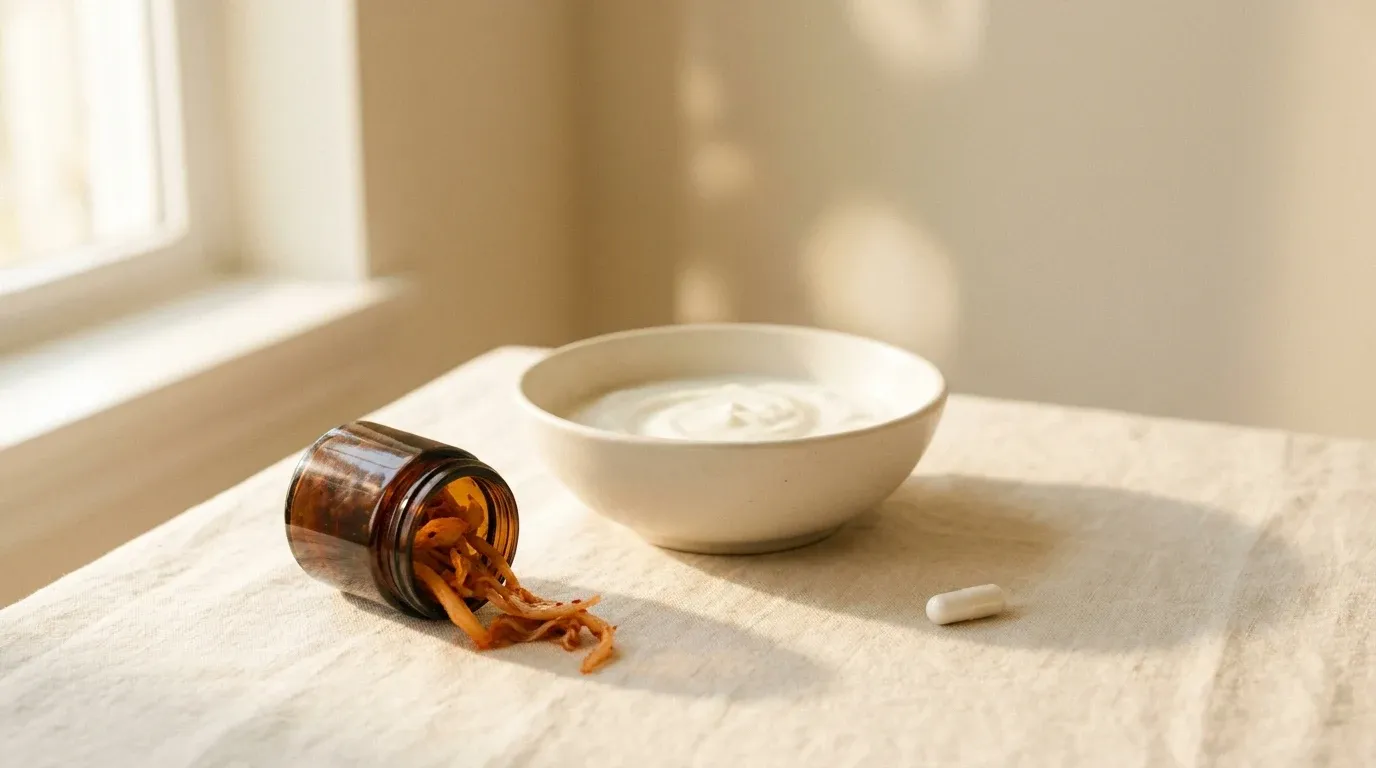
The global probiotic supplement market is projected to exceed $12 billion by 2027. At the same time, surveys consistently show that consumption of traditionally fermented foods. yogurt, kefir, kimchi, sauerkraut, miso. has been declining across Western populations for over a decade. Those two trends moving in opposite directions should concern anyone serious about gut health.
The assumption driving supplement sales is straightforward: if probiotics support gut health, then a concentrated capsule must be at least as effective as eating fermented cabbage. That assumption deserves scrutiny, because the science tells a more complicated story.
What a Capsule Actually Contains
Most commercial probiotic supplements are built around one to five bacterial strains, typically Lactobacillus acidophilus, Bifidobacterium longum, or a short list of close relatives. Manufacturers fix the dose. usually expressed in CFUs (colony-forming units). at anywhere from one billion to fifty billion per serving, and that number stays constant regardless of temperature, storage time, or what else you've eaten that day.
That precision sounds like a feature. In practice, it's also a limitation. Your gut ecosystem doesn't operate like a controlled laboratory setting. It's a dense, dynamic community of trillions of microorganisms interacting in real time. Introducing a fixed dose of two strains into that environment is a bit like adding two musicians to an orchestra and expecting the sound to transform.
Research published in peer-reviewed gastroenterology literature has found that many commercial probiotic strains don't colonize the gut at all. they pass through, temporarily boosting counts while the supplement is taken, then disappearing within days of stopping. For general healthy adults, the clinical evidence for probiotic pills improving gut microbiome composition remains surprisingly thin. As 8 in 10 Adults Take Supplements: What Science Actually Says outlines, supplement use is widespread but the evidence base for most products trails far behind consumer confidence.
What Fermented Foods Bring to the Table
Traditionally fermented foods are structurally different from anything that fits inside a capsule. A single serving of high-quality kimchi can contain dozens of distinct bacterial strains, many of which shift in composition depending on fermentation time, temperature, and the specific vegetables used. That variability isn't a flaw. it's a feature that mirrors the natural complexity of a healthy gut microbiome.
Beyond live bacteria, fermented foods deliver compounds that pills can't replicate:
- Prebiotic fibers: The vegetable and dairy matrices in fermented foods feed beneficial bacteria already living in your gut, not just the ones arriving in that serving.
- Short-chain fatty acids (SCFAs): Fermentation produces butyrate, acetate, and propionate. compounds that fuel colon cells, regulate immune signaling, and reduce intestinal permeability.
- Bioactive peptides: Dairy fermentation in kefir and yogurt generates peptides with anti-inflammatory and antimicrobial properties that have no equivalent in a probiotic capsule.
- Postbiotics: The metabolic byproducts of bacterial activity. enzymes, vitamins, and organic acids. are present in whole fermented foods and largely absent from standard supplements.
A landmark randomized controlled trial published in Cell found that a high-fermented-food diet over ten weeks significantly increased microbiome diversity and decreased markers of systemic inflammation. A high-fiber diet alone did not produce the same diversity increase in the same timeframe. That's a meaningful distinction.
Why Microbiome Diversity Matters More for Active People
If you train regularly. whether that's strength work, endurance sport, or anything in between. your gut microbiome has a direct bearing on your performance and recovery outcomes. This isn't a peripheral wellness consideration. it's core physiology.
Higher microbiome diversity is associated with more efficient nutrient absorption, particularly of amino acids, B vitamins, and minerals like magnesium and zinc that are critical for muscle function and energy metabolism. Diverse microbiomes also produce more SCFAs, which help regulate systemic inflammation. the same inflammatory load that determines how quickly you recover between sessions.
For athletes chasing gains through progressive overload, recovery capacity isn't a soft variable. It determines how frequently and intensely you can train before tissue damage outpaces repair. A gut producing inadequate SCFAs and running on low microbial diversity is a gut that's working against your training, not with it.
Elite endurance athletes have been found to harbor specific bacterial species. most notably Veillonella atypica. at higher levels than sedentary controls. That species converts lactate into propionate, effectively recycling a fatigue byproduct into usable fuel. You don't get that ecosystem shift from a two-strain probiotic capsule. You get it from years of training combined with a diet rich in fermented and fiber-dense whole foods.
The Practical Gap: Why People Reach for Pills Instead
Fermented foods have a convenience problem. Kimchi requires either making your own or buying a refrigerated product that costs more than shelf-stable supplements. Kefir spoils. Quality sauerkraut. the raw, unpasteurized kind that actually contains live cultures. isn't always easy to find at a standard grocery chain. And the taste profile of these foods is genuinely acquired: funky, sour, pungent. Not everyone adapts quickly.
Probiotic capsules solve all of that. They're shelf-stable, tasteless, and require no meal planning. A bottle runs anywhere from $20 to $60 for a month's supply, which feels like a simple health investment. The problem is that simple and effective aren't the same thing.
This gap is also widening through marketing. Supplement brands have the resources to run large awareness campaigns. Fermented food producers, typically smaller and more regional, don't. The result is a consumer population that knows what a probiotic CFU count is but can't name three fermented foods beyond yogurt.
When Supplements Still Have a Role
This isn't an argument that probiotic pills are useless. The clinical evidence supports specific, targeted uses: restoring gut flora after a course of antibiotics, managing certain gastrointestinal conditions like IBS-D (diarrhea-predominant irritable bowel syndrome), and reducing the incidence of antibiotic-associated diarrhea. In those contexts, strain-specific supplementation with clinically validated products. look for strains with published human trial data, not just CFU counts. can be genuinely useful.
If you're traveling and your food environment is unpredictable, a quality multi-strain supplement offers a reasonable bridge. If you're managing gut permeability issues around heavy training blocks, certain strains like Lactobacillus rhamnosus GG have enough evidence behind them to justify inclusion. And for endurance athletes with compressed race schedules, the practical nutrition demands of training sometimes make supplementation a realistic fallback when whole-food intake is disrupted.
The issue isn't using supplements. it's using them as a substitute for food-first strategy rather than a complement to it.
Building a Food-First Gut Strategy
If you want to shift toward a gut-health approach that actually changes your microbiome composition over time, fermented foods need to become a regular part of your diet. not an occasional addition. Research suggests that consistent daily exposure to diverse fermented foods. even in small portions. produces measurable microbiome shifts within four to six weeks.
Here's what a practical approach looks like:
- Start with two to three servings daily: A small bowl of yogurt with breakfast, a tablespoon of sauerkraut with lunch, and miso soup alongside dinner covers significant microbial ground without requiring dramatic dietary overhaul.
- Prioritize unpasteurized or raw-fermented products: Heat kills live cultures. Look for refrigerated products with "live and active cultures" on the label, or make your own ferments at home.
- Pair fermented foods with prebiotic fiber sources: Onions, garlic, leeks, asparagus, and legumes feed the bacteria arriving with your fermented foods. The combination is more effective than either alone.
- Vary your sources across the week: Rotating between kefir, kimchi, plain yogurt, and kombucha exposes your gut to a broader strain diversity than eating the same product daily.
This approach is particularly relevant for people over 40, where microbiome diversity naturally tends to decline. The intersection of strength training, adequate protein intake, and fermented food consumption becomes a meaningful lever for maintaining metabolic and physical function, as explored in Lifting and Eating More After 50: The Combo That Changes Everything.
For those interested in how personalized gut data might eventually sharpen these strategies, Precision Nutrition in 2026: Does Eating for Your Profile Work? covers where microbiome testing and individualized nutrition are headed.
The Bottom Line
Probiotic pills are a convenient product solving a real marketing problem: people want to support their gut health without changing their diet. But convenience and efficacy aren't the same variable. The gap between what a capsule delivers and what a diverse fermented food diet delivers. in terms of strain variety, prebiotic fiber, bioactive compounds, and long-term microbiome shifts. is substantial enough to matter, especially if you're training hard and depending on your gut to support recovery and performance.
Use supplements where evidence supports them. Build your baseline from food. That order of operations is what the research actually suggests, even if it's not what the supplement aisle is designed to tell you.