
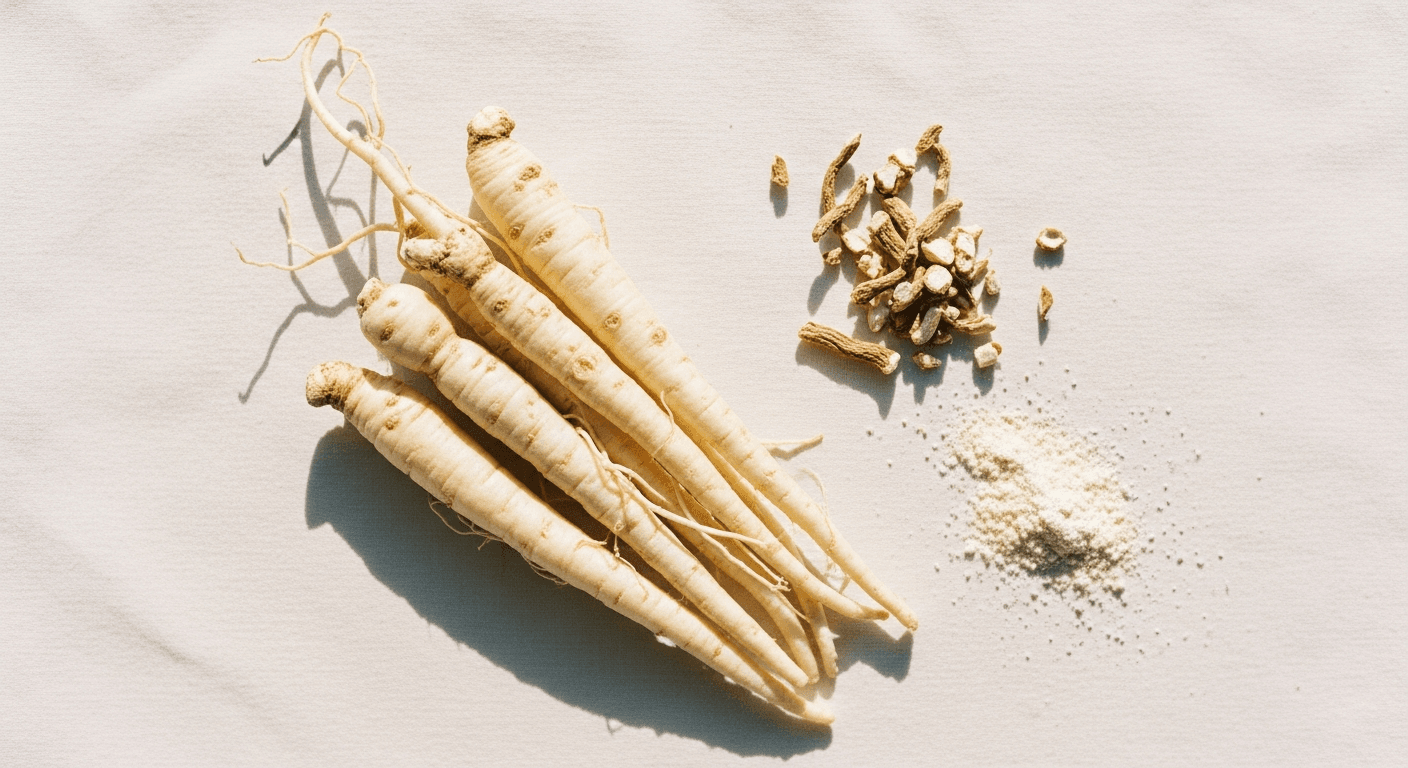
Ayurvedic herbs have been cycling through Western wellness culture for years, often arriving with outsized claims and underwhelming evidence. Shatavari is different. Not dramatically different. But enough to warrant a serious look, especially now that standardized extracts are moving beyond health food stores and into mainstream supplement retail across Europe and beyond.
Haya Labs recently launched SRI-81 Shatavari, a standardized extract positioned as a premium standalone supplement for women. The timing reflects broader market momentum. Global interest in adaptogens specifically marketed to women has grown sharply, and shatavari. derived from the root of Asparagus racemosus. is emerging as one of the more credible options in that category. Here's what the science actually supports, where the gaps are, and how to think about this supplement if you're an active woman considering adding it to your routine.
What Shatavari Actually Is
Shatavari (Asparagus racemosus) is a climbing plant native to India and parts of Asia. It's been used in Ayurvedic medicine for centuries, primarily as a female tonic. The active constituents are steroidal saponins called shatavarins, along with flavonoids, polyphenols, and mucilage compounds. These are the compounds researchers have focused on when studying its physiological effects.
The word "adaptogen" gets thrown around loosely, but in shatavari's case, the classification isn't entirely unearned. Adaptogens are broadly defined as compounds that help the body resist physical and psychological stress without disrupting normal function. Several studies have looked at shatavari's effects on the hypothalamic-pituitary-adrenal (HPA) axis, the system that governs your stress hormone response, and the results are cautiously promising.
A number of peer-reviewed studies, most conducted in India with small sample sizes, have reported reductions in cortisol markers and improvements in self-reported stress scores among women taking shatavari root extract. The effect sizes are modest but consistent enough to be worth noting. If you're already thinking about how chronic stress silently erodes cognitive health, the idea of a plant-based cortisol modulator has obvious appeal. The key word, though, is "modest."
The Evidence Worth Taking Seriously
Three areas of research stand out as genuinely credible when it comes to shatavari and women's health.
Lactation support. This is the most robust area of clinical evidence. Multiple small randomized controlled trials have found that shatavari supplementation significantly increases prolactin levels in postpartum women and improves breast milk production. A 2010 study published in a peer-reviewed obstetrics journal found a 33% increase in prolactin among shatavari users compared to placebo. For breastfeeding women, this is one of the stronger herbal interventions available.
Hormonal balance across the cycle. Research suggests shatavari has mild phytoestrogenic activity, meaning it may interact with estrogen receptors without mimicking estrogen strongly enough to cause disruption at normal doses. Several studies have reported reductions in perimenopausal symptoms, including hot flashes and mood fluctuations, though the evidence base here is thinner than it is for more established interventions like black cohosh. Women with hormone-sensitive conditions should speak with a physician before using any phytoestrogenic supplement.
Stress and sleep modulation. A handful of studies link shatavari supplementation to improvements in sleep quality and anxiety scores, particularly in women reporting high perceived stress. This aligns with what's known about the herb's effects on the HPA axis. If you're already addressing sleep consistency as a lever for better rest, shatavari may complement those efforts. It's unlikely to fix poor sleep hygiene on its own, but as part of a broader wellness approach, the data isn't negligible.
What the SRI-81 Standardization Claim Actually Means
Haya Labs markets SRI-81 as a standardized extract with higher bioavailability than generic shatavari root powder. This is a meaningful distinction in principle. Most shatavari products sold in the US and Europe are whole root powders or non-standardized extracts. Standardization means a guaranteed minimum concentration of active compounds, specifically shatavarins, in each dose. That matters because raw shatavari powder can vary significantly in potency depending on harvest conditions, sourcing, and processing.
The claim that SRI-81 specifically delivers superior bioavailability compared to competitors is harder to evaluate right now. As of publication, no independent third-party testing data for this particular extract is publicly available. Haya Labs hasn't released pharmacokinetic studies comparing SRI-81 absorption rates to other standardized extracts on the market. That doesn't mean the claim is false. It means you're currently taking the manufacturer's word for it.
This is standard for the supplement industry, not unique to Haya Labs. But it's worth flagging because bioavailability claims are one of the most commonly used marketing levers in the premium supplement space. Until independent testing confirms those claims, the honest position is: SRI-81 is likely a higher-quality product than a generic powder, and that's meaningful, but the specific bioavailability advantage hasn't been externally validated yet.
Pricing positions SRI-81 in the premium tier, roughly $30 to $45 per month's supply at current European retail rates converted to USD. That's comparable to other standardized adaptogen extracts like ashwagandha KSM-66 or rhodiola rosea, which gives it a reasonable market reference point.
Active Women and Female Athletes: What the Evidence Does and Doesn't Say
The primary marketing target for products like SRI-81 is active women, including recreational athletes and fitness-focused consumers. This is where you need to apply the most critical thinking, because the evidence specifically linking shatavari to exercise performance is genuinely thin.
There are no high-quality randomized controlled trials examining shatavari's effects on VO2 max, strength output, recovery time, or body composition in female athletes. The performance-related claims that sometimes appear in product marketing are largely extrapolated from the herb's general adaptogenic and cortisol-modulating properties. That's not illegitimate reasoning, but it's not the same as direct evidence.
What's more plausible, based on existing research, is an indirect benefit pathway. If shatavari genuinely reduces cortisol dysregulation and improves sleep quality, those effects could support recovery and training consistency over time. That's a reasonable hypothesis. It's not a confirmed mechanism for performance gains.
Active women who are managing high training loads alongside work and life stress may notice subjective improvements in mood and energy when using shatavari. Several user-reported outcomes in small studies support this. But subjective improvements are not the same as measurable performance gains, and you should keep that distinction clear when evaluating the value of any supplement.
If you're building a serious fitness foundation, your programming, recovery practices, and nutritional strategy will always outperform any supplement. Working with a qualified coach who understands female physiology can make a significantly larger difference than any single herb. If you're newer to structured training, resources like how to choose a personal trainer as a fitness beginner can help you prioritize what actually moves the needle.
Safety, Dosing, and Who Should Be Cautious
Shatavari has a strong traditional safety record and is generally well tolerated at standard doses (typically 500mg to 1000mg of standardized extract daily). Reported side effects are rare and mild, most commonly mild digestive discomfort at higher doses.
That said, there are specific groups who should consult a physician before using shatavari:
- Women with hormone-sensitive conditions, including estrogen receptor-positive cancers, endometriosis, or uterine fibroids. The phytoestrogenic activity, though mild, warrants medical guidance.
- Women taking hormonal medications, including oral contraceptives or hormone replacement therapy. Potential interactions are not well studied.
- Pregnant women, despite shatavari's traditional use during pregnancy in Ayurveda. Western clinical safety data during pregnancy is limited, and the conservative position is to avoid it unless under medical supervision.
- People with asparagus allergies. Shatavari is in the asparagus family. Allergic reactions, while uncommon, have been documented.
For healthy, non-pregnant adult women without the above risk factors, shatavari at standard doses appears safe for regular use. A 12-week cycle is a reasonable trial period to assess whether you notice any subjective benefit before committing longer-term.
The Bigger Picture for Women's Supplementation
Shatavari's arrival in European mainstream retail reflects a larger shift in the women's wellness supplement market. Consumers are increasingly skeptical of one-size-fits-all formulas and looking for targeted, evidence-informed products. That's a healthy development. It also means the market is flooded with products making claims that range from well-supported to completely speculative.
Shatavari sits somewhere in the credible middle. It's not a miracle herb. It's a reasonably well-studied adaptogen with genuine evidence in specific areas (lactation, stress modulation, perimenopausal support) and meaningful knowledge gaps in others (athletic performance, long-term hormonal effects). SRI-81's standardization approach is a step toward better product quality, but independent validation of its specific claims is still pending.
If you're an active woman dealing with chronic stress, disrupted sleep, or perimenopausal transition, shatavari is a reasonable supplement to investigate alongside other evidence-based approaches. Just don't expect it to replace the fundamentals. Understanding how exercise benefits can plateau without strategic variation matters more for long-term health outcomes than any single supplement ever will. And making sure your sleep quality is truly addressed will likely deliver more measurable results than adding an adaptogen to a chaotic schedule.
Shatavari deserves a fair evaluation on its actual merits. It's getting one. The evidence base, while modest, is real. The premium product segment is maturing. And the women asking sharper questions about what they're putting in their bodies are right to demand both.