
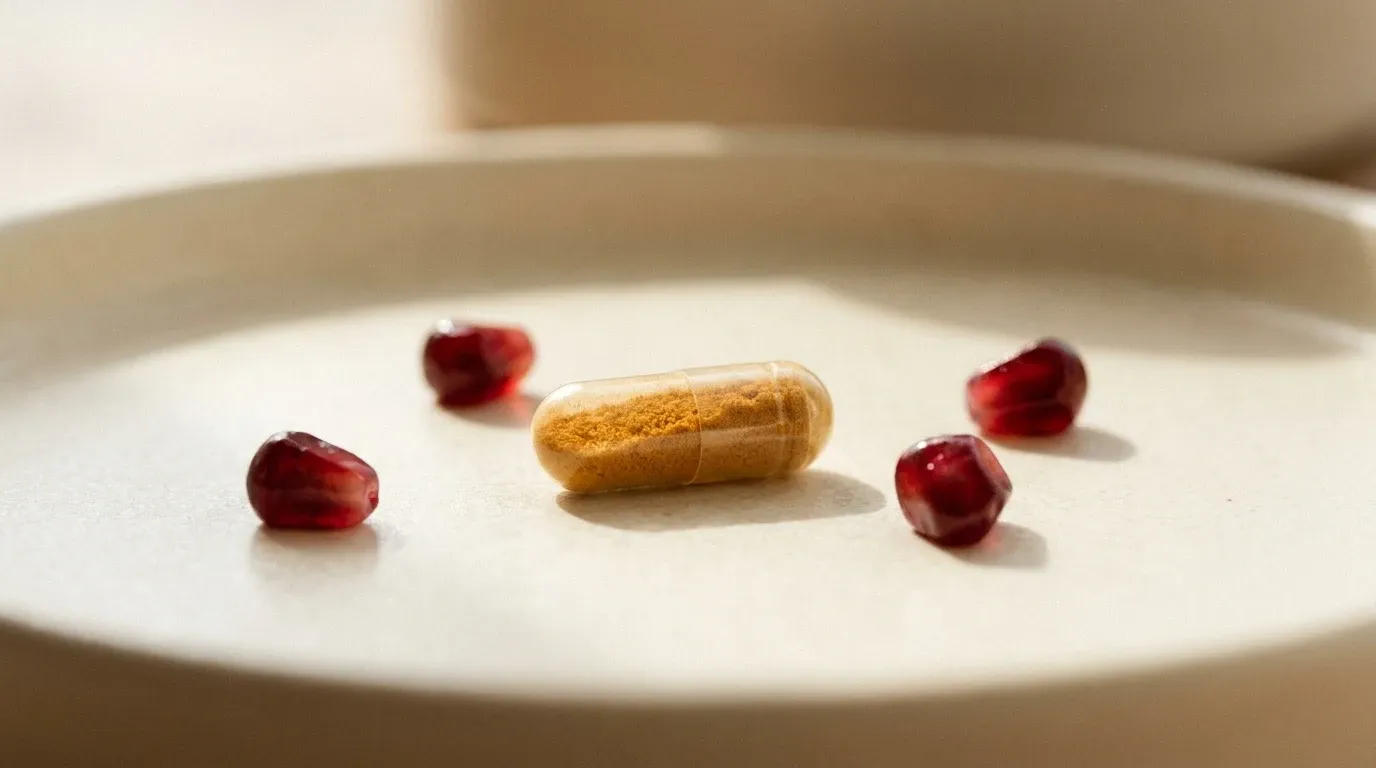
A study published in JAMA Network Open in November 2026 found that urolithin A supplementation increased cerebral blood flow during cognitive tasks in middle-aged adults with obesity. That's a genuinely interesting finding. It's also a much more limited one than the headlines suggested. Here's what the research actually shows, and where the gaps still are.
What the Study Found
Researchers at the University of Oklahoma ran a randomized, controlled trial examining the effects of urolithin A supplementation on brain function in middle-aged adults with obesity. Participants who received the supplement showed measurable increases in cerebral blood flow during mentally demanding tasks compared to those who received a placebo.
Cerebral blood flow matters. The brain is metabolically expensive, and adequate blood delivery is fundamental to how neurons perform under load. The idea that a supplement could meaningfully influence that process during cognitive effort is worth taking seriously.
But here's where the study draws its own limits. No statistically significant improvements were detected in memory or attention. Participants weren't measurably better at recalling information, sustaining focus, or completing cognitive tasks accurately. The blood flow signal was real. The functional payoff, at least in this initial trial, was not.
Why That Distinction Matters
It's tempting to assume that more blood flow equals better brain performance. That's a reasonable intuition, but it doesn't always hold at the clinical level. Blood flow is a proxy measure. What you ultimately care about is whether cognition improves, and in this study, it didn't, at least not in ways the researchers could detect with statistical confidence.
This is a pattern worth recognizing in supplement research. A biological mechanism shows activity. A downstream marker shifts. But the outcome you actually want, sharper memory, better attention, faster processing, doesn't move. That gap between mechanism and outcome is where a lot of promising supplements have stalled.
It doesn't mean the finding is useless. It means you're looking at early-stage evidence for a cognitive application, not a proven cognitive enhancer. Those are very different things, and conflating them is how supplement marketing gets ahead of the science.
How Urolithin A Actually Works
Urolithin A is a compound produced in the gut when certain bacteria metabolize polyphenols found in foods like pomegranates and walnuts. The problem is that most people don't produce meaningful amounts of it, because gut microbiome composition varies enormously. That's why supplemental forms exist.
Its primary mechanism is mitophagy, which is the selective recycling of damaged or dysfunctional mitochondria. Think of it as cellular housekeeping for your energy-producing organelles. When mitophagy works efficiently, cells maintain a healthier pool of mitochondria, which supports energy output and reduces the kind of cellular stress associated with aging.
That mechanism has real relevance for physical performance and longevity research. Mitochondrial decline is one of the core drivers of muscle aging, and improving mitophagy could plausibly slow that process. If you're interested in the broader picture of how nutrition intersects with aging and physical resilience, the article Frailty After 60: How Nutrition Can Actually Help covers the nutritional levers that actually have evidence behind them at that stage of life.
The cognitive angle is newer and less established. The theory is that better mitochondrial function in neurons could support brain energy metabolism, which might translate to better cerebrovascular function and, eventually, better cognition. The JAMA study found the first link in that chain. The rest of it is still hypothetical.
Who Was in the Study and Why That Matters
The trial focused specifically on middle-aged adults with obesity. That's a population with known risk factors for reduced cerebral blood flow, including insulin resistance, low-grade inflammation, and cardiovascular changes that affect how efficiently blood reaches the brain. The effect of urolithin A may have been more detectable in this group precisely because there was more room for improvement.
What that means for you depends on where you sit on that spectrum. If you're a healthy, active adult with good cardiovascular function, the effect size in a population already starting from a compromised baseline may not translate. Research findings in higher-risk or metabolically compromised groups don't always generalize to the general population, and there's no data yet on whether urolithin A influences cerebral blood flow in leaner, more active individuals.
This isn't a reason to dismiss the research. It's a reason to read it carefully rather than assuming it applies to everyone.
Where the Stronger Evidence Actually Points
If you're evaluating urolithin A as a supplement, the most credible evidence to date sits in the domain of physical performance and muscle aging rather than cognition. Earlier research published in Nature Metabolism found improvements in muscle endurance and mitochondrial gene expression in older adults. That's a more mature evidence base than what currently exists for brain effects.
This aligns with a broader principle in longevity-adjacent nutrition research: the compounds most reliably shown to influence aging tend to work at the cellular energy level first, with downstream benefits to specific tissues emerging more slowly and inconsistently. The same applies to protein intake strategies, as covered in Protein for Muscle After 50: What Actually Works, where the evidence for muscle preservation is far stronger than for cognitive outcomes.
Exercise remains the most robust intervention for cerebral blood flow. Even modest increases in physical activity consistently improve brain perfusion. Research on shorter training formats has shown that you don't need extensive training volume to generate meaningful physiological benefits, as explored in You Don't Need Hours in the Gym to Buy Years of Life. No supplement currently comes close to replicating that effect.
What to Make of the Supplement Market's Response
Expect urolithin A marketing to pivot hard toward brain health following this study. That's the predictable cycle: a credible journal publishes something intriguing, and by the time consumers see the claims, the nuance has been stripped out entirely.
Urolithin A supplements typically run between $60 and $120 per month in the US market, depending on the brand and dose. That's not trivial. If you're weighing it against other evidence-based interventions, it's worth checking Sports Supplements in 2026: What the Science Says Now for a grounded view of where urolithin A sits relative to compounds with deeper evidence bases.
The honest framing right now is this: urolithin A has a plausible mechanism, early-stage evidence for physical performance benefits, and one intriguing but inconclusive study suggesting it may influence cerebrovascular function during cognitive tasks. That's worth watching. It's not worth retrofitting into a marketing claim about brain optimization.
The Practical Takeaway
If you're a middle-aged adult, particularly one managing weight or metabolic health, urolithin A is a supplement worth monitoring as research develops. The mitophagy mechanism is genuinely interesting, and the JAMA study adds a data point that's worth factoring in. But you'd be making a significant inferential leap to conclude it sharpens your memory or attention based on what this trial actually found.
The more defensible position is to track the research over the next few trials, particularly any studies that use functional cognitive outcomes as primary endpoints rather than blood flow as a proxy. If those land, the picture will look very different. Until then, the brain health story on urolithin A is a signal, not a verdict.
The lifestyle variables with the most consistent evidence for cognitive function, regular exercise, adequate sleep, and adequate protein intake, remain far ahead of any single supplement. That's not a dismissal of the research. It's just where the weight of evidence currently sits.