
Most pre-workout nutrition advice is written for people heading to a gym to lift weights or run on a treadmill. If you're a boxer, wrestler, BJJ practitioner, or MMA fighter, that generic advice can get you into serious trouble. Combat sports training is high-intensity, contact-based, and demands both explosive output and sustained focus. Your digestive system is under a different kind of stress. A meal that works fine before a strength session can leave you nauseous mid-round or gassing out when you should be sharp.
This guide applies sports nutrition principles to combat athletes specifically, because the stakes around gut comfort and energy availability are higher than most fitness contexts.
Why Combat Sports Demand a Different Pre-Training Approach
When you're grappling, sparring, or working the heavy bag, your body is constantly changing positions, absorbing impact, and cycling between explosive bursts and brief recovery windows. That's a very different demand on your digestive system compared to steady-state cardio or lifting. Your gut doesn't like being jostled while it's trying to process a large meal.
Gastric emptying rate matters a lot here. The speed at which food leaves your stomach determines whether you feel comfortable or wrecked during training. High-intensity exercise already slows gastric emptying compared to rest. Add a meal heavy in fat, fiber, or volume, and you've created conditions for cramping, reflux, or simply feeling sluggish at the worst moment.
Combat sports also draw heavily on the phosphocreatine and glycolytic energy systems during intense exchanges, with aerobic capacity doing the heavy lifting between those bursts. That means you need readily available carbohydrates. But the form those carbohydrates take, and when you eat them, is what separates smart preparation from educated guessing.
The Case for Easily Digestible Carbohydrates
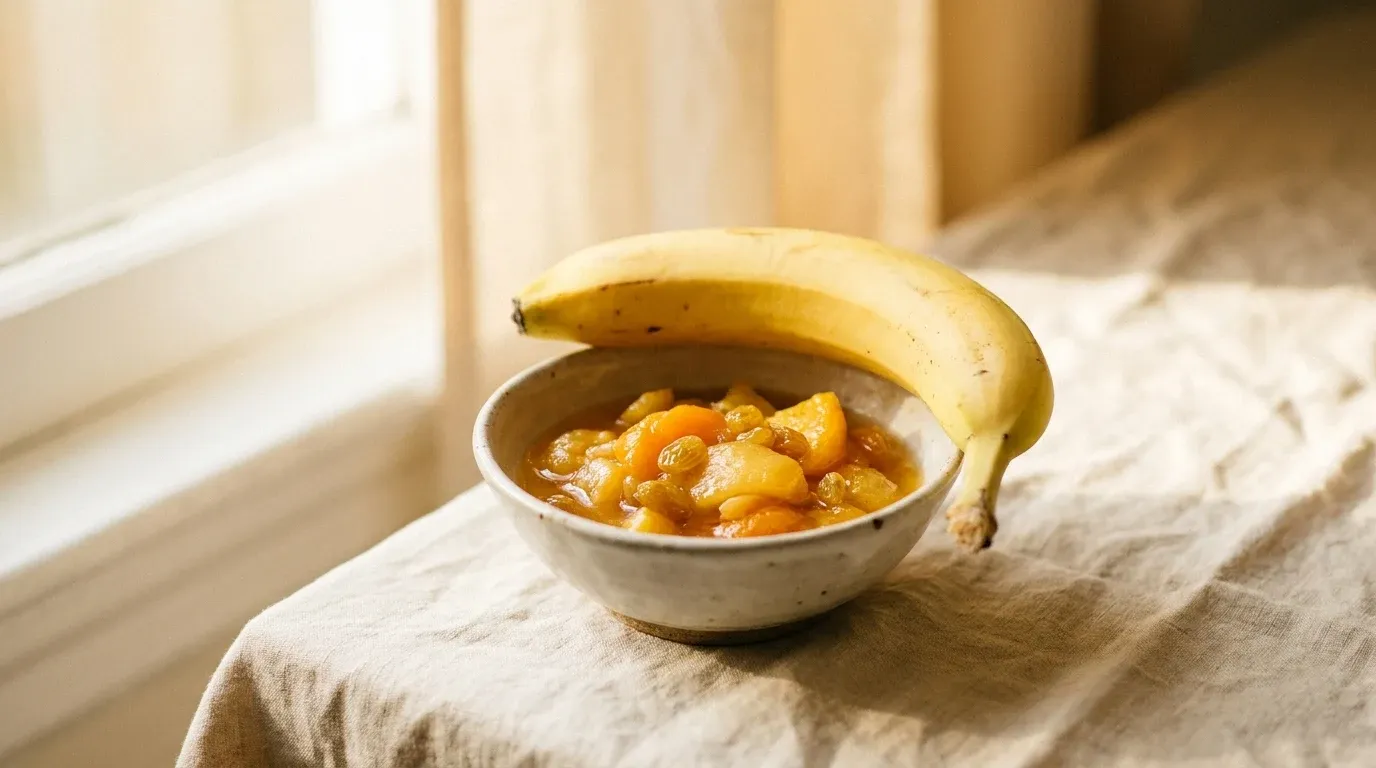
Ripe bananas are probably the single most useful pre-training food for combat athletes. They're high in simple sugars, low in fiber compared to less ripe fruit, and digest quickly. A ripe banana can be absorbed and available as fuel within 30 to 60 minutes, making it practical even when your training window is tight.
Fruit compotes work similarly. Cooked fruit breaks down cell walls, reducing the fiber load further and accelerating digestion. A small portion of unsweetened applesauce or stewed pears provides fast carbohydrates without the GI friction of raw, high-fiber produce. White rice with a small amount of honey is another option that many combat athletes use, particularly in Asian combat sports traditions where plain rice before training has been standard practice for decades.
Refined carbohydrates in this context aren't the enemy. For pre-training purposes within two hours of a session, the speed of absorption matters more than the nutritional density of the carbohydrate source. This is one of the few times where choosing white bread over whole grain, or fruit juice over whole fruit, is genuinely the right call.
Research on carbohydrate oxidation during high-intensity intermittent exercise consistently shows that muscle glycogen depletion happens faster than most athletes expect. Ensuring you start training with glycogen stores topped up, and with fast-access carbohydrates in your system, reduces the drop-off in performance during later rounds. For more context on how carbohydrate intake is calibrated for high-output athletes, 90g of Carbs Per Hour: Are Endurance Athletes Overdoing It? offers a useful frame for understanding carbohydrate thresholds and when more isn't always better.
What to Cut from Your Pre-Training Window
Fat and fiber are the two macronutrients you want to minimize in the two hours before combat training. Both slow gastric emptying significantly. Fat delays stomach clearance more than any other macronutrient. Fiber, particularly insoluble fiber, adds bulk and slows transit time. Neither belongs in your pre-training meal if you want to feel comfortable during rounds.
This means skipping avocado toast, nut butter, full-fat dairy, and anything fried. It also means passing on high-fiber options like bran cereals, lentils, beans, or large amounts of raw vegetables. These are excellent foods. They just don't belong in the 90-to-120 minute window before you train.
Protein is worth a brief mention. A moderate amount of protein before training is fine, and some research supports its role in reducing muscle breakdown during sessions. But large protein boluses slow digestion, and high-protein meals eaten too close to training are commonly associated with GI discomfort. If you include protein, keep it lean, light, and small. A few slices of turkey breast or a small portion of low-fat Greek yogurt is enough. Eggs are a reasonable option if you have more than two hours before training.
Hydration is part of this picture too. Arriving to training already dehydrated impairs both physical output and cognitive sharpness, the latter being especially relevant in sparring. Drink water consistently in the hours leading up to training rather than trying to catch up in the final 20 minutes.
Timing Your Pre-Training Meal
The practical timing for most combat athletes depends on training schedule. If you're training first thing in the morning, a light, fast-digesting snack 30 to 45 minutes before is usually better than a full meal. A ripe banana, a small bowl of rice with honey, or even a sports gel is enough. If you're training in the afternoon or evening, you have more flexibility to eat a moderate meal two to three hours before, then top up with a small fast-carbohydrate snack closer to the session.
The key is not to train in a fully fasted state if the session is high intensity. The research on fasted training shows some benefit for fat oxidation during low-to-moderate intensity work, but high-intensity combat training with technical demands requires cognitive alertness and glycolytic fuel. Fasted sparring is not the same as fasted jogging.
Body weight management also complicates pre-training nutrition for combat athletes who compete in weight classes. If you're in a cutting phase, the caloric constraints are real, but the approach to meal composition before training doesn't fundamentally change. Prioritize carbohydrates, minimize fat and fiber, and keep portions appropriate to your caloric budget. Severe restriction before high-intensity sessions increases injury risk and impairs technical learning. The article on REDs: The Hidden Energy Deficit Killing Your Performance addresses what happens when energy availability drops too low, a risk that's particularly relevant for fighters cutting weight aggressively.
Supplementation in the Pre-Training Window
Caffeine is the most evidence-supported ergogenic aid for combat sports athletes. Studies show it improves reaction time, reduces perceived exertion, and can sustain output during repeated sprint efforts. A dose of 3 to 6 mg per kilogram of body weight, taken 30 to 60 minutes before training, is the range most commonly studied. That's roughly 200 to 400 mg for many adult athletes, though individual tolerance varies considerably.
Creatine monohydrate is worth taking consistently if you're not already, though its timing is less critical than caffeine. It doesn't need to be part of your immediate pre-training window. Beta-alanine is used by some combat athletes for its buffering capacity during high-intensity efforts, though the tingling sensation it causes is enough of a deterrent for many people.
Keep pre-training supplementation simple. The nutrition fundamentals matter far more than any stack of supplements. If you're not eating appropriately, no supplement will compensate for it. For a broader view of what current evidence recommends, JFN 2026: What Sports Nutrition Experts Say You Should Change is worth reading alongside your current approach.
Test Everything in Training, Never on Fight Day
This is the most important practical rule in combat sports nutrition, and it's often ignored until something goes wrong. Whatever pre-training meal strategy you're considering, it needs to be tested across multiple training sessions before you rely on it for a competition. Your digestive system is unpredictable under stress. What works on a Tuesday evening sparring session might not work on a Saturday morning weigh-in day, when anxiety is high and your nervous system is already activated.
Fight day nutrition is not the place for experimentation. If you've never eaten a banana and rice before training, don't make it your pre-fight meal. If caffeine from a new product upset your stomach once in training, don't assume it won't happen again when it matters most. Use training cycles deliberately. Treat nutrition as a variable that needs to be optimized through the same kind of repetition and refinement you apply to your technique.
Beyond the immediate pre-training window, your overall nutrition throughout the week sets the baseline. Recovery between sessions, sleep quality, and consistent energy intake all affect how well you absorb and perform during training. Active vs. Passive Recovery: Which One Do You Actually Need is a useful companion read for understanding how to structure the full recovery picture around demanding training blocks.
Combat sports ask a lot of your body. Respecting the specific digestive demands of this kind of training, and building a pre-training nutrition approach around them, is one of the clearest performance edges that athletes at every level routinely leave on the table.