
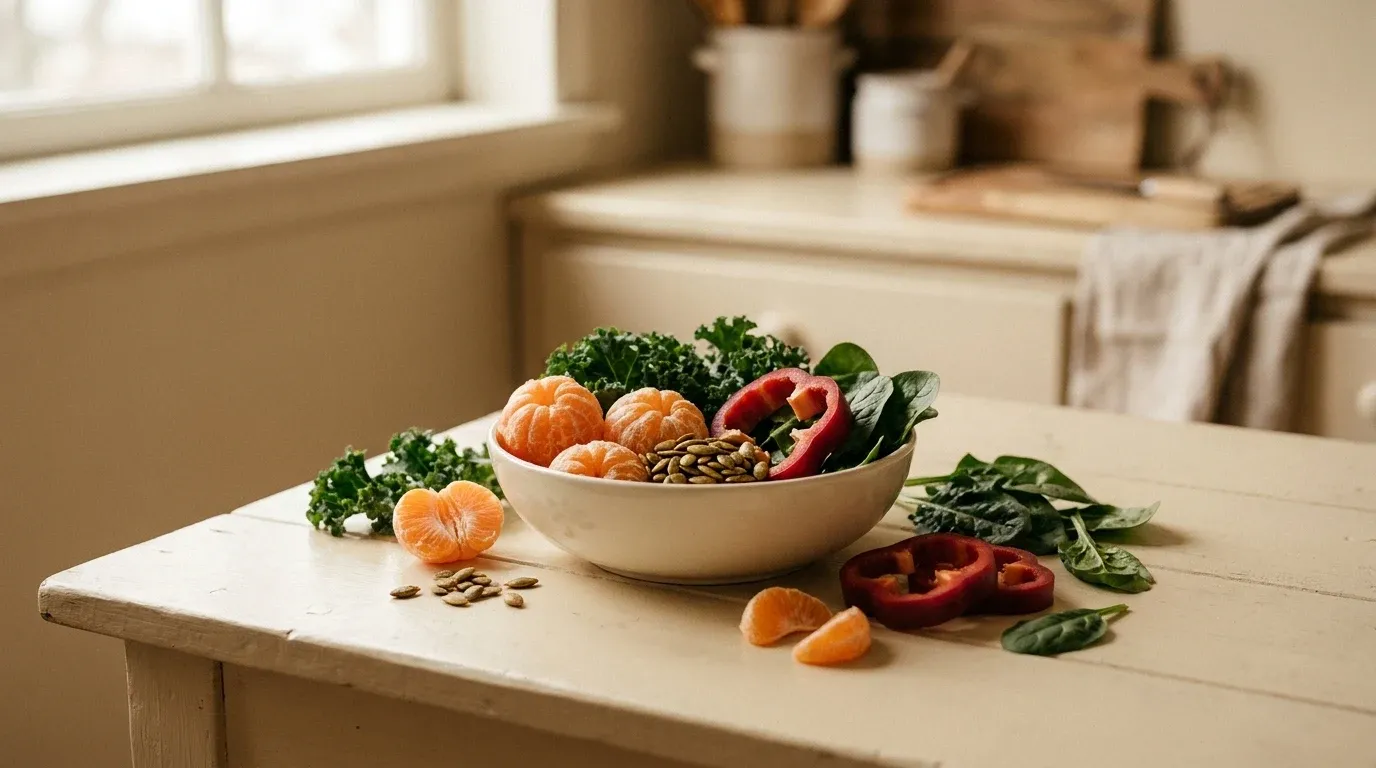
Winter is a rough season to be a serious athlete. You're training hard, daylight is short, and everyone around you is coughing. What most athletes don't realize is that those heavy training blocks are actively suppressing your immune system at exactly the moment your environment is loading it with threats. The fix isn't a shelf full of supplements. It's a smarter approach to what you eat and when you eat it.
Why Hard Training Leaves You Vulnerable
Every intense session triggers a temporary window of immune suppression. The key mechanism involves secretory immunoglobulin A, or sIgA. This antibody sits in your mucosal membranes, the linings of your nose, throat, and airways, and acts as your body's first line of defense against airborne pathogens. After a hard workout, sIgA concentrations drop significantly and can remain suppressed for up to 72 hours.
During that window, the common cold, flu, and other upper respiratory tract infections (URTIs) have a much easier time taking hold. Research tracking competitive endurance athletes consistently shows that URTI incidence spikes following periods of intensified training, not during moderate phases. The harder you push, the more pronounced the dip.
This isn't an argument to train less. It's an argument to treat the post-workout period as a genuine intervention window, not just a recovery window for muscle repair. What you eat in the hours after a session directly influences how quickly your immune defenses rebuild.
Carbohydrates: The Underrated Immune Lever
Carbohydrate intake around training sessions is one of the most evidence-backed strategies for blunting exercise-induced immune suppression, and it's one of the most ignored. When you train in a low-carbohydrate state, cortisol and epinephrine spike higher than they do when you're fueled. Those stress hormones suppress immune cell function and compound the sIgA drop.
Consuming carbohydrates during and after prolonged or high-intensity sessions keeps cortisol responses in check. Studies consistently show that athletes who consume 30 to 60 grams of carbohydrate per hour during sessions lasting over 90 minutes experience significantly smaller drops in immune markers compared to those training fasted or carb-depleted.
This doesn't require anything exotic. A banana, a handful of dates, or a glass of orange juice before or during a hard session can meaningfully change your immune response afterward. Post-workout, pairing carbohydrates with protein helps restore glycogen and supports the immune signaling that your body needs to rebuild mucosal defenses. And given that your protein and exercise needs are higher than you think, the combination matters more during winter training blocks than most athletes account for.
Zinc and Vitamin C From Food, Not Pills
Two micronutrients stand out in the athlete immunity literature: zinc and vitamin C. Both are involved in immune cell production and function. Both are frequently deficient in athletes eating high-volume, low-variety diets. And both are significantly better absorbed from whole foods than from most supplement forms.
Zinc is essential for the development of immune cells called natural killer cells and T-lymphocytes. Deficiency doesn't have to be severe to blunt your immune response. Mild zinc insufficiency, common in athletes restricting calories or eating primarily plant-based, is enough to slow immune recovery after hard sessions.
The best food sources of highly bioavailable zinc include:
- Oysters (by far the most concentrated source)
- Red meat, particularly beef and lamb
- Pumpkin seeds and hemp seeds
- Legumes, though absorption is lower due to phytates
- Full-fat dairy products, which also offer additional recovery benefits covered in the new research on full-fat dairy
Vitamin C concentrates in immune cells at levels far higher than in most other tissues, which tells you something about how central it is to immune function. It supports the production of white blood cells and acts as an antioxidant to protect those cells from damage during the oxidative stress of intense training.
Supplemental vitamin C has shown mixed results in athlete populations. Whole food sources perform more consistently, likely because they deliver co-factors, bioflavonoids and polyphenols, that enhance absorption and cellular uptake. Focus on:
- Bell peppers, especially raw red and yellow varieties
- Kiwi fruit (two kiwis provide over 100% of the daily reference value)
- Citrus fruits and their juices
- Broccoli and Brussels sprouts, lightly cooked to preserve vitamin C content
- Strawberries and blackcurrants
Practical target: aim for at least three to four servings of vitamin C-rich vegetables or fruit daily during heavy training weeks, prioritizing raw or lightly cooked preparations. Heat degrades vitamin C significantly, so a raw bell pepper in your post-workout meal beats a roasted one.
Probiotic Foods Outperform Most Supplements for URTI Prevention
The gut-immune axis is not a wellness trend. It's a well-established physiological reality. Roughly 70 percent of your immune tissue is located in or around the gut, and the composition of your gut microbiome directly influences how effectively that tissue responds to threats.
Multiple meta-analyses now confirm that probiotic interventions reduce the incidence, duration, and severity of upper respiratory tract infections in exercising adults. The evidence for probiotic-rich foods is at least as strong as, and in some studies stronger than, the evidence for standalone probiotic supplements. That's partly because foods deliver live organisms alongside prebiotic fibers, polyphenols, and other compounds that support microbial colonization in ways a capsule can't replicate.
It's also worth noting the broader context. As covered in why supplement sales are slipping despite market growth, consumer trust in supplements is eroding precisely because whole food approaches keep outperforming pill-form alternatives in head-to-head research. Probiotic supplements are a clear example of that pattern.
The probiotic foods with the strongest evidence in athletic populations include:
- Live-culture yogurt and kefir: aim for products that specify "live and active cultures" on the label. Plain, unsweetened versions give you the microbiome benefit without the added sugar load.
- Fermented vegetables: sauerkraut and kimchi, unpasteurized versions from the refrigerated section, deliver Lactobacillus strains consistently associated with URTI reduction.
- Miso and tempeh: useful for athletes eating plant-forward diets, and both also contribute meaningful protein alongside probiotic activity.
- Aged cheeses: Gouda, cheddar, and similar varieties contain live cultures that survive digestion at reasonable rates.
Practical target: include at least one serving of a probiotic-rich food daily throughout the winter training block, ideally with a meal that includes prebiotic-rich vegetables or legumes to feed the beneficial bacteria you're introducing.
Timing Matters as Much as What You Eat
The post-workout immune window is real and specific. The 30 to 90 minutes after a hard session is when sIgA is lowest and cortisol is highest. Eating a mixed meal within that period, one that includes carbohydrates, protein, zinc-rich foods, and something probiotic, stacks multiple immune-supportive mechanisms simultaneously.
That might look like: Greek yogurt with kiwi and pumpkin seeds, a beef and broccoli stir-fry over rice, or a smoothie with kefir, berries, and a handful of spinach. None of these require elaborate preparation. They require the decision to treat post-workout nutrition as seriously as the workout itself.
Sleep is the other timing factor that can't be separated from immune resilience. Even a perfect post-workout meal can't compensate for chronically poor sleep, which independently suppresses immune function. If your training schedule is pushing your sleep window shorter or later, that's worth addressing directly. The relationship between sleep consistency and overall health outcomes is one of the clearest findings in sports science over the past decade.
What to Actually Put on Your Plate This Winter
You don't need a complicated protocol. The evidence points to a surprisingly simple set of priorities, executed consistently across a training block.
- Fuel your sessions: don't train hard in a carb-depleted state if immune resilience is a priority. Eat before, during sessions over 90 minutes, and immediately after.
- Eat zinc-rich foods at least once daily: rotate between red meat, shellfish, seeds, and legumes depending on your dietary approach.
- Hit three to four servings of vitamin C-rich produce daily: bell peppers, kiwi, citrus, and brassicas should be winter staples, not afterthoughts.
- Add a probiotic food to at least one meal per day: yogurt, kefir, kimchi, or sauerkraut. Consistency over weeks matters more than quantity at any single meal.
- Protect your sleep: the full picture of winter resilience for athletes includes rest, stress management, and the kind of structured recovery covered in this practical winter reset guide.
Winter illness isn't inevitable. For athletes training hard through the cold months, the immune system is a performance variable, one that responds directly to what you eat and when. The leverage is in your kitchen, not in a supplement stack.