
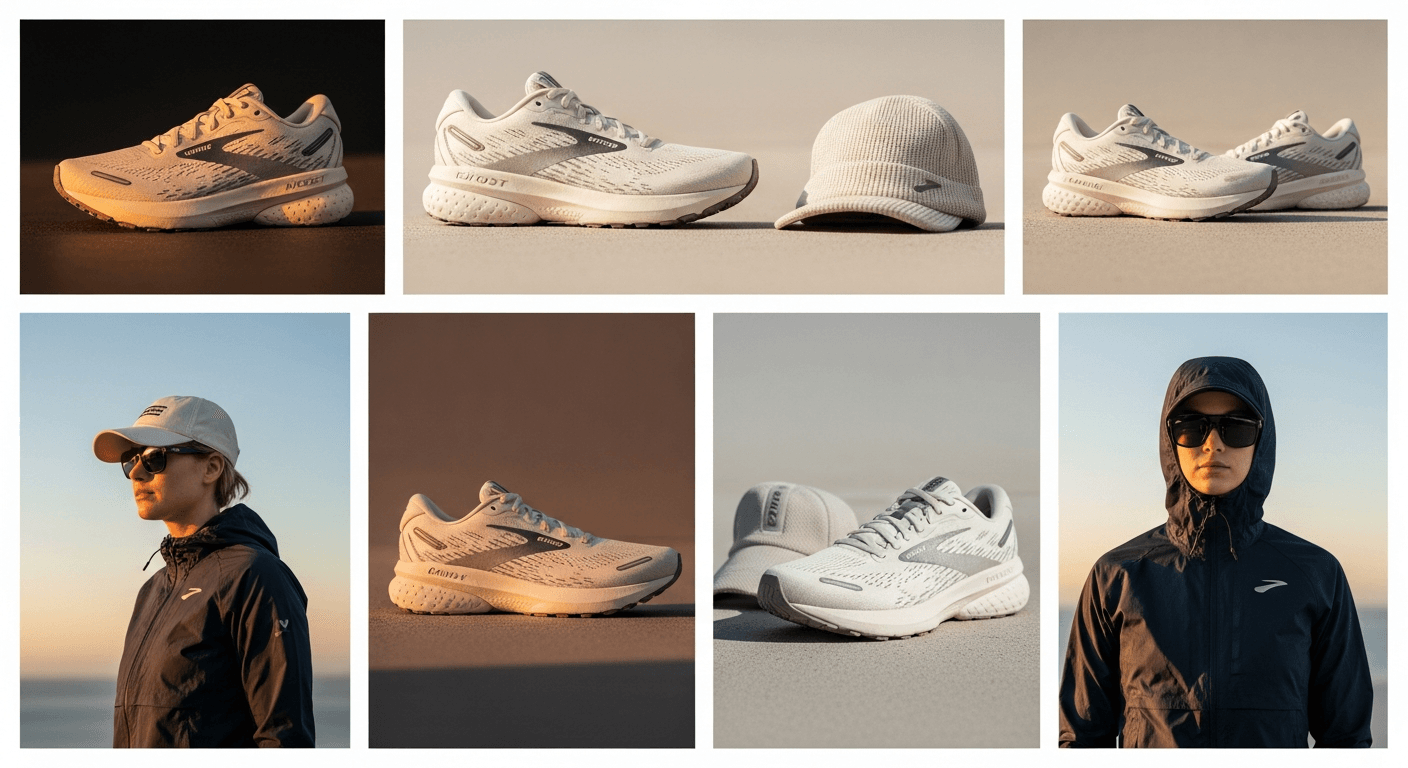
Brooks Running just posted its strongest quarter on record. Q1 2026 delivered 23% year-over-year global sales growth, outpacing most major running competitors in the same period. That number alone is worth paying attention to. What's driving it tells you something far more useful about where specialty fitness brands are headed.
The story isn't just shoes. Brooks is executing a deliberate head-to-toe product strategy, and apparel is accelerating fast enough to be called a core revenue pillar. If you're building or operating a brand with a dominant single-category identity, this is the blueprint you need to study right now.
A Record Quarter Built on More Than Footwear
Brooks has always been a shoe brand. That reputation is earned. Its Ghost, Glycerin, and Adrenaline lines hold serious loyalty among road runners, and the brand has maintained specialty retail relationships that most running labels envy. But Q1 2026 made something clear: footwear alone is no longer the whole growth story.
Apparel acceleration was explicitly cited as a contributor to the record quarter. The Dash collection performed strongly. Specific bra styles pulled volume. These aren't peripheral wins dressed up in a press release. They signal that soft goods are being treated as a strategic growth category, not a margin afterthought. For a brand historically synonymous with the midsole, that's a significant internal shift.
The broader apparel market context makes this timing deliberate rather than opportunistic. the athleisure category has crossed $900 billion globally, and specialty brands that ignore that headroom are leaving durable revenue on the table. Brooks isn't ignoring it. It's building into it with product that's clearly designed for the runner who already trusts the brand.
The Retention Logic Behind Head-to-Toe
Here's where Brooks' strategy gets interesting for brand operators. The company isn't framing its apparel push purely as a margin play. It's framing it as a retention and loyalty tool. That distinction matters enormously when you're thinking about customer lifetime value.
A runner who buys one pair of shoes is a transaction. A runner who buys shoes, a sports bra, shorts, and a running jacket is a relationship. The repeat purchase cycle shortens. The brand's share of that athlete's spend increases. And when that customer replaces their gear, they don't start their search at zero because they're already inside your ecosystem.
Runner brand loyalty is at a documented high in 2026. That means the competitive window to deepen those relationships is open right now, but it won't stay that way indefinitely. Brands that convert loyal footwear customers into multi-category customers during this period are building a structural advantage that's genuinely hard to unwind.
The math is straightforward. If your average order value for a shoe purchase is $160 and you add a $65 top and a $75 short to that transaction, you've nearly doubled revenue per visit without acquiring a new customer. Multiply that across a customer base with strong repeat purchase intent, and the numbers become substantial fast.
What Single-Category Brands Get Wrong
Most specialty fitness brands underinvest in adjacent categories for one of two reasons. Either they're protecting brand equity from dilution, or they don't have the product development infrastructure to do it credibly. Both are real concerns. Neither is a permanent excuse.
The dilution fear is worth addressing directly. Brooks running shoes are still the anchor. Nothing about launching a strong apparel line has softened that identity. In fact, the opposite tends to be true. When your apparel is designed specifically for the athlete who uses your primary product, it reinforces category authority rather than blurring it. A Dash collection built for runners signals that Brooks understands the runner's full body experience. That's brand deepening, not brand dilution.
The infrastructure problem is real but solvable. Apparel requires different sourcing, different fit models, different retail merchandising logic. It's not trivial. But the brands that treat it as an investment in customer retention rather than a separate P&L pressure point find the numbers easier to justify. Brooks appears to have made exactly that framing shift internally, and Q1 2026 is the early validation.
The Lifetime Value Play Every Fitness Brand Should Copy
The principle Brooks is executing isn't unique to running. It applies directly to any fitness brand that has built strong single-category trust. Cycling brands, yoga brands, strength training brands, swim brands. If your customer trusts your product in one category, they're the warmest possible prospect for your product in an adjacent one.
The question is whether you're building the systems to capture that. Average order value is one metric. Churn reduction is another. When a customer is buying multiple categories from you, the cost of switching brands rises significantly. They're not just replacing a shoe. They're rebuilding a wardrobe. That friction is enormously valuable to you as a brand operator.
This dynamic is playing out across the premium fitness space more broadly. Operators who build deeper product and service ecosystems are seeing meaningfully better retention metrics than those who offer a single touchpoint. Life Time's Q1 2026 results show exactly how multi-service ecosystems stress-test and ultimately reward retention-focused operators. The logic is the same whether you're selling memberships or running gear.
Brooks' head-to-toe strategy is also benefiting from the data infrastructure that modern specialty retail enables. When you know which customers buy shoes every eight months and haven't purchased apparel, you have a clear, high-intent segment to activate. That kind of segmentation turns apparel from a passive category into an active growth lever.
Brand Identity in a Crowded Market
There's a third dimension to this strategy that's easy to miss. It's not just about revenue per customer or churn reduction. It's about what the brand communicates when it shows up head-to-toe in a race photo, a run club post, or a retail display.
Running as a sport has enormous social visibility right now. Strava's $2.2 billion valuation reflects just how deeply run culture has embedded itself into digital fitness identity. Every runner posting a workout, sharing a race recap, or tagging a run club is a walking brand surface. If Brooks owns the shoes and the kit, it owns more of that surface.
That's not an abstract benefit. Brands that achieve head-to-toe visibility in active lifestyle communities generate organic reach that paid media can't replicate efficiently. It's the same principle that built Nike's dominance in basketball and Lululemon's in yoga. You don't just sell to the activity. You become the visual language of it.
Brooks is clearly pursuing that position in running, and Q1 2026 suggests it's working. The Dash collection performing strongly isn't just an SKU win. It's evidence that runners are choosing to represent Brooks from their shoulders to their shoes. That's a brand signal with long-term compounding value.
What You Should Be Building Right Now
If you're running a specialty fitness brand and this trajectory concerns you, it should. The window to deepen customer relationships before competitors lock them in is narrow. Here's what the Brooks playbook translates to in practical terms.
- Audit your single-category customers for adjacent purchase potential. Which segments have high repeat purchase rates in your core category but zero engagement with anything else you offer? Those are your warmest apparel or accessory prospects.
- Design adjacent products for your specific athlete, not for a generic fitness consumer. Brooks' apparel works because it's built for runners. Generic activewear from a running brand would have landed differently. Category credibility requires product specificity.
- Frame the investment internally as a retention tool, not a new revenue line. That framing changes which metrics you optimize for and how you evaluate success in the early quarters before volume builds.
- Build merchandising that tells the head-to-toe story at every touchpoint. Retail displays, email flows, product pages. Every customer interaction is an opportunity to show them the full ecosystem they're not yet inside.
- Track multi-category customer LTV separately. You need to see the actual lifetime value gap between single-category and multi-category customers to justify continued investment and to make the case internally.
The fitness and wellness market is consolidating around brands that earn depth of relationship, not just breadth of reach. the $900 billion athleisure market rewards brands that own the full outfit, not just the hero product. Brooks is proving that a specialty brand with a strong single-category foundation can make that transition without sacrificing the identity that made it matter in the first place.
Q1 2026 is the headline. The real story is the infrastructure and strategic logic underneath it. That's what you should be building toward, regardless of what category your brand currently owns.