
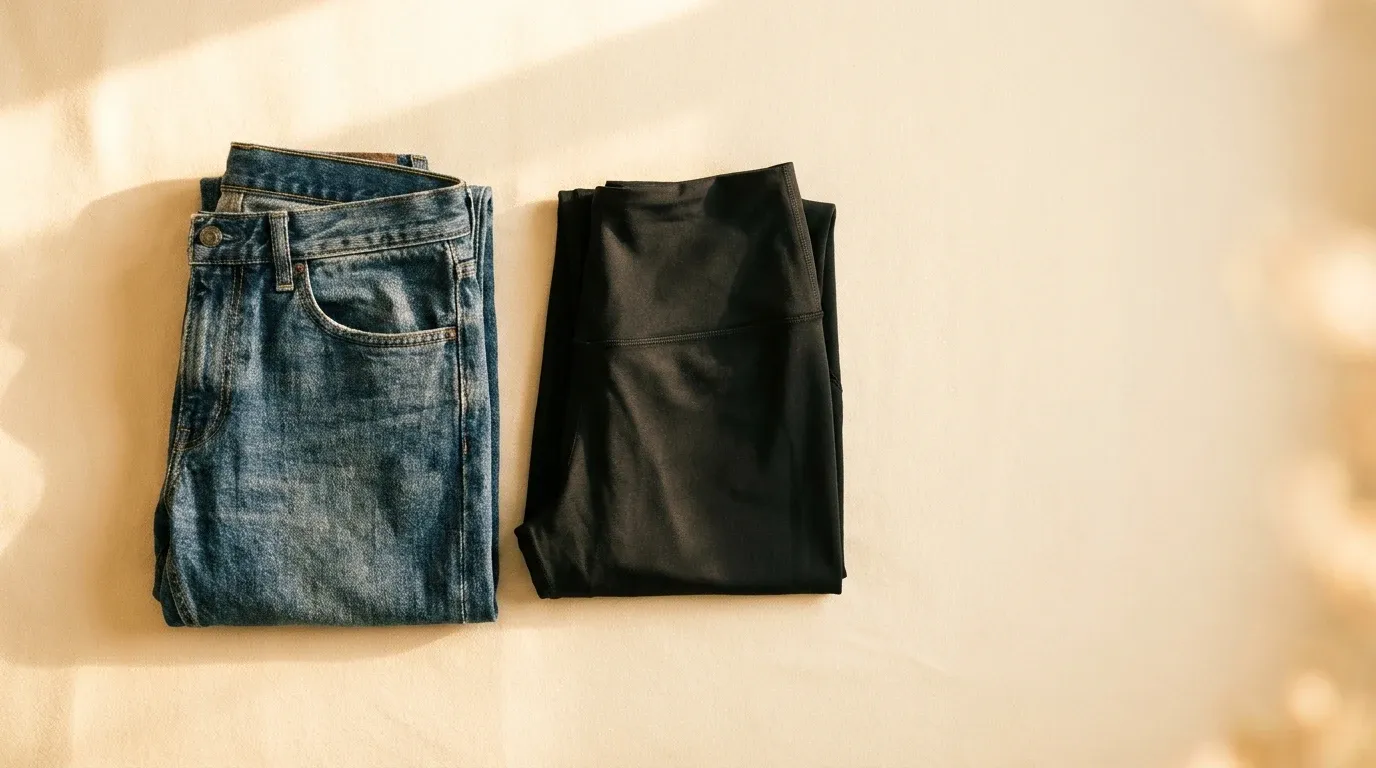
On November 3, 2026, Authentic Brands Group completed its acquisition of the Lee intellectual property from Kontoor Brands. That single transaction handed ABG control of one of the most recognized denim names in the world, a label with over 130 years of heritage and genuine global recall across North America, Europe, and Asia-Pacific markets.
What ABG intends to do with that IP is the more consequential story. The company has stated clearly that Lee will expand into activewear and workwear. If you operate in the mid-tier fitness apparel space, that statement deserves more attention than it's currently getting.
What ABG Actually Bought
Kontoor Brands, which had spun off from VF Corporation in 2019, retained Lee's core denim operations but sold the intellectual property outright. That distinction matters. ABG doesn't manufacture. It owns names, trademarks, and licensing rights, then deploys those assets through a global network of retail and manufacturing partners.
What ABG acquired with Lee is not a factory floor or a supply chain. It's decades of brand equity, a recognizable wordmark, and a heritage positioning in workwear and durable casual apparel. Those assets translate directly into licensing leverage across any category ABG chooses to enter.
Lee jeans have been worn on job sites, in high schools, and at country fairs for generations. That cultural footprint is exactly what ABG's model is designed to monetize in adjacent categories at scale.
The ABG Playbook, Applied to Lee
ABG has executed this model repeatedly. Its portfolio includes Sports Illustrated, Reebok, Forever 21, Barneys New York, Brooks Brothers, Nautica, and Volcom, among others. The consistent logic is straightforward: acquire a brand with high consumer recognition but underperforming commercial infrastructure, strip back or outsource manufacturing, and relicense the name into new categories through retail partners who already have shelf space and customer traffic.
Reebok is the clearest precedent for what Lee's activewear pivot might look like. After ABG acquired Reebok from Adidas in 2022, the brand was relicensed across performance footwear, training apparel, and fitness accessories. It now appears in mass retail, mid-market sporting goods chains, and direct-to-consumer channels simultaneously. It's not trying to out-innovate Nike on performance technology. It's winning on name recognition and price accessibility.
Lee's activewear entry will follow a similar logic. ABG will identify licensing partners with existing activewear manufacturing and retail relationships, attach the Lee brand to product lines positioned around durability and functional casualwear, and distribute through channels ranging from mass market to mid-tier specialty. The machine is already built. Lee is the next input.
This is the same structural shift reshaping fitness infrastructure broadly. As Xponential's Poison Pill: What It Signals for Boutique Fitness M&A illustrates, legacy brand equity and licensing scale are increasingly the competitive moats that determine who wins positioning battles in crowded categories.
Why Activewear and Workwear Specifically
ABG's category selection for Lee is not arbitrary. The global activewear market was valued at approximately $384 billion in 2023 and continues to grow at a compound annual rate above 6 percent. Workwear-adjacent functional apparel, the segment that sits between traditional denim and performance sportswear, is one of the fastest-growing pockets within that broader category.
Lee's heritage is a direct credential in that space. The brand built its early identity around durable work apparel before denim became a fashion category. Repositioning Lee as a performance workwear and functional casualwear brand isn't a stretch. It's a return to a core consumer association that has simply been dormant under Kontoor's narrower denim focus.
ABG is also reading a clear consumer signal. The boundary between workwear, casualwear, and activewear has collapsed for a large portion of the market. Consumers wearing stretch-fabricated pants to job sites, functional hoodies on hiking trails, and moisture-wicking shirts to weekend errands are the same consumers Lee already reaches through its denim distribution. The category extension targets an existing audience, not a new one.
The Competitive Threat to Mid-Tier Activewear Brands
Here's where this gets uncomfortable for existing activewear operators. Mid-tier brands, those positioned above fast fashion but below Nike, Lululemon, and On, are already under structural pressure. They don't have the R&D budgets of the mega-brands and they can't match the speed or price aggression of private-label fast fashion. That squeeze is real and intensifying.
Lee's entry doesn't threaten the top of the market. Nike and Lululemon compete on proprietary performance technology, community ecosystems, and brand prestige that a licensed heritage play can't replicate at launch. But the mid-tier is exposed, particularly in functional casualwear, stretch workwear, and the outdoor-adjacent segments where performance claims don't need to be extreme to be credible.
A consumer choosing between an unfamiliar mid-tier activewear brand at $65 and a Lee-branded functional pant at $55 may default to the name they already trust. That's the heritage credibility threat. It's not about Lee producing technically superior product. It's about brand recognition functioning as a shortcut in purchase decisions, particularly in mass and mid-market retail environments where consumers aren't deeply engaged with performance specifications.
ABG's licensing scale compounds the problem. Lee won't appear in one channel. It will appear in mass retail, sporting goods chains, online marketplaces, and potentially premium specialty simultaneously, depending on which licensing partners ABG recruits. A brand positioned purely at mass can be avoided. A brand that appears everywhere at multiple price points is much harder to outmaneuver on shelf.
The same dynamic is playing out across fitness categories. WHOOP and Ultrahuman Show Where Wearable Money Is Going captures how brand positioning and distribution scale are increasingly separating winners from the crowded middle in every fitness-adjacent vertical.
What Brand Managers Should Watch
If you're managing an activewear or functional apparel brand in the mid-tier, there are specific pressure points worth monitoring as Lee's ABG repositioning develops.
- Retail shelf allocation. ABG's existing relationships with major retailers mean Lee could displace shelf space currently held by smaller brands without those brands having visibility into the decision until it's already executed.
- Price anchoring in workwear-adjacent categories. If Lee enters at accessible price points backed by heritage credibility, it sets a new reference price in those segments. Brands priced above that level will need sharper justification for their premium.
- Licensing partner identity. The manufacturing and retail partners ABG recruits for Lee's activewear lines will reveal the category's intended positioning. Watch for announcements from established activewear manufacturers or sporting goods retailers taking on Lee licensing agreements.
- Channel strategy signals. ABG's approach with Reebok and Nautica suggests simultaneous multi-channel distribution rather than a staged rollout. Lee's activewear entry may saturate channels faster than a traditional brand launch would.
The Broader Pattern in Fitness and Wellness
Lee's repositioning is one expression of a wider trend reshaping how fitness and wellness brands compete. Heritage labels with genuine consumer recognition are being acquired, restructured, and deployed into high-growth adjacencies by holding companies with global distribution infrastructure. The brand does the trust work. The platform does the distribution work.
This model is accelerating across gym operations, fitness technology, and apparel simultaneously. The operators and brand managers who understand it structurally are better positioned to respond before the competitive impact lands on their P&L.
For activewear brands specifically, the response isn't necessarily to compete directly with Lee on heritage. It's to identify the differentiation points that a licensed heritage play structurally cannot match: authentic community, genuine performance innovation, specific subcultural credibility, or direct relationships with high-intent fitness consumers who don't make purchase decisions based on legacy brand recognition alone.
Those consumers exist and they're reachable. 24 Hour Fitness Goes Premium: What Operators Can Learn shows how repositioning around genuine community and elevated experience can create defensible differentiation even in a commoditizing market. The logic applies equally to apparel brands navigating the same structural squeeze.
Lee isn't entering activewear because ABG believes it has a better product story. It's entering because ABG has a distribution and licensing machine that makes heritage brand adjacency plays financially logical regardless of category. Understanding that distinction is the first step in figuring out how to compete with it.
If you're building a training wardrobe rather than a brand strategy, it's worth remembering that the best fitness apparel is still the one you'll actually wear consistently. What goes on the label is a corporate decision. What goes on your body is yours. For programming guidance that holds up regardless of what you're wearing, Winter Strength Block: Program Your Next 12 Weeks gives you a structured framework built around what actually moves the needle in the gym.