
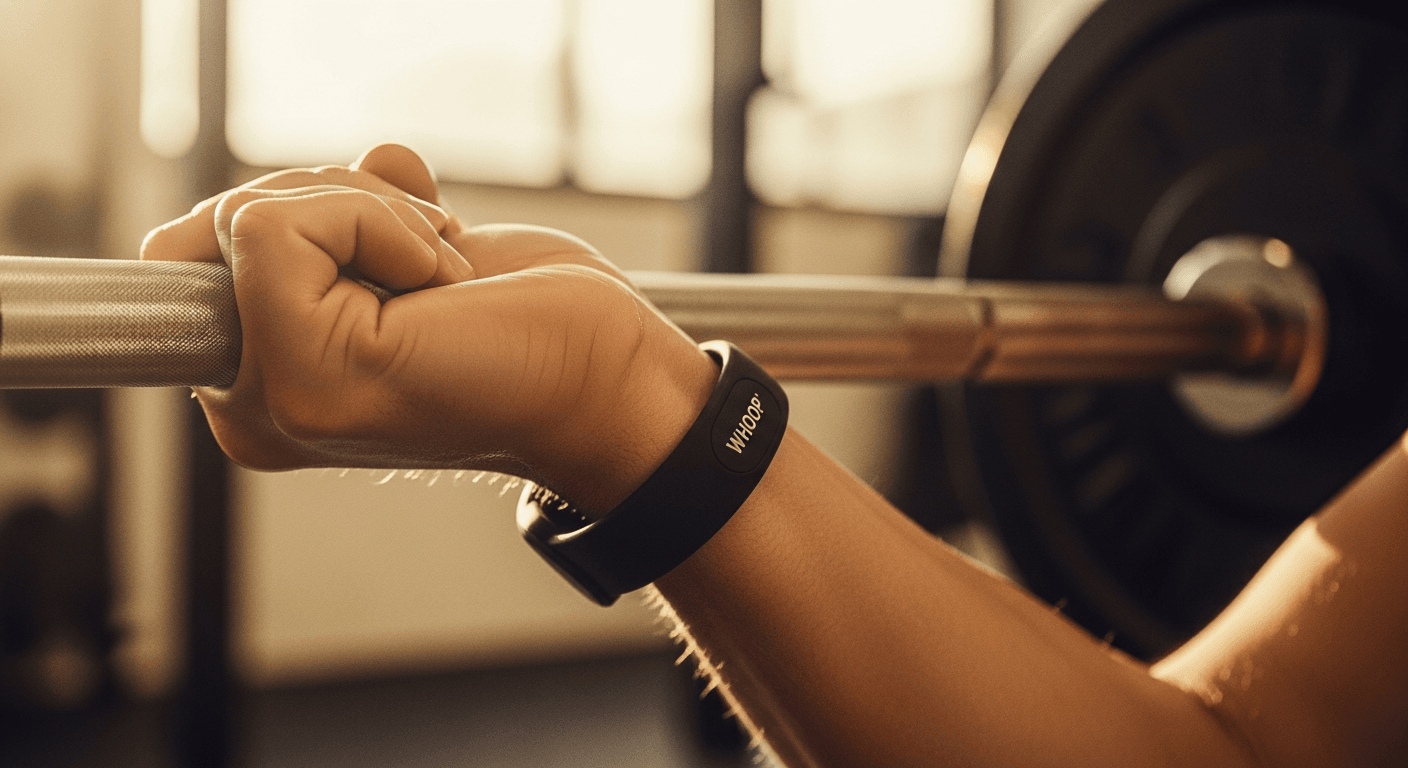
Two moves, a few weeks apart, redrew the wearable fitness landscape. In late March 2026, WHOOP closed a $575 million Series G at a $10.1 billion valuation -- nearly tripling its previous $3.6 billion mark. In early June, Oura launched the Ring 5, the world's smallest smart ring, at $399. The signal from both is identical: wearables aren't fitness gadgets anymore. They're health platforms.
Key Takeaways
- WHOOP raised $575M in Series G at a $10.1B valuation, nearly tripling its previous valuation
- Round includes Qatar Investment Authority, Mubadala, Abbott, Mayo Clinic, Ronaldo, and LeBron James
- WHOOP has 2.5M+ members; subscriptions grew 103% YoY; company was cash flow positive in 2025
- Oura Ring 5 shipped June 4 at $399, 40% smaller than its predecessor, with blood pressure signal tracking
- Both companies are building health data platforms, not just fitness trackers
The WHOOP Round: When Sovereign Wealth Backs Fitness
WHOOP's Series G isn't a typical venture round. The presence of Qatar Investment Authority and Mubadala in the cap table marks an inflection point in the institutional legitimization of fitness tech. This isn't early-stage VC making long-shot bets. These are permanent capital vehicles betting on the convergence of consumer health and medical monitoring.
Abbott and Mayo Clinic in the round add another layer. They position WHOOP explicitly in the continuum between consumer health and healthcare -- a repositioning that's strategically significant for a company that started as a wristband for elite athletes.
The operating metrics justify the confidence. WHOOP has crossed 2.5 million members. Subscriptions grew 103% year-over-year. The company was cash flow positive in 2025. This isn't a startup burning capital looking for a model. It's a profitable business accelerating toward an IPO, according to Bloomberg.
Platform Strategy, Not Product Strategy
What distinguishes this raise from a bet on a wearable device is the underlying vision. WHOOP explicitly positions itself as a "global health platform," not a connected hardware manufacturer.
That shows up concretely: WHOOP is building partnerships with insurers and employers, exploring clinical applications of its data, and investing in AI to sharpen its recovery and readiness models. The band is the entry point. The ongoing relationship with the user -- and the data it generates -- is the real asset.
The logic isn't unlike Apple Health's playbook, which uses the Apple Watch as a Trojan horse into a much broader health ecosystem. WHOOP's differentiation is targeting the most engaged users first -- athletes, biohackers, performance-obsessed professionals -- before expanding toward mainstream adoption.
Oura Ring 5: Miniaturization as a Mass-Market Argument
While WHOOP was raising, Oura was shipping. The Ring 5, announced May 28 and available since June 4, is 40% smaller than its predecessor, making it the smallest smart ring in the world, according to the Finnish company.
Beyond the miniaturization, the new features signal where the market is heading:
- Background blood pressure signal tracking opens the door to continuous cardiovascular health applications, territory previously reserved for medical devices.
- Health Radar, rolling out from June in the US, UAE, and India, introduces continuous cardiovascular and respiratory monitoring.
- GLP-1 Insights dashboard lets users on weight-loss medications aggregate dosage and side-effect data alongside sleep, readiness, and activity scores -- a strong signal on the wearable-pharmacology convergence.
- The Counsel Health partnership lets users access licensed physicians directly inside the Oura app across 43 US states.
What These Moves Signal for the Industry
Taken together, WHOOP at $10 billion and Oura Ring 5 at $399 point to a market restructuring around three axes:
1. The line between fitness and medicine is dissolving. Cardiovascular tracking, blood pressure detection, and in-app physician access aren't conference announcements anymore. They're shipping features in consumer products. For digital health players, that's both an opportunity and a direct competitive pressure.
2. The subscription model is winning. WHOOP's 103% subscription growth illustrates the power of recurring revenue in wearable fitness. Brands that stay on a one-time hardware sale model lose user contact and the value of longitudinal data.
3. Institutional investors are validating the sector. Sovereign wealth funds and institutions like Mayo Clinic in fitness tech raises send a clear signal to brands in fundraising mode. The "fitness is a niche market" argument doesn't hold against these valuations.
For fitness brands that haven't yet thought through their data and subscription strategy, these two developments are a clear warning. Wearables have become the gravitational center of a much larger ecosystem. Brands that don't position themselves there now risk losing direct consumer access to platforms that have already figured out the play.
Sources: BusinessWire, March 2026 ; TechCrunch, May 2026 ; CNBC ; Bloomberg