
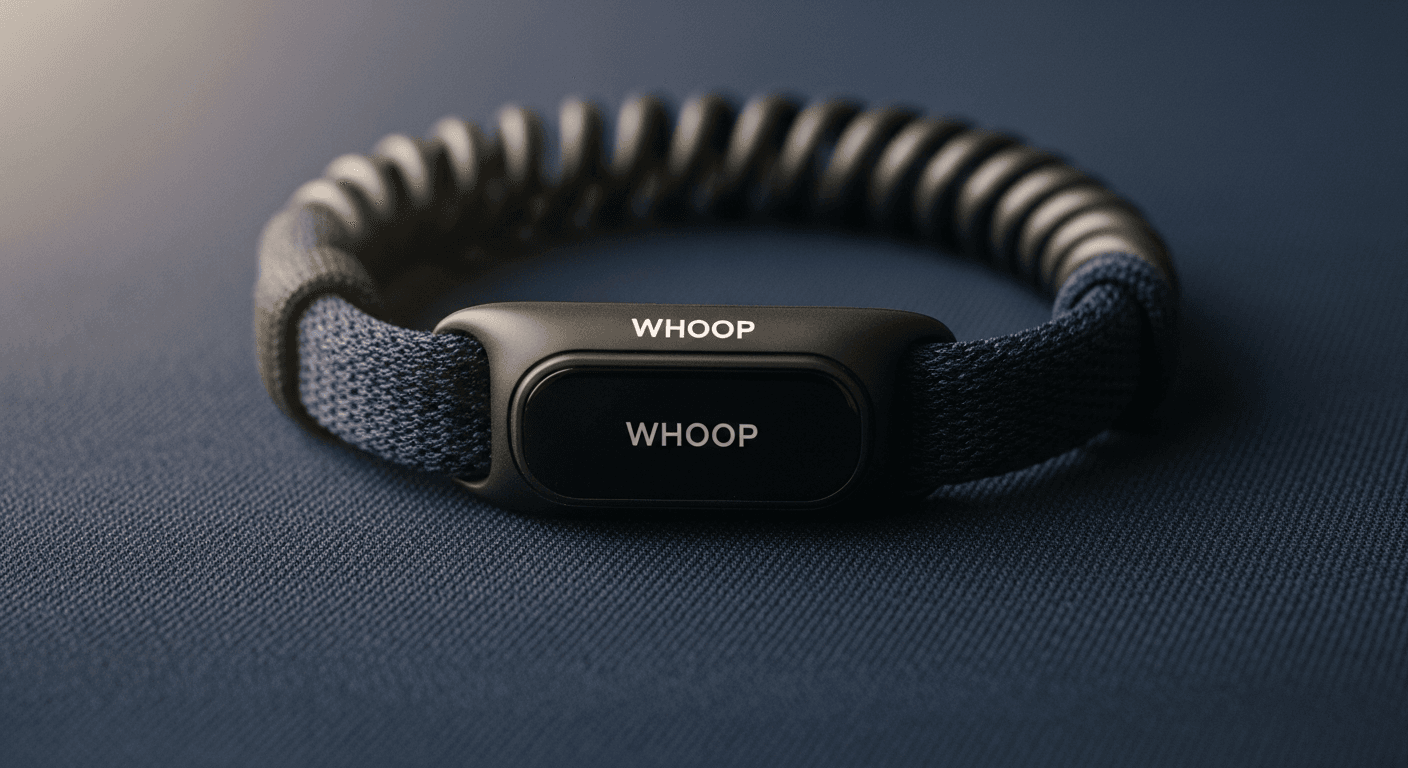
In just a few months, WHOOP has signed a partnership with Paris Saint-Germain, raised $575 million in a Series G at a $10.1 billion valuation, and grown revenue more than 100% year-over-year. For a screenless fitness band sold on subscription, that's a trajectory worth paying attention to.
What's happening here isn't just the story of a successful product. It's a signal of deep transformation in the wearables market — moving from step-counting gadgets to genuine wearable health systems.
Why the PSG Partnership Is Strategic
WHOOP isn't signing with PSG to sell bands to supporters. It's signing to anchor its positioning: WHOOP is the elite athlete's wearable. Before PSG, WHOOP had LeBron James. Before LeBron, Tiger Woods. The strategy is clear: earn credibility with professional athletes, then convert the mainstream consumer.
This is a classic strategy in performance equipment. And it works. Wearable product searches exploded early in 2026, with Oura and Garmin among the most-searched products online between December 2025 and February 2026.
The Shift: From Tracker to Health System
Five years ago, a wearable counted your steps and heart rate. In 2026, the category has evolved into comprehensive health tracking systems: recovery, stress, sleep quality, training load, and personalized behavioral recommendations.
WHOOP developed with Solidcore a custom activity profile for reformer Pilates sessions. Oura works with CorePower Yoga to use sleep, stress, and recovery data for personalized class recommendations. These brand-to-brand integrations show where the market is headed: wearables becoming data layers powering fitness experiences, not isolated products.
The Garmin Threat to WHOOP
Garmin, the GPS and outdoor watch giant, is reportedly preparing a screenless wearable called CIRQA for a May or June 2026 release. If confirmed, WHOOP faces a serious competitor with a key advantage: Garmin is trusted by millions of runners, cyclists, and triathletes — the core premium wearable demographic.
The potential differentiator: Garmin is expected to offer a no-subscription model, unlike WHOOP which charges $30-50 per month on top of the band cost. If CIRQA delivers comparable features at a lower total cost of ownership, WHOOP will need to defend its value proposition more sharply.
What This Means for Fitness Professionals
For coaches, sports trainers, and gym operators, wearable market evolution creates new opportunities and new client expectations.
Clients wearing WHOOP, an Oura Ring, or a Garmin arrive at sessions with data. They know their recovery score, heart rate variability, and last night's sleep quality. A coach who can interpret this data and integrate it into programming adds significant differentiating value. A coach who dismisses this data misses an opportunity to deepen client relationships in ways few coaches currently offer.
Market Numbers
The fitness wearable segment is expected to grow 16% this year per Counterpoint Research. With over 940 brands active in sponsorship or partnership deals in Fitness Facilities and Connected Fitness categories, competition for visibility and ecosystem integration is intense. The next battle won't be about features. It'll be about integration into fitness and health ecosystems.