
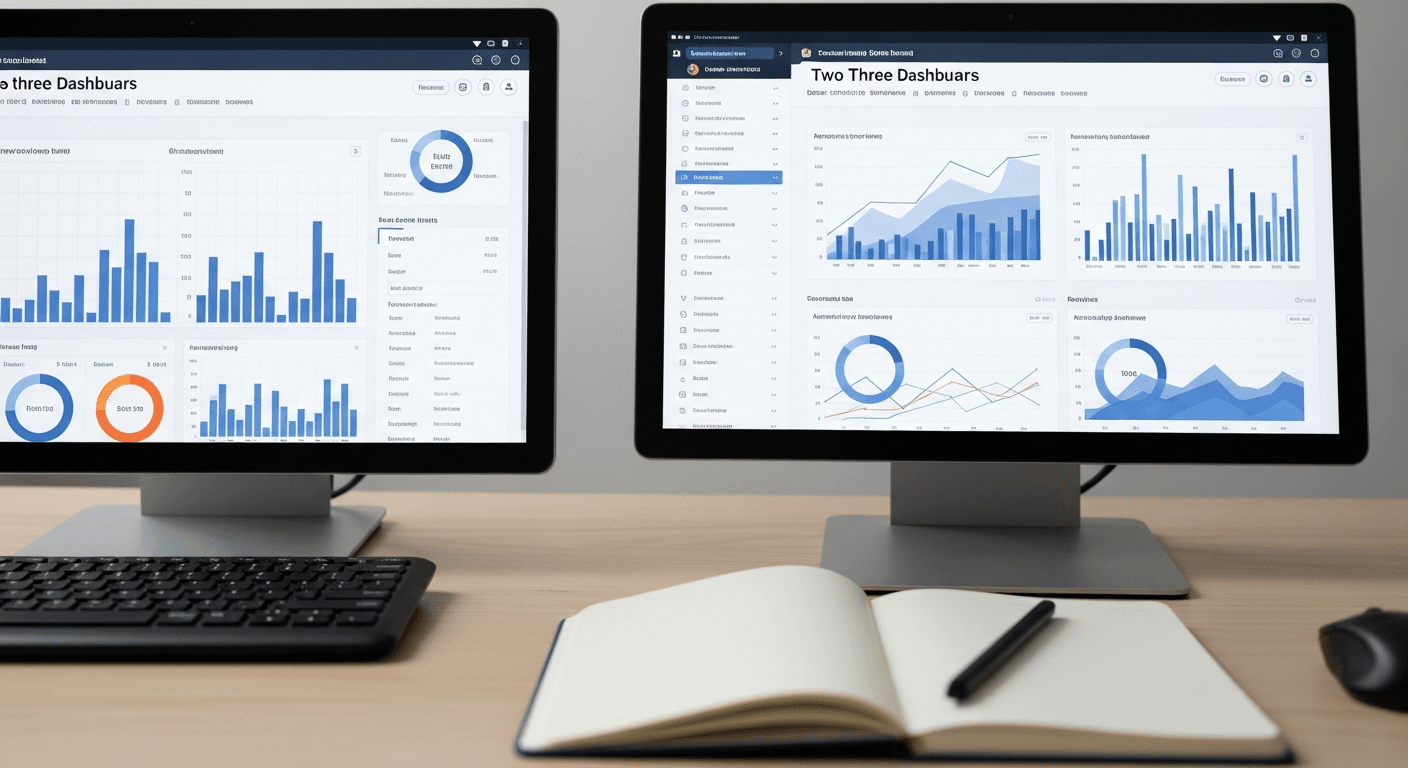
The online coaching software market is growing fast, and the numbers aren't subtle. From $4.1 billion in 2025, the sector is projected to reach $13 billion by 2035, a compound annual growth rate of 12.3% according to a February 2026 platform review. That's not a niche signal. That's a structural shift in how professional coaching gets delivered, tracked, and monetized.
For working coaches, the boom creates both opportunity and risk. More platforms mean more choice, but also more marketing noise, more feature inflation, and steeper switching costs when you pick the wrong tool early. The coaches who move deliberately now will spend less time migrating data later.
A Market Built on Bigger Forces
Coaching software doesn't exist in a vacuum. It's riding a much larger wave. The broader eLearning and digital coaching market is projected to exceed $221.71 billion globally by 2026, driven by remote work normalization, demand for flexible learning, and a measurable shift toward personalized guidance over generic content delivery.
Clients no longer tolerate one-size-fits-all programs. They expect adaptive communication, on-demand check-ins, and results that feel tailored to their specific situation. That expectation is reshaping what platforms need to offer just to stay relevant, and it's raising the baseline for what serious coaches should demand from their tools.
Platforms that understood this early positioned themselves ahead of the curve. Others are scrambling to retrofit features onto infrastructure that wasn't designed for personalization at scale. Understanding that gap is central to every platform decision you'll make in the next 12 months.
The AI Problem Nobody Talks About Openly
Here's where the market gets complicated. As of January 2026, only about 25% of coaching platforms offer genuine AI features. The remaining 75% are marketing basic automation, conditional logic sequences, and smart templates under the AI label.
That's not a minor distinction. True AI in a coaching platform means the system learns from user behavior, adapts recommendations based on new data inputs, and surfaces insights a coach couldn't easily generate manually. Automation scripts, by contrast, follow fixed rules. They trigger when conditions are met. They don't learn. They don't adapt. They execute.
The marketing language is nearly identical, which makes evaluation harder. A platform can call its onboarding sequence "AI-powered" because it uses conditional branching. A platform can claim "intelligent scheduling" because it blocks unavailable time slots. These are useful features. They're not AI.
The downstream cost of this confusion is real. Coaches who build their workflows around a platform's supposed AI capabilities, and later discover those capabilities don't exist, face a disruptive migration. Client history, session notes, payment records, and program templates don't always transfer cleanly between platforms. The switching cost isn't just financial. It's operational.
This connects directly to why recent industry moves deserve attention. When you look at acquisitions like the one covered in MyFitnessPal's purchase of Cal AI and what it means for nutrition coaching, you see the market consolidating around platforms that control both data and personalization infrastructure simultaneously.
What Baseline Looks Like in 2026
Before evaluating advanced features, you need to confirm that any platform you're considering covers the essentials. In 2026, competitive parity in coaching software means the following features are present and functional by default.
- 1:1 video coaching with stable connection quality and session recording
- Group session capability for cohort programs and community formats
- Integrated scheduling with calendar sync and automated reminders
- Secure payment processing with subscription and package options
- In-app messaging that keeps client communication off your personal channels
- Client analytics covering engagement, progress tracking, and session history
Any platform missing more than one item on this list is a liability, not a foundation. You'll spend time compensating for gaps with workarounds, third-party tools, and manual processes that don't scale. The feature set above is the floor, not a selling point.
Once you've confirmed the baseline, you can move to the three-axis evaluation framework that actually separates competitive platforms from expensive mistakes.
Three Axes That Should Drive Your Decision
Axis 1: Genuine AI Capability vs. Automation Scripts
Ask vendors direct questions. Does the platform's recommendation engine update based on client behavior, or does it follow a static decision tree? Can the system flag at-risk clients based on engagement patterns without you manually reviewing dashboards? Does program adaptation happen automatically, or do you trigger it?
If the answers are vague, that's your answer. Legitimate AI capability in a coaching platform will have a clear technical explanation behind it. Rebranded automation will deflect into marketing language about "intelligent workflows" and "smart suggestions."
The wearable data integration trend makes this even more pressing. As explored in the breakdown of WHOOP's $575 million raise and its implications for coaching strategy, the next generation of coaching intelligence depends on platforms that can ingest real-time biometric data and adapt programming accordingly. That requires actual machine learning infrastructure, not automation scripts dressed up with branded terminology.
Axis 2: Client-Facing UX That Reduces Churn Friction
Your clients judge your professionalism partly by the tools you use. A clunky client portal, a confusing app experience, or an onboarding flow that requires a tutorial creates friction before the coaching relationship has a chance to build momentum.
When evaluating platforms, test the client experience yourself. Sign up as a client on a demo account. Book a session, access a program, send a message, and submit a progress update. Count the steps. Note where you hesitate. Any point of friction in that flow is a potential churn trigger, especially for clients in early stages who haven't yet built the habit of checking in.
Client retention isn't just about coaching quality. It's about removing every unnecessary barrier between your client and the action you want them to take. Platform UX is part of your product whether you designed it or not.
Axis 3: Data Portability to Prevent Vendor Lock-In
This axis gets ignored until it's urgent, and by then it's expensive. Before committing to any platform, you need to know exactly what data you can export, in what format, and how easily.
Client profiles, session history, progress data, payment records, and program templates should be exportable in standard formats like CSV or JSON. If a platform stores your client data in a proprietary format with no clean export path, you're not a customer. You're a captive.
Pricing benchmarks matter here too. Mid-tier coaching platforms in the US typically run between $99 and $299 per month for solo coaches, with team or enterprise tiers starting around $500 per month. Some platforms charge additional percentages on revenue processed through their payment system, often between 2% and 5%. If you're generating $10,000 per month in coaching revenue, a 3% platform fee costs $300 monthly on top of your subscription. Over a year, that's $3,600 in fees that have nothing to do with your actual coaching work. Factor that into your true cost of ownership before signing anything.
The Strategic Lens Independent Coaches Need
The platform decisions you make in 2025 and 2026 will compound. A platform with genuine AI infrastructure that improves over time builds a growing competitive advantage into your practice. A platform with automation scripts doesn't get smarter. It just gets more familiar.
This matters especially if your coaching methodology is built around progressive, evidence-based principles. The same rigor you apply to programming, for example, understanding whether you're training for absolute versus relative strength and why that difference shapes outcomes, should apply to evaluating the tools you stake your business on. Surface-level metrics don't tell you enough in either domain.
The broader market signals reinforce the urgency. Independent coaches are already navigating increasing competitive pressure from platform-native coaching products, as detailed in the analysis of what the Peloton and Spotify partnership means for independent coaches in 2026. When large platforms bundle coaching into subscription products, the independent coach's advantage has to come from superior personalization, deeper client relationships, and operational tools that scale without sacrificing quality.
That's exactly the gap a well-chosen platform should help you close.
What to Do Before You Commit
Run every platform you're seriously considering through a structured evaluation before you migrate any client data or cancel your current subscription.
- Request a technical breakdown of any feature labeled "AI-powered." If the vendor can't explain the underlying mechanism clearly, treat it as automation.
- Test the client-facing experience on mobile and desktop. Most of your clients will use mobile first.
- Download a full data export from your current platform before you leave. Confirm the files are usable and complete.
- Calculate total cost of ownership including subscription fees, transaction fees, and any add-ons you'd need to reach feature parity with your current setup.
- Ask the platform's support team a hard question and measure response quality and speed. Support culture reflects product culture.
The $13 billion market projection isn't just a headline. It's a signal that this space will attract more investment, more entrants, and more marketing spend over the next decade. Some of that investment will build genuinely better tools. Some of it will fund better branding for the same limitations.
Your job is to tell the difference before it costs you clients, data, or time you can't recover.