
Client acquisition has never been more expensive or more exhausting. Paid social costs are climbing. Organic reach on Instagram and TikTok continues to compress. And yet the dominant coaching advice still centers on posting more content, running more ads, and hoping the algorithm cooperates. It doesn't.
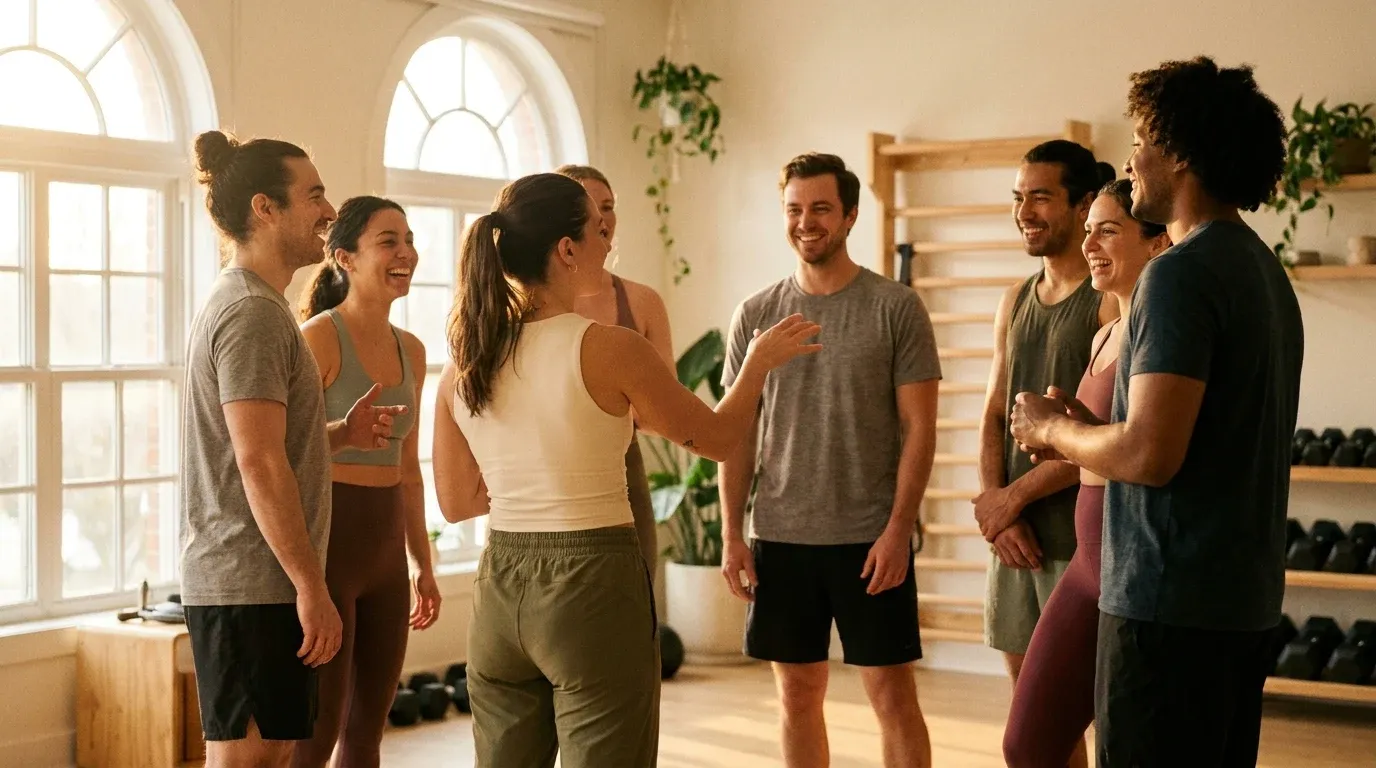
The coaches gaining ground in 2026 aren't out-advertising the competition. They're building community systems that do the marketing for them. That's not a soft, feel-good idea. It's a structural shift that the data supports, and the brands already executing it are showing measurable results.
Why Paid Acquisition Is Failing Independent Coaches
The economics are straightforward. As more coaches, gyms, and wellness brands compete for the same digital ad inventory, the cost per lead rises while conversion rates stagnate. The coaches absorbing those costs are the ones without the margin to sustain it. That's most independent coaches.
According to recent industry surveys, 80% of personal trainers report that finding new clients is harder in 2026 than it was in previous years. That number is striking on its own. What makes it more significant is the context: this difficulty is persisting even as the profession becomes more technologically capable. As explored in 4 in 5 Trainers Struggle to Find Clients: The Fix, the acquisition problem isn't primarily a visibility problem. It's a trust problem. And trust is built through relationships, not retargeting campaigns.
The global coaching industry surpassed $5.34 billion in 2026, with emerging markets in Southeast Asia, Latin America, and the Middle East contributing disproportionate growth. That's an opportunity, but it's also a signal. The coaches who build community-anchored brands now are positioning for international client bases, not just local referrals. The market is global. The strategy needs to match.
Technology Helps. Community Converts.
Sixty-four percent of personal trainers now use AI tools in some part of their workflow, whether for programming, client check-ins, or content creation. That adoption rate is real progress. But it hasn't moved the acquisition needle in the way many expected.
The reason is structural. AI tools optimize efficiency. They don't generate referrals. They don't create the social proof that comes from a client telling their colleague, unprompted, that working with you changed their body composition in 90 days. That kind of trust transfer happens inside communities, not inside software interfaces.
If you're wondering what actually differentiates coaches in a crowded, AI-enabled market, the answer isn't your tech stack. It's the network effects your community creates around your brand. When 64% of Trainers Use AI, What Actually Makes You Indispensable? examines this distinction in detail. The short version: your community is the moat that automation can't replicate.
Four Community Marketing Levers You Can Deploy Now
The following aren't theoretical frameworks. These are specific, operational tactics that fitness brands are already using to convert community engagement into client acquisition, without relying on ad spend.
1. Client-Led Content Programs
Your most satisfied clients are your most underutilized marketing asset. A structured client-led content program doesn't mean asking people to post about you. It means creating systems that make sharing natural and rewarding. That could be a monthly transformation spotlight with your client's permission, a structured testimonial format you send after milestone weeks, or a simple photo protocol built into your 12-week program.
The content is authentic because it comes from real people. It reaches networks you don't have access to. And it costs you nothing beyond the organizational overhead of running it consistently.
2. Referral Loops Tied to Group Challenges
Referral programs that offer a discount in exchange for a name rarely work. What does work is embedding referral moments inside high-engagement experiences. A six-week group challenge, for example, creates natural social sharing. Participants talk about it. They invite friends. They post about results.
When you structure that challenge with a built-in referral mechanism, such as a "bring a friend" trial week in week four, you're turning the challenge's energy into an acquisition funnel. The referral is a byproduct of the community experience, not a transactional ask.
3. Run Clubs as Acquisition Funnels
This one has moved from trend to documented strategy. Gym operators and independent coaches across the US, UK, and Australia have used run clubs to generate new client pipelines at near-zero cost. The mechanic is simple: a free, recurring community event attracts fitness-minded people who aren't yet clients. It demonstrates your coaching presence, your values, and your community culture. Conversion happens over time, without a hard pitch.
Run clubs work because they solve a real problem for participants, the accountability and social structure that most people lack in their fitness routines. That value creates trust. Trust creates clients. The same model applies to free mobility sessions, outdoor bootcamps, or any recurring community touchpoint you can own consistently.
4. Structured Alumni Networks for Lapsed Clients
Most coaches treat a lapsed client as a lost client. The smarter move is to treat them as community members in a different phase. A structured alumni network, even a simple group chat or quarterly check-in sequence, keeps former clients connected to your brand. It positions you for re-engagement when their circumstances change. And it turns people who've already experienced your coaching into passive referral sources.
The re-acquisition cost of a lapsed client who already trusts you is a fraction of the cost of acquiring a cold lead. An alumni network systematizes that advantage.
What the Discover Strength Model Tells Independent Coaches
Discover Strength, the science-backed strength training franchise, reached 41 studios across 15 states by mid-2026. That expansion didn't happen through aggressive discounting or heavy advertising. It happened through retention. Their model is built on high member loyalty, driven by a clear identity: evidence-based training, efficient protocols, and a community that validates that identity through results.
The science behind their approach aligns with what research consistently shows about resistance training. Programs designed for efficiency and measurable outcomes, similar to the principles covered in The One Workout That Burns Fat Without Losing Muscle, retain clients because the results are real and the experience feels intentional.
Independent coaches can't replicate the franchise infrastructure. But they can replicate the underlying logic. Define a clear coaching identity. Build a community around it. Let results and belonging drive retention. Retention drives word-of-mouth. Word-of-mouth drives growth. That loop doesn't require 41 studios. It requires consistency and a positioning that means something to the right people.
The International Dimension Coaches Are Ignoring
The $5.34 billion global coaching market isn't distributed evenly, and it isn't static. Emerging markets are growing faster than established ones. Remote and hybrid coaching formats, accelerated by the pandemic and normalized since, mean that a coach in Austin or Manchester can realistically build a client base that spans three continents.
Community infrastructure makes that scalable. A private online group, a structured alumni network, a challenge framework that runs asynchronously across time zones. These aren't just retention tools. They're the architecture for a global micro-brand. If you're thinking about expanding your offer internationally, the business models worth studying are covered in Who's Funding Fitness in 2026: The VC Landscape for Coaches. The investors backing fitness brands in 2026 are paying close attention to community retention metrics, not just subscriber counts.
Building the System, Not Just the Audience
There's an important distinction between having a community and running a community marketing system. An audience watches your content. A community participates in experiences you design. The transition from one to the other is operational, not just attitudinal.
That means calendaring your community touchpoints the same way you calendar your training sessions. It means setting measurable goals for referrals generated per quarter, not just followers gained. It means treating your alumni network as a segment with its own engagement strategy, not as a list you ignore after the contract ends.
Coaches who treat community as a structured business function, not a soft add-on to their coaching practice, are the ones who will hold a durable advantage as acquisition costs continue to rise. The playbook exists. The question is whether you'll build it before the coaches in your market do.