
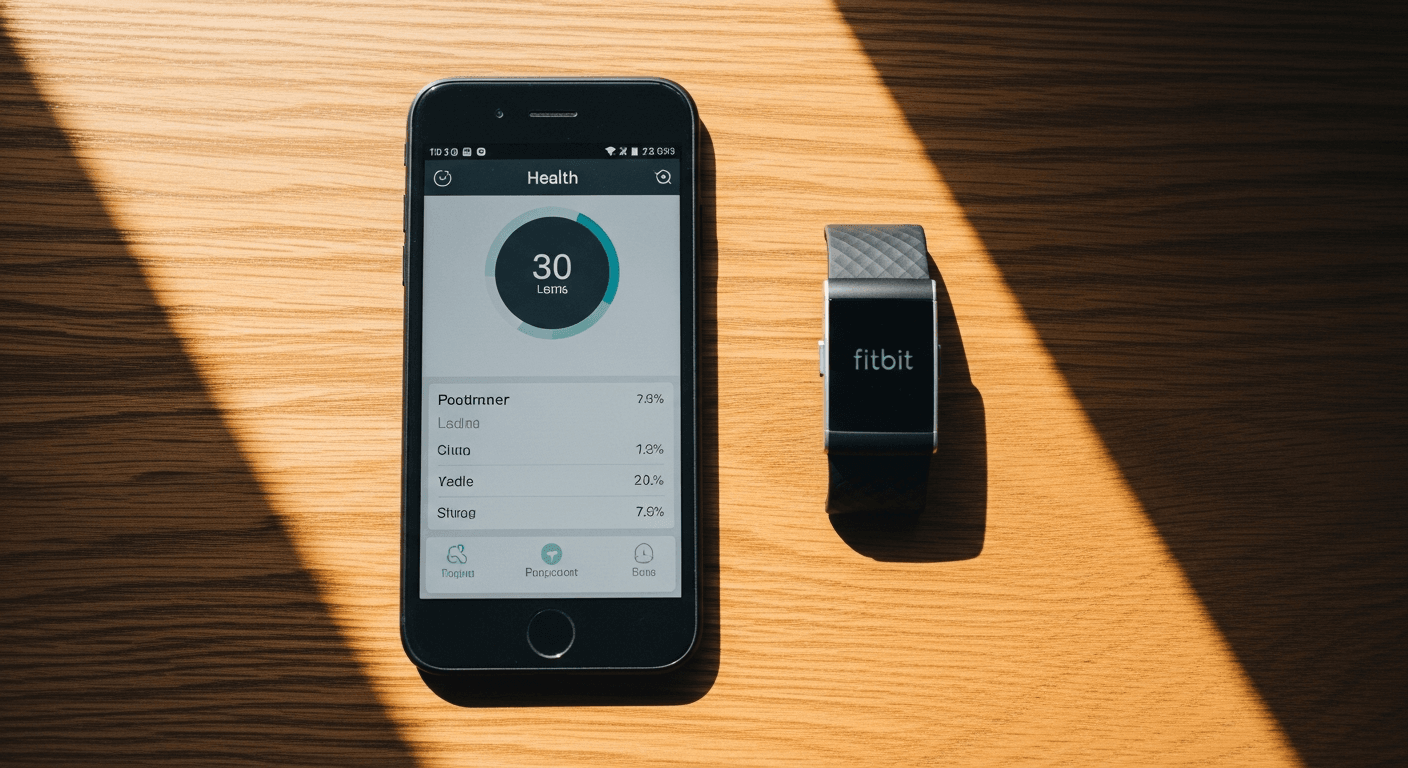
Google has officially retired the standalone Fitbit app and folded its functionality into a unified Google Health platform. If you've built any part of your coaching workflow around Fitbit data, that infrastructure is now broken or about to be. This isn't a minor update. It's a structural shift that touches client onboarding, progress tracking, habit check-ins, and the third-party integrations your business depends on.
Here's what you need to understand, what you need to audit, and how to turn this disruption into a credibility advantage with your clients.
What Google Actually Changed
The Fitbit app didn't just get rebranded. Google has decommissioned the standalone Fitbit experience and replaced it with Google Health, a unified platform that consolidates wearable data, health metrics, and fitness tracking under a single ecosystem. Fitbit devices still work, but the data pipeline runs through Google Health now, not the Fitbit app.
This matters because the underlying API structure has changed. Data fields that Fitbit previously exported under specific labels, such as sleep stages, resting heart rate, step counts, and active zone minutes, are now mapped to Google Health's schema. If your coaching tools pull that data via the old Fitbit API, those connections are likely deprecated or will stop functioning without updated authentication.
For coaches who assumed this was a backend change they could ignore, the risk is losing longitudinal client data. Months of baseline metrics, trend lines, and progress benchmarks can disappear from your dashboard if the pipeline breaks silently.
Why Your Platform Integration Probably Needs Attention
Coaches running programs through all-in-one platforms like TrueCoach, Everfit, or Trainerize need to verify one thing immediately: whether their platform has updated its Fitbit or Google Health integration. Legacy Fitbit OAuth connections, the authentication method that allowed third-party apps to access client data, are likely broken or on a deprecation schedule.
This is not speculative. Platform integrations built on Fitbit's previous API require active updates from the software vendors. Some platforms have already migrated. Others haven't. You won't know until you check, and by then a client may have already noticed their data isn't syncing.
Log into your platform, navigate to your integration settings, and confirm the connection status for any client using a Fitbit device or the new Google Health app. If the connection shows as active but data has stopped updating, that's a broken OAuth token masquerading as a live feed.
Contact your platform's support team directly and ask: "Has your Google Health API integration been updated to reflect the Fitbit migration?" Get a clear answer in writing. The industry consolidation happening right now, detailed in what investors are seeing in the $3.2B online coaching market, means platform decisions made in the next 12 months will have outsized long-term consequences for your business.
The Broader Platform Consolidation You Can't Ignore
Google retiring the Fitbit app isn't an isolated product decision. It reflects a consolidation trend that has been accelerating across the wearable data ecosystem. Apple Health, Google Health, and Samsung Health now collectively dominate wearable data aggregation. Together, they represent the vast majority of active health data users globally.
This narrows the interoperability window for niche coaching apps significantly. Smaller platforms that built on independent wearable APIs, Garmin, Whoop, Oura, and others, still maintain their own ecosystems. But the gravitational pull of the three major health platforms is increasing. Developers and coaching software vendors prioritize integrations where user volume is highest, which means Apple, Google, and Samsung get updated first.
For coaches, this means your tool stack is increasingly only as reliable as the weakest integration link. A coaching app that hasn't kept pace with Google Health's new schema is a liability, not an asset. And clients who switch wearable devices, which they do frequently, are more likely than ever to land in one of the three major ecosystems.
The smarter positioning, both operationally and commercially, is to build your data workflows around these dominant platforms rather than around device-specific apps. That's the direction the market is moving, as outlined in the demand and retention dynamics shaping personal training through 2026.
How to Audit Your Current Workflow
Before you migrate anything, you need a clear picture of your exposure. Here's a structured audit you can complete in under two hours:
- Identify affected clients: Pull a list of every client who connected a Fitbit device or the Fitbit app to your coaching platform. These clients are your immediate priority.
- Check data sync status: For each affected client, verify whether their data is still updating in your platform. A static metric that hasn't changed in several days is a red flag.
- Review your onboarding documentation: If your client onboarding guide references Fitbit specifically, it's now outdated. Flag every document, email template, or intake form that mentions Fitbit and queue it for revision.
- Map your data fields: If you use custom spreadsheets or CSV exports from Fitbit, document which data fields you currently track. You'll need to remap these to Google Health's equivalent fields after migration.
- Assess your platform's update status: As noted above, contact your software vendor and confirm their integration is current. Don't assume.
This audit is not optional if you're running a data-informed coaching business. The coaches who skip this step are the ones who discover the problem six months from now when a client asks why their sleep data disappeared.
Migrating Clients to Google Health: A Practical Approach
Once you've completed your audit, the migration itself is straightforward for most clients. Google Health is available on Android natively and downloadable on iOS. Clients who already have a Google account can set it up in minutes. Fitbit devices connect directly to Google Health, so hardware replacement isn't required.
The friction point is client communication. Many of your clients won't understand why they're being asked to download a new app or reconnect their device. Your job is to frame this clearly and proactively rather than reactively.
Send a direct communication to affected clients that does three things. First, explain the change briefly and without technical jargon. Second, give them a simple step-by-step process for connecting Google Health to your coaching platform. Third, reassure them that their historical data and program structure aren't affected.
Coaches who handle this proactively, before data gaps appear, signal technical competence. That matters more than most coaches realize. Tech-forward clients, typically the highest-value segment in terms of retention and referrals, are watching how you manage exactly this kind of operational challenge. Your response either builds confidence or erodes it.
The Strategic Upside for Coaches Who Move First
Disruptions in platform infrastructure create short-term chaos and medium-term competitive differentiation. Coaches who migrate early, document the process cleanly, and update their onboarding materials have a concrete operational advantage over coaches who are still troubleshooting broken syncs three months from now.
There's also a positioning opportunity here that extends beyond the technical fix. Coaches who can speak fluently about how data flows through wearable ecosystems, and who proactively guide clients through platform changes, are genuinely differentiated in a crowded market. This is part of what a modern holistic coaching revenue model looks like in practice: not just programming expertise, but operational reliability that clients can see and feel.
Consider turning your migration process into a client touchpoint. A short video walkthrough, a one-page PDF guide, or a dedicated check-in call positions the transition as a value-add rather than a disruption. It's also a natural moment to review your client's overall tracking setup and identify any other gaps in their data ecosystem before they become problems.
High-quality client data supports better outcomes, and better outcomes drive retention. There's a reason research consistently links more personalized, varied, and data-informed programming to superior results. The kind of longitudinal tracking that wearables enable, when the data pipeline is intact, is the foundation for delivering the nuanced programming insights referenced in research covered in Harvard's findings on workout variety and longevity.
What to Do in the Next 72 Hours
The window for a clean, proactive migration is open right now. Here's your immediate action list:
- Complete your client audit today. Identify every client connected via Fitbit and flag their sync status.
- Contact your platform vendor. Confirm whether their Google Health integration is current and what action, if any, is required on your end.
- Draft client communication. Write a clear, jargon-free message explaining the transition and what clients need to do. Send it before data gaps appear.
- Update your onboarding materials. Replace all Fitbit-specific references with Google Health. This includes email sequences, PDF guides, intake forms, and any video walkthroughs.
- Document your migration process. A documented process becomes a reusable asset for future platform changes, and there will be future platform changes.
The coaches who treat this as a process improvement moment rather than a crisis will come out of it with tighter operations, stronger client relationships, and a cleaner data infrastructure. That's the outcome worth building toward.