
On May 27, 2026, Signos closed a $20 million funding round backed by Google Ventures, Dexcom, and 450 Ventures, the venture arm of Blue Cross Blue Shield of Alabama. The company pairs FDA-cleared continuous glucose monitor hardware with behavioral coaching, and it's scaling fast inside the GLP-1 medication boom. If you're a personal trainer watching that headline and wondering whether it affects your business, it does. Significantly.
This isn't a tech story. It's a market signal telling you where premium fitness coaching is heading and what your clients will expect from you within the next 12 to 24 months.
Why Investors Are Betting on CGM-Plus-Coaching Right Now
The timing of this raise is not accidental. GLP-1 medications like semaglutide have exploded in adoption, with tens of millions of Americans now using or considering medication-assisted weight loss. The clinical problem is that the drugs suppress appetite but don't teach behavior. Patients lose weight, then plateau, then regain when they stop. What fills that gap? Structured metabolic and behavioral coaching.
That's exactly the thesis Signos is selling to its investors. The company's platform combines real-time glucose data from a wearable CGM device with coaching layers that help users understand how food, exercise, sleep, and stress affect their metabolic response. Blue Cross Blue Shield's involvement is particularly significant. When a major insurer puts capital behind a coaching product, it signals that this category is moving toward reimbursability. That changes everything about how clients perceive the value of structured coaching.
For trainers, the takeaway is direct: the client population coming out of GLP-1 programs is large, motivated, and medically primed to invest in the behavioral and physical work that sustains their results. That's your pipeline, if you're positioned for it.
From Self-Reported Logs to Real-Time Metabolic Data
Here's where this funding round should genuinely challenge how you think about your coaching product. The Signos model replaces the weakest link in most nutrition coaching: self-reported food logs. Clients don't lie intentionally, but they under-report, forget, and estimate poorly. CGM data doesn't. It tells you, with physiological precision, how a client's body responded to a meal, a workout, or a night of disrupted sleep.
This raises the bar for what premium coaching looks like. Clients who've experienced real-time metabolic feedback will arrive at your door expecting data-informed programming rather than generic periodization templates. The trainers who can work with that expectation, rather than against it, will retain those clients. The trainers who can't will lose them to platforms that can.
Integrating CGM data into your programming doesn't require you to become a registered dietitian. It requires you to understand glucose variability as a performance and recovery signal, and to build workout protocols that complement what the data is showing. Low glucose variability days may be ideal for high-intensity sessions. High variability patterns may signal that your client needs a recovery-focused session instead, something like the interval walking protocol that supports fat metabolism without adding significant metabolic stress.
The Pricing Reality: What CGM-Integrated Coaching Commands
Let's talk numbers, because the business case here is concrete. Premium online coaching tiers in 2026 are already reaching $350 per month for women over 40 who receive data-driven personalization. That's not a niche outlier. That's where the market ceiling is moving for coaches who can demonstrate metabolic literacy.
Standard online coaching in the $100 to $150 per month range typically delivers program adjustments based on check-in forms and progress photos. When you layer in CGM-informed programming, you're offering a fundamentally different product: responsive programming based on objective physiological data, updated in real time. That justifies a price point two to three times higher, and clients with GLP-1 backgrounds are already conditioned to spend at that level because they've been paying for medication and medical monitoring.
This isn't about inflating your rates arbitrarily. It's about building a service that genuinely delivers more precision and accountability. The coaches building those premium tiers are treating their practice more like a structured AI-integrated ecosystem than a one-to-one hourly service. That architecture is what makes higher pricing defensible.
The AI Competition Is Already Here
Signos is not the only company in this space moving fast. Simple's Avo AI coach was named Best Virtual Health Coach at the MedTech Breakthrough Awards 2026, and it's delivering automated behavioral nudges at a scale no human coach can match. When a client eats a high-glycemic meal at 11pm, an AI coach can respond with a contextualized nudge within seconds. You can't.
That's not a reason to panic. It's a reason to be precise about what you offer that AI cannot replicate. The answer is relationship depth, contextual judgment, and accountability that is emotionally resonant rather than algorithmically generated. A client who is grieving, stressed, or going through a life transition doesn't need a nudge. They need a human who can recognize the pattern, adjust the program, and hold space for the conversation that actually changes behavior.
This differentiation needs to be explicit in how you position yourself. Don't compete with Avo on volume or speed. Compete on the things it structurally cannot do: notice that your client has been sleeping poorly three weeks in a row and that it correlates with their glucose variability and their missed sessions, then have a real conversation about it. The connection between REM sleep quality and metabolic regulation is the kind of nuanced insight a skilled coach can translate into action in ways an automated system simply won't.
How to Position Yourself in the CGM Coaching Landscape
You have two viable strategies here, and which one fits depends on your current client base and technical appetite.
Strategy one: partner with CGM platforms. Signos and competitors like Levels Health already offer professional referral and partnership programs. If you work with clients focused on metabolic health, weight management post-GLP-1, or performance nutrition, aligning with a CGM platform positions you as the human coaching layer in their ecosystem. Your job is to translate data into training decisions. Their platform generates the data and handles the hardware.
Strategy two: develop CGM literacy independently. You don't need a formal partnership to start speaking the language of glucose variability and metabolic coaching. Read the clinical literature. Understand how exercise intensity affects post-meal glucose response. Learn which training modalities, including well-designed strength programs with clear metabolic outcomes, are most effective for clients with insulin resistance patterns. Build that vocabulary into your onboarding conversations and client communications.
Either path requires you to stop treating nutrition as someone else's department. Trainers who maintain a hard boundary between movement and metabolism will increasingly find themselves offering half a product in a market moving toward integrated metabolic coaching.
What Your Clients Will Ask You Next
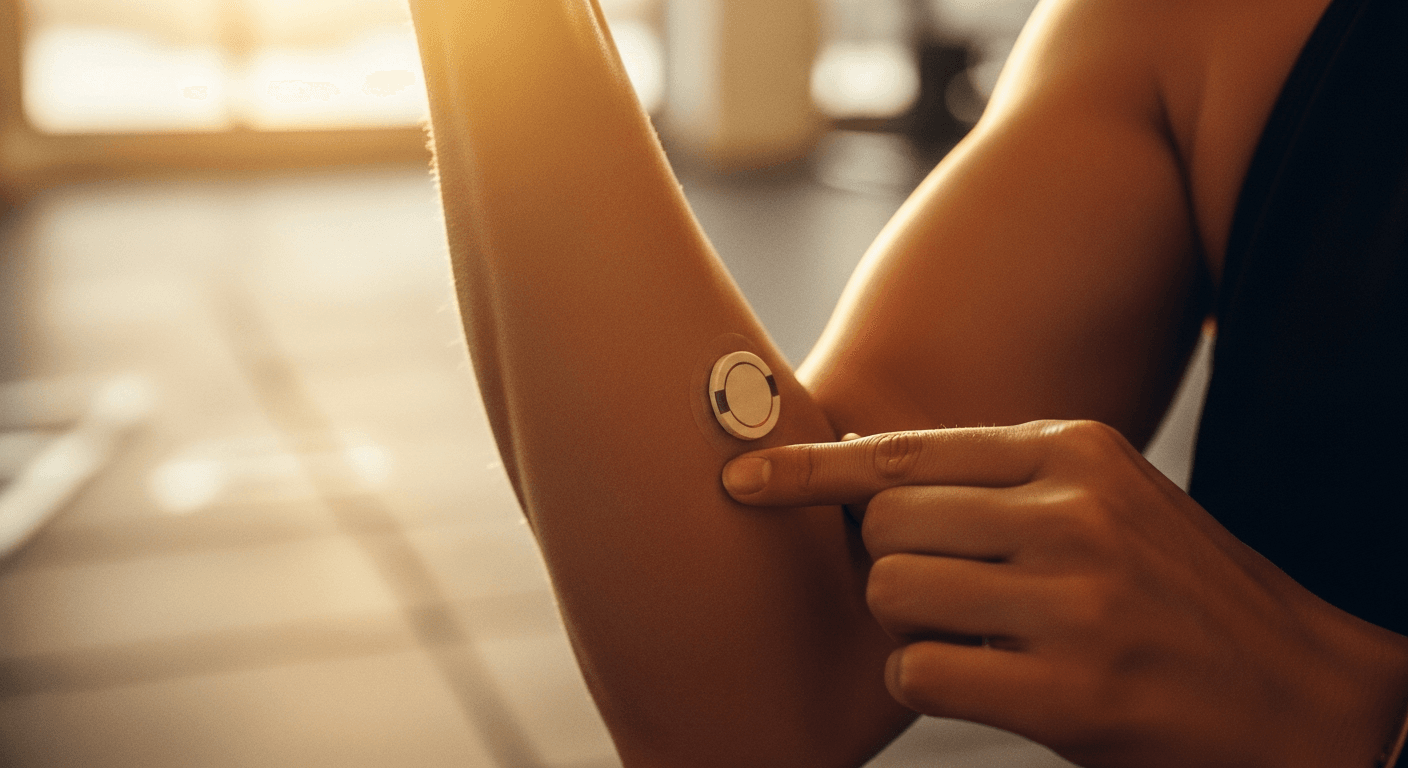
Within the next year, you will have clients walk into a consultation wearing a CGM patch and wanting to know whether you can work with their data. Some of them will be on GLP-1 medications. Some will be post-GLP-1 and focused on muscle preservation. Some will simply be early adopters who have become deeply curious about their own metabolic responses.
The trainers who say "I don't really work with that" will lose those clients. The trainers who say "let's look at your data together and build your training around what it's telling us" will win them, and likely retain them at premium price points for years.
The Signos raise is a market signal, not just a tech news headline. It tells you that institutional money, including insurance capital, is flowing into the hypothesis that human behavioral coaching plus real-time metabolic data is a durable, scalable product. That product is your adjacent competitor and your potential partnership opportunity at the same time.
The coaches who are already thinking through this positioning, including how to convert new client pipelines generated by broader fitness market disruption, will be the ones who define what premium coaching looks like in 2027. The window to build that expertise before it becomes table stakes is narrowing. Start now.