
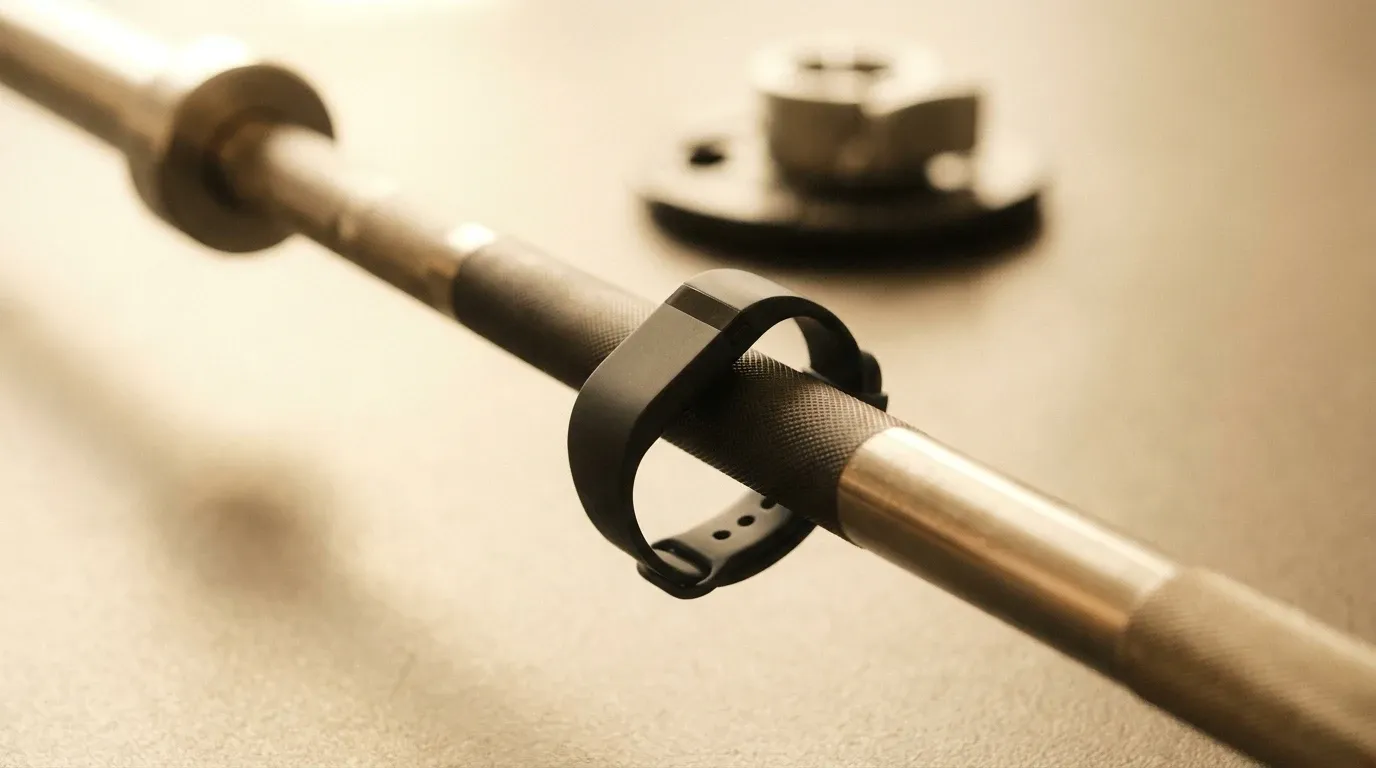
A pre-launch startup just secured $1.95M to bring velocity-based training (VBT) to everyday lifters through a wearable AI device. That funding round, timed to a CES 2027 debut, isn't just a product announcement. It's a signal about where the coaching industry is heading and what happens to coaches who don't reposition before the technology catches up.
If you're a strength or performance coach, here's what this moment actually means for your business.
What Velocity AI Is Building
Velocity-based training uses real-time bar speed data to auto-regulate load, volume, and intensity during a session. Until recently, it was confined to elite performance environments. The hardware was expensive, the interpretation required expertise, and the feedback loop depended on a trained coach to act on the data. That barrier is about to collapse.
Velocity AI's pitch is straightforward: put that entire feedback system on the wrist of a recreational lifter. The device tracks movement velocity, compares it against target thresholds, and delivers coaching cues in real time. No coach required. No expensive gym setup. Just a wearable and a subscription.
This is not a niche product for competitive powerlifters. The company is positioning it for the mass market, targeting everyday gym-goers who want smarter training without paying premium coaching rates.
The Market Context Behind the Funding
Velocity AI didn't raise in a vacuum. The personal fitness trainer market is projected to reach $48.0B in 2026, up from $45.6B in 2025. That growth reflects genuine consumer appetite for fitness guidance. But it also means you're not just competing with other coaches anymore. You're competing with an expanding wave of well-funded technology products targeting the same clients.
Fitness and wellness tech has accumulated $1.85B in funding in 2026 alone. With 770 recently funded fitness startups averaging $6.1M each, institutional investors are not hedging. They're making concentrated bets that technology will capture a meaningful share of the coaching market. Velocity AI's $1.95M raise fits that pattern precisely.
This isn't the first time coach-adjacent tech has drawn serious capital. As covered in FitnessKPI Raises $1.45M: What It Means for Coaches, the trend of data infrastructure tools targeting fitness professionals has been building for several years. What's changed in 2026 is the speed and specificity of the automation being funded.
The Skill That's Being Commoditized
VBT programming is genuinely technical. Reading bar speed, understanding velocity loss thresholds, adjusting load in real time, and periodizing around that data takes years of applied practice. It's the kind of expertise that coaches have historically charged premium rates to deliver.
When a wearable device does that reliably for $20 to $30 a month, your technical programming cues stop being a differentiator. They become a baseline expectation. Clients won't pay a premium for something they can approximate themselves with hardware they bought online.
That's the real threat embedded in this funding round. It's not that coaches will be replaced outright. It's that the technical layer of coaching, the part that takes the longest to develop and that coaches most often lead with in their marketing, is being repriced downward by software. Coaches who have built their entire value proposition around programming sophistication are walking into a margin compression problem they can't solve by getting better at programming.
According to current pricing data, what 302 personal trainers actually charge in 2026 reveals significant spread between coaches competing on technical credentials versus those offering broader behavioral and lifestyle support. The gap is widening in favor of the latter.
Where Your Defensible Value Actually Lives
The coaching skills that are genuinely hard to automate aren't the ones you learned from a textbook. They're the ones that require reading a human being in real time, understanding why they're not following through, and knowing how to respond in a way that changes behavior rather than just adjusting a rep scheme.
Three areas remain structurally difficult for wearable AI to replicate at scale:
- Behavioral change architecture. Getting a client to actually show up, sustain effort across months, and modify habits outside the gym requires relational trust, motivational interviewing skills, and adaptive communication. These are not algorithmic outputs.
- Accountability scaffolding. The most effective coaches don't just write programs. They build systems that make it harder for clients to quit. Check-ins, friction reduction, consequence framing, and strategic encouragement at the right moments are all human decisions that depend on context a device cannot access.
- Clinical-adjacent services. Coaches who operate at the intersection of movement quality, pain management, chronic condition support, and lifestyle medicine are in a category that requires licensure, liability management, and nuanced clinical judgment. No wearable is touching that market meaningfully in the near term.
If you haven't yet structured your offer around these areas, the window to do so before VBT becomes a commodity feature is closing. Reviewing how to choose an online coaching platform that won't kill your margins is a practical starting point for aligning your infrastructure with a higher-margin service model.
What Coaches Should Be Watching at CES 2027
When Velocity AI presents at CES 2027, it won't be alone. Consumer electronics trade shows have become reliable previews of which professional skills are next in line for disruption. Expect to see multiple startups demonstrating AI-driven form correction, fatigue detection, and periodization automation in the same week.
The coaching industry's response to that moment matters. The worst reaction is dismissal. Telling yourself that clients will always prefer a human coach because connection matters ignores the evidence from adjacent industries where automation didn't eliminate human practitioners but did permanently compress their average fees and shift the composition of their work.
The more productive response is to treat CES 2027 as a deadline. If your current offer can be described in terms of sets, reps, and velocity thresholds, you have roughly 12 months to add layers that can't be downloaded.
The fitness startup ecosystem is also creating new partnership opportunities worth tracking. GymNation's $272K incubator for fitness startups reflects a broader pattern of gym operators investing in tech that coaches can eventually integrate rather than compete against. Getting ahead of those partnerships before the products launch is a smarter position than reacting after they've already captured your client base.
The Pricing Reality You Need to Face
Clients are already making price comparisons between human coaches and technology-assisted alternatives. That comparison will become more explicit as AI coaching products improve and market themselves more aggressively. The question isn't whether this affects your pricing power. It already does. The question is whether you're positioned on the right side of that comparison.
Coaches who compete primarily on technical programming are in a race where the floor keeps dropping. Coaches who compete on outcomes that require a human, sustained behavioral change, emotional accountability, clinical nuance, and long-term lifestyle transformation, are building a defensible business in a market that's getting more crowded, not less.
Recovery science, stress management, and sleep quality are increasingly part of a holistic coaching conversation that no VBT wearable addresses. Clients dealing with high-stress lifestyles, irregular sleep, or chronic health conditions need more than velocity data. Understanding what modern performance science says about recovery and integrating that into your coaching methodology is exactly the kind of value-add that widens the gap between what you offer and what a wearable can replicate.
The Bottom Line for Coaches
Velocity AI raising $1.95M is not a threat to every coach equally. It's a threat to a specific type of coach: one whose primary differentiation is technical programming knowledge, and who hasn't yet built the relational, behavioral, and clinical dimensions of their practice.
The funding environment in fitness tech is not slowing down. The products coming out of that investment are getting more capable with each release cycle. Coaches who treat each of these announcements as a moment to reassess their own positioning will be better prepared for what CES 2027 brings than those who are waiting to see how the technology performs in the market.
Your technical skills got you into coaching. They're not what will keep you profitable in a market where AI can approximate them for $25 a month. Build what can't be wired into a wearable, and that's where your business survives.