
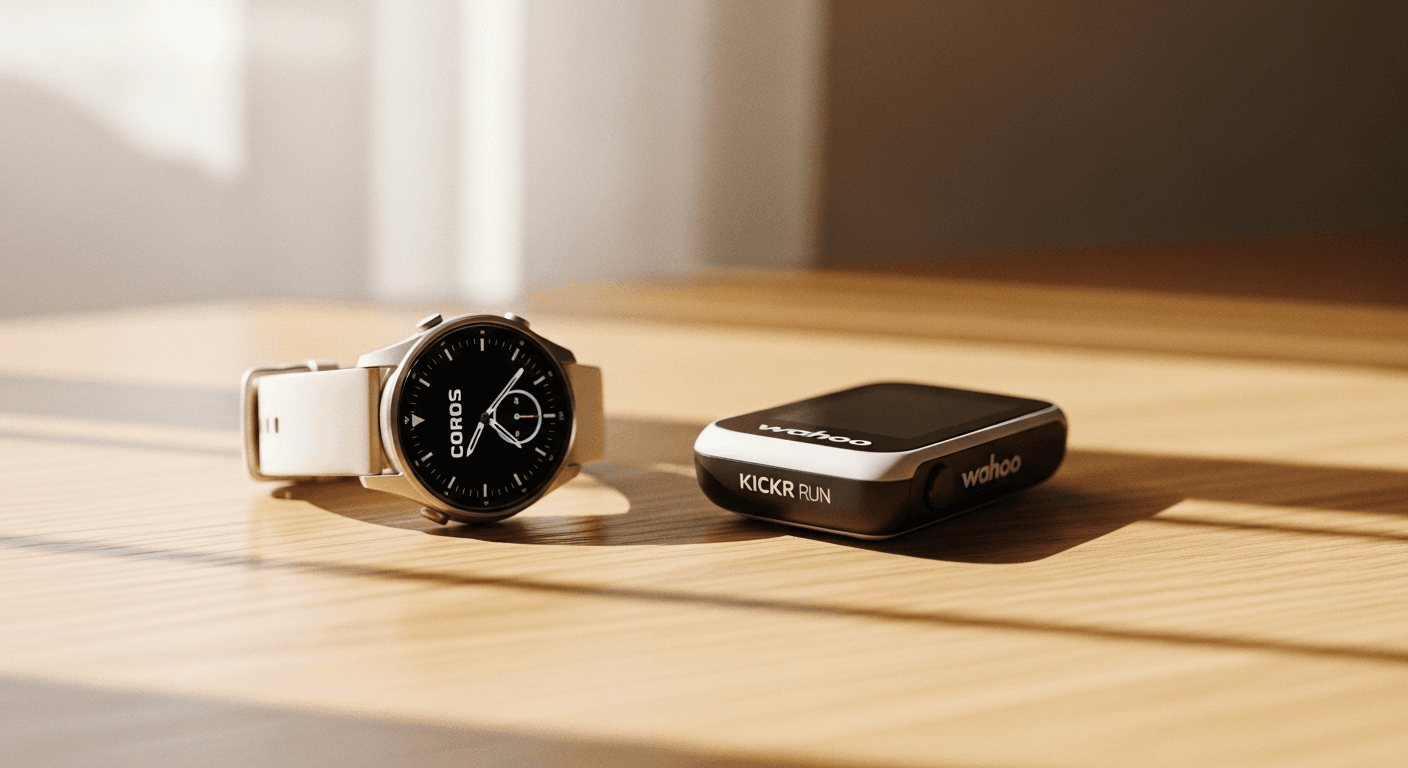
On April 24, 2026, Wahoo Fitness and COROS announced a software integration partnership built around two-way API data sharing. No merger, no acquisition. Just a direct data bridge between two of the more serious hardware ecosystems in endurance and performance training.
For coaches managing clients across mixed-device rosters, this is the kind of infrastructure update that actually matters. It's not a headline product launch. It's a quiet fix to a problem that's been grinding down coaching workflows for years.
What the Partnership Actually Does
The integration works in both directions. Workout data flows between Wahoo's training software and COROS watches, meaning a client running on a KICKR RUN treadmill with a COROS watch on their wrist no longer operates in two separate data silos. The watch picks up the session. The platform sees it. You see it.
That KICKR RUN integration is one of the more specific improvements named in the announcement. COROS watch users who train on Wahoo treadmill hardware will now get cleaner, more complete session data without needing manual exports or third-party connectors to patch the gap.
Wahoo is also adding select COROS watches to its own retail website. That's a distribution move with a clear signal attached: these two brands are building toward deeper platform convergence, not just a one-time API handshake.
Why Platform Fragmentation Has Been a Real Cost for Coaches
If you've been coaching for more than a few years, you already know the scenario. One client runs on a Garmin. Another trains exclusively on a Wahoo KICKR and uses a COROS Pace for outdoor runs. A third is all Apple Watch. Getting clean, comparable training load data across that roster has always required some combination of manual exports, Strava as a middle layer, or just accepting that your data is incomplete.
That manual reconciliation has a real cost. It's time that doesn't scale. For coaches running programs at volume, or operating inside a high-touch coaching model, the administrative drag from fragmented ecosystems eats into margin fast. See how this fits into the broader pressures facing the industry in Personal Training 2026: Strong Demand, Harder Growth.
The Wahoo-COROS integration doesn't solve every fragmentation problem in the market. But it closes a meaningful gap between two ecosystems that have significant overlap in their user bases, specifically endurance athletes, triathletes, and performance-focused runners who are exactly the clients most likely to be using both platforms simultaneously.
How This Changes Program Delivery in Practice
The practical shift for coaches comes down to standardization. When data flows automatically between hardware and platform, you can deliver the same structured program to a client using a COROS watch and a client using a Wahoo head unit without building workarounds into your delivery system.
Structured workouts pushed through Wahoo's software now have a cleaner path to COROS devices, and completed sessions from COROS watches feed back into the same data environment. That means your training load analysis, recovery tracking, and performance trending are all working from more complete inputs.
For coaches building periodized programs, especially those working with athletes over 40 where recovery management is critical, having accurate data across every session matters. Gaps in the record mean gaps in your ability to modulate load intelligently. For context on why that matters physiologically, How Often Should You Train Per Week After 40? covers the underlying principles coaches need to apply.
The integration also gives you more flexibility when onboarding new clients. Instead of steering every athlete toward a specific hardware ecosystem to keep your data clean, you can let them stay on the device they already own and trust. That removes friction at acquisition and reduces a common reason coaches lose prospects before a program even starts.
The Broader Shift: Open APIs Are Replacing Walled Gardens
The Wahoo-COROS deal isn't happening in isolation. It reflects a clear directional shift across the fitness hardware industry in 2026. Brands that spent the previous decade building proprietary ecosystems and fighting to lock users in are increasingly moving toward open API partnerships.
The logic is straightforward. Walled gardens made sense when hardware sales were the primary revenue driver and platform lock-in was a defensible moat. That model is under pressure. Subscription software, coaching platform integrations, and data licensing are now significant parts of how fitness tech companies generate revenue. Interoperability increases the value of the platform, which increases retention, which increases the value of the software subscription.
For coaches, this shift is leverage. The more interoperable the hardware ecosystem becomes, the less your tech stack decisions are driven by compatibility constraints and the more they're driven by which platform actually serves your coaching methodology best. That's a better position to be in. You can explore how these dynamics are reshaping the business model more broadly in Coaching Platforms in 2026: Trends That Change the Business Model.
Other partnerships announced in early 2026 point in the same direction. The industry is moving toward a model where your watch, your training software, your gym equipment, and your recovery tools are expected to talk to each other. Coaches who build their systems with that expectation in mind will be better positioned than those still managing everything through manual exports and spreadsheet reconciliation.
What This Means for High-Performance Coaching at Scale
If you're running a coaching business that targets performance-oriented clients, triathletes, competitive runners, or serious cyclists, your client base is disproportionately likely to own COROS or Wahoo hardware. These aren't casual fitness brands. They sit at the performance end of the market.
That matters because your clients in this segment are also the ones most likely to own equipment from both ecosystems. A competitive triathlete running Wahoo KICKR indoor training and a COROS Vertix for outdoor and race-day use is a completely normal profile. Until now, coaching that athlete cleanly required accepting some data gaps or adding manual reconciliation steps to your workflow.
With this integration in place, that athlete becomes significantly easier to coach at a high standard. You get the full picture. That has a direct impact on your ability to deliver results, and results are what justify premium coaching fees. For coaches positioned in this segment, it's worth reviewing where the real pricing power sits right now in High-Ticket Coaching Niches in 2026: Where the Real Money Is.
The integration also matters for group coaching programs. If you're running a structured training block for 30 athletes with mixed hardware, the ability to pull consistent data across COROS and Wahoo devices without manual intervention changes what's operationally feasible. You can run larger cohorts without proportionally increasing your admin time.
What Coaches Should Do Right Now
The integration is live as of the April 24 announcement. Here's how to make practical use of it immediately.
- Audit your client hardware list. Identify which clients are currently on COROS devices and which are using Wahoo equipment. These are the clients who will benefit most directly from the new data flow, and they may need to update app connections or re-authenticate integrations to activate it.
- Revisit your onboarding hardware guidance. If you've been steering clients toward specific devices to keep your data clean, that constraint just loosened. Update your onboarding materials to reflect that COROS and Wahoo hardware are now interoperable within your coaching workflow.
- Test the KICKR RUN integration specifically. If any of your clients train on a KICKR RUN treadmill with a COROS watch, run a test session to confirm the data is flowing correctly before relying on it for load management decisions.
- Monitor the COROS watch listings on Wahoo's site. The retail distribution move signals which COROS models Wahoo is prioritizing in this partnership. Those are likely to receive the deepest software integration support going forward.
- Set realistic expectations with clients. Two-way API integrations sometimes have edge cases. Let clients know what's now possible, but confirm it's working cleanly in their specific setup before adjusting your data review process.
The Takeaway
The Wahoo-COROS partnership is a technical infrastructure update, but it has real consequences for how you run your coaching business. It reduces manual reconciliation, expands your hardware flexibility, and makes it easier to deliver consistent programs across a mixed-device client roster.
More broadly, it's evidence that the fitness tech industry is moving toward an interoperable model. Coaches who understand that shift and build their systems to take advantage of it will have a structural advantage over those still working around fragmented platforms. The coaches who'll feel this most are those working with performance clients who need complete training data to support intelligent programming, the kind of training that, over a career, supports not just performance but long-term physical capacity. That's a point worth grounding in the evidence around Being Fit in Midlife Actually Extends Your Lifespan.
The direction the industry is moving is clear. Open APIs, cross-platform data sharing, and hardware flexibility are the new baseline expectation. The Wahoo-COROS deal is one concrete step in that direction, and for coaches, it's a useful one.