
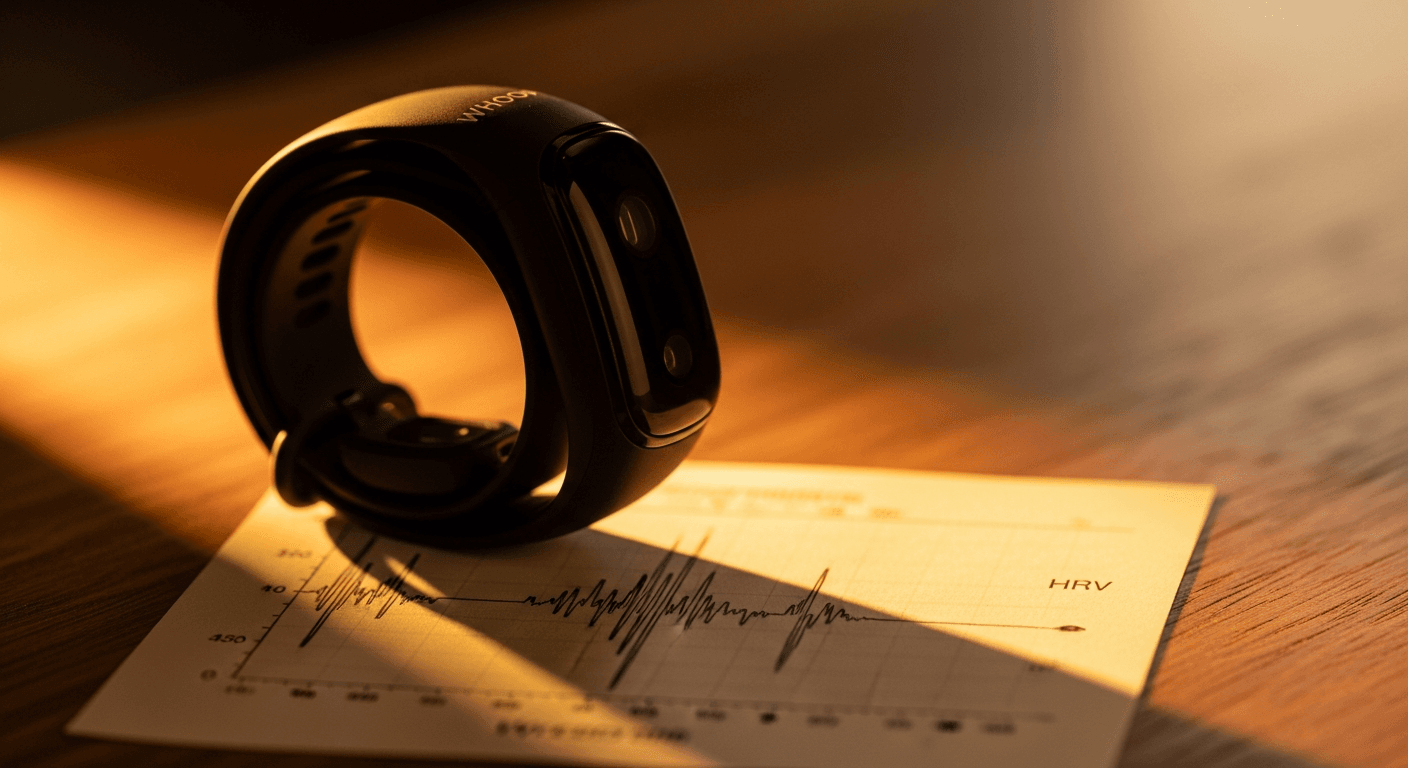
In March 2026, WHOOP closed a $575 million Series G round at a $10.1 billion valuation. The headline number matters less than who wrote the checks. Abbott and Mayo Clinic both participated as strategic investors. That's not fitness money. That's clinical health infrastructure money. And it changes the competitive landscape for every coach who works with performance, wellness, or longevity clients.
This isn't a wearable company chasing a bigger fitness market. This is a wearable company positioning itself as a healthcare platform. The difference is significant, and coaches who miss it will feel the consequences in their client relationships within the next 24 months.
The Platform Is Coming for Your Value Proposition
WHOOP has explicitly repositioned itself as a "central hub for improving individual health and livelihood." Read that language carefully. That's not a product description. That's a coaching value proposition. It's the same sentence coaches use on their websites, in discovery calls, and in intake forms.
The platform now tracks strain, recovery, sleep, cardiovascular load, and increasingly metabolic markers through integrations with continuous glucose monitors. It generates weekly health reports, flags recovery deficits, and offers personalized recommendations built on months of individual biometric history. For a client who's never worked with a coach, WHOOP already feels like a coach.
The risk here isn't that WHOOP replaces human coaching overnight. The risk is that it satisfies enough of the coaching need that clients stop looking for you. Retention, referrals, and perceived value all take the hit before you've had a chance to respond.
Oura at $11B Is Doing the Same Thing From a Different Angle
WHOOP isn't moving alone. Oura reached a valuation of over $11 billion following its $900 million-plus funding round in October 2025. More telling than the money is where Oura deployed its brand next: a formal partnership with the United States Tennis Association as the official wearable partner for the US Open coaching system.
That partnership normalized something important. Hardware is now a recognized layer of the coaching process at the elite sport level. The USTA, one of the most institutionally conservative sporting bodies in the US, is officially embedding ring-based biometrics into how its coaches work with players. When elite sport normalizes a tool, recreational and performance clients follow within two to three years.
This mirrors what happened when heart rate monitors moved from pro cycling to every spin class, or when GPS tracking moved from Premier League academies to recreational running apps. The diffusion is fast, and coaches who wait for the mainstream moment to adapt are already behind.
Most Coaches Are Not Ready for This
The 2025 ICF Global Coaching Study found that only 19% of coaches reported investing in new technologies including AI tools or wearable integration over the prior year. That leaves more than four in five coaches operating without a structured approach to the data their clients are already generating.
This is the real exposure. Clients aren't waiting for coaches to get comfortable with biometric data. They're arriving at session one with six months of HRV trends, strain scores, sleep stage breakdowns, and recovery baselines already loaded on their phones. If you don't know what to do with that data, you lose credibility before the first program is written.
The ICF 2026 data on coaching ROI and client acquisition reinforces this: differentiation is increasingly technical. Coaches who can translate client data into programming decisions are commanding higher rates and retaining clients longer. The ones who treat wearables as a novelty are competing on personality and price alone, and that's a race to the bottom.
The parallel risk is platform dependency. As covered in the essential audit every coach should run on platform consolidation risk, when a third-party platform becomes central to your client relationships, you're one policy change away from losing that connection. WHOOP owns the client relationship in its app. You don't.
The Strategic Play: Become the Interpretation Layer
The coaches who will thrive in this environment aren't the ones who fight the hardware. They're the ones who make themselves indispensable to understanding it.
WHOOP can tell a client their HRV dropped 18% over the past two weeks. It cannot tell them whether that drop is from under-recovery, life stress, a training block that's working exactly as designed, or a sign they need to pull back entirely. That interpretation requires context only a coach has: the training history, the client's stress load outside the gym, the conversation from last Tuesday's check-in, and the judgment to weigh all of it against a specific performance goal.
That's your seat at the table. Not the data collection. The human translation of what the data means for this person, right now, given everything you know about them.
Here's what that looks like in practice:
- Build a data intake protocol. Before session one, ask clients to share their last 30 to 90 days of WHOOP or Oura data. Review HRV baselines, sleep consistency, and recovery trends the way you'd review a movement screen. It tells you as much.
- Make biometric check-ins a structured part of your program design. Weekly HRV trends should inform load management decisions. If a client's recovery scores have been red for five straight days, that's a programming conversation, not a discipline conversation.
- Educate clients on what the platform cannot tell them. Wearables are pattern detectors. They surface correlations. They don't diagnose causes or prescribe solutions. That's where you live. Make sure clients understand that distinction regularly.
- Position your data literacy as a service feature, not a tech add-on. When clients pay $200 or $350 per session, part of what they're paying for is someone who can read their biometric history and make better programming decisions because of it. Name that value explicitly.
What the Science Says Coaches Should Actually Do With the Data
HRV-guided training is one of the most evidence-supported applications of wearable data in coaching. Research consistently shows that adjusting training intensity based on daily HRV readings reduces injury rates and improves performance outcomes compared to fixed periodization models. This isn't experimental. It's well-established enough that elite programs use it as standard operating procedure.
The nervous system dimension is particularly important here. As outlined in the research on training the nervous system like a muscle, stress accumulation is non-specific. The body does not distinguish between a hard training session, a poor night's sleep, and a high-pressure work week. HRV captures all of it. A coach who integrates that signal into programming decisions is working with the complete picture. One who doesn't is building programs based on partial information.
Recovery tracking also gives coaches an objective anchor for conversations that used to be difficult. Telling a client to back off intensity is easier when you can point to 11 consecutive days of below-baseline recovery scores and connect that pattern to the plateau they've been frustrated about. The data gives your recommendations credibility beyond opinion.
The Retention Argument Is Stronger Than the Performance Argument
There's a business case here that goes beyond program quality. Clients who feel like their coach understands them as a complete system, not just their workout performance, stay longer and refer more. The research on what keeps people committed to their fitness in 2026 points consistently toward personalization and perceived understanding as the primary retention drivers, more so than results alone.
Integrating wearable data into your coaching is one of the highest-leverage ways to demonstrate that personalization. When a client sees that you reviewed their sleep data before changing their program, or that you adjusted their load week because their recovery scores were suppressed, that experience is hard to replicate with any platform, no matter the valuation.
WHOOP at $10 billion and Oura at $11 billion are not threats to coaching. They're tools that raise the baseline expectation clients carry into every coaching relationship. Your job is to be worth more than the device. Right now, for 81% of coaches, that's not a given. It needs to become one.