
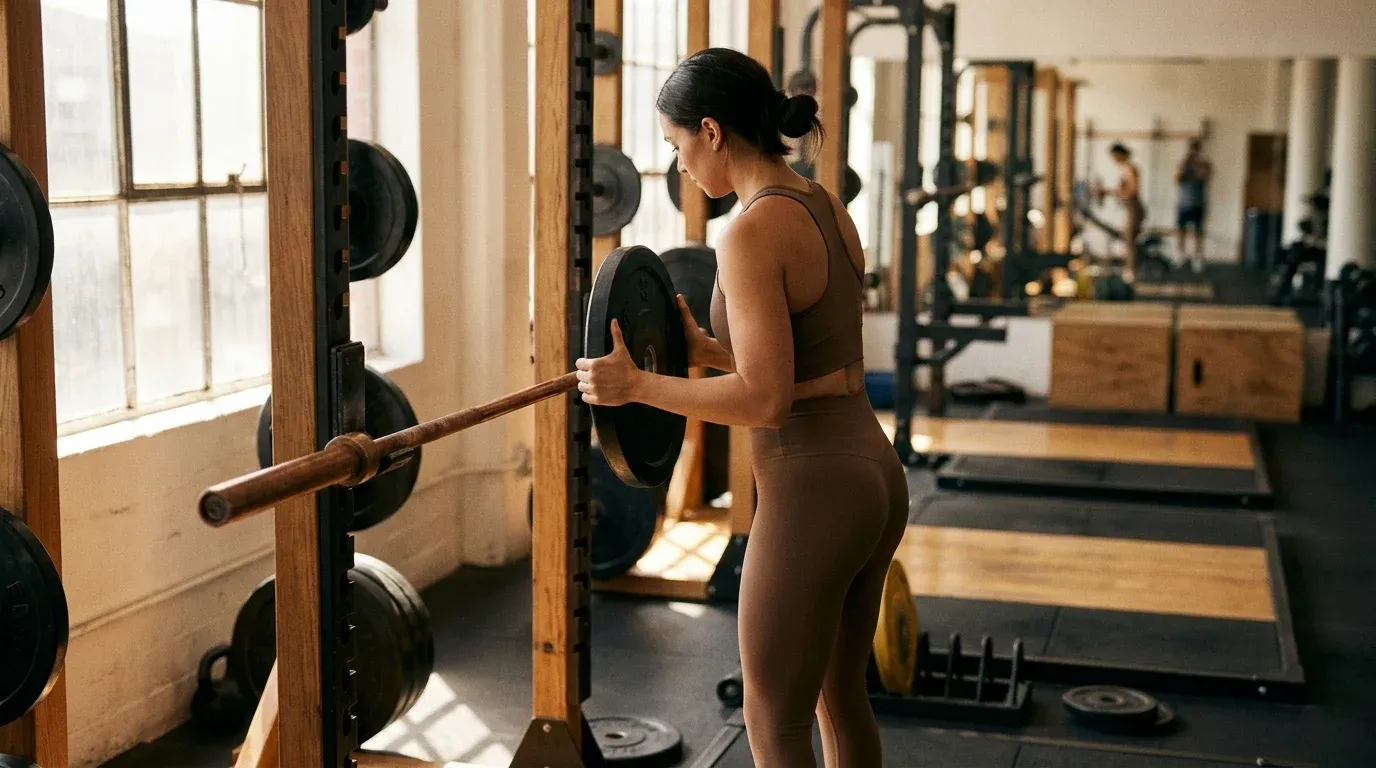
In November 2026, the National Strength and Conditioning Association released a revised set of training recommendations that land as a direct challenge to how most commercial gyms have operated for the past three decades. The updated framework explicitly rejects the assumption that women require lower training intensities or reduced volumes compared to men. For gym operators, that's not an academic footnote. It's an audit trigger.
The guidelines equalize prescription frameworks across sexes, drawing on a substantial body of research showing that women adapt to resistance training stimuli through the same physiological mechanisms as men. Relative intensity, progressive overload, and volume landmarks should be prescribed by training age and goal. Not by gender.
If your club hasn't already responded, your competitors are about to.
What the Updated Framework Actually Says
The NSCA's revised position doesn't argue that women and men are identical athletes. It argues that the default of under-loading women has no evidence base. Historically, programming defaults for female clients included lower percentages of one-rep max, reduced session volumes, and an emphasis on "functional" or "toning" work that avoided true strength thresholds. The 2026 update formally closes that chapter.
The practical implication: a female client with two years of training experience should be working at the same relative intensity ranges as a male client at an equivalent training age. A 75-85% one-rep max prescription for hypertrophy is as valid for her as it is for him. The same applies to periodization models, deload timing, and progressive overload parameters.
This isn't a fringe position anymore. It's the current standard, and operating against it now means operating against the evidence.
The Structural Gap Most Clubs Haven't Fixed
Here's where the guidelines expose a real operational problem. Most commercial gym floor plans were designed in an era when strength training was coded as male. Free-weight zones were sized and positioned around assumed male traffic patterns. Squat racks, deadlift platforms, and loaded barbell stations are often clustered in areas that remain socially uncomfortable for many women, particularly newer lifters or those transitioning from machine-based training.
That's a floor layout problem with a revenue consequence. Personal training and small-group strength coaching are among the highest-margin programming categories any club can run. If women, who now represent one of the fastest-growing strength training demographics, feel structurally excluded from the spaces where real strength work happens, you're leaving significant revenue on the table.
The solution isn't a designated "women's strength zone." That approach replicates the same segregation that the NSCA guidelines are pushing back against. The solution is redesigning the floor so that free-weight areas feel genuinely accessible and well-distributed, with coaching touchpoints that reflect inclusive programming standards.
Operators already benchmarking their physical footprint against market leaders should also be watching how large-scale consolidators are thinking about space. Providence's development of a 900-club European gym network signals that floor efficiency and demographic inclusivity are increasingly baked into expansion models at the highest investment level.
Staff Re-Education Is the Immediate Priority
Your coaching staff is the pressure point right now. Any trainer who is still defaulting to lower-load prescriptions for female clients because of their gender is operating outside current evidence-based standards. That's a programming quality problem. It's also a liability exposure you don't want to carry.
The liability angle is worth taking seriously. If a client can demonstrate that she received a materially lower quality of programming than a comparable male client, and that the gap is now explicitly contradicted by the NSCA's published guidelines, you have a professional standards issue. That's true whether the trainer holds an NSCA credential or not. The guidelines set a broader industry benchmark.
Re-education doesn't mean a single team meeting. It means a structured continuing education requirement, documented curriculum, and an updated programming library that coaches can actually use with female clients at appropriate intensity levels. That includes barbell progression templates, strength testing protocols, and periodization models that apply the same standards regardless of sex.
The question of where and how coaching is delivered matters too. As the right training environment for coached work depends heavily on access to loaded free weights and appropriate equipment, female clients who have been defaulted into home or outdoor sessions may actually be underserved by their current setup if strength development is the goal.
The Demographics Are Already Moving
Women's strength training isn't a niche segment projecting growth. It's growing right now, and the data from 2026 reflects it clearly. Barbell training participation among women aged 25 to 44 has increased significantly across US-based club networks, driven by a cultural shift that has been building for several years and accelerated by content ecosystems that normalize heavy lifting for women.
This demographic shift is showing up consistently across the fitness trends that are actually gaining traction in late 2026. The fitness trends actually winning in the current market are weighted toward performance-oriented training rather than aesthetic-only programming, and women are driving a significant share of that demand.
What that means for operators: the demand is already there. The question is whether your programming, your staff, and your floor reflect that demand credibly. A club that visibly aligns with the NSCA's updated framework, through its coaching standards, its group strength programming, and its marketing positioning, has a concrete differentiator over competitors still running legacy toning circuits.
That differentiator compounds over time. Women's strength clients who are trained well, at appropriate intensities, and see measurable progress are high-retention members. They refer other women. They convert to personal training. They move into small-group programming at premium price points. The long-term revenue profile of this demographic, when well-served, is strong.
Auditing Your Program Offerings
If you're running a formal audit in response to the NSCA update, here's a practical scope to work from:
- Programming review: Audit every template your coaching staff uses for female clients. Flag any that apply systematic load reductions based on sex rather than individual training history. Replace them with gender-neutral templates built on relative intensity.
- Staff credentials and CPD: Identify which coaches hold current NSCA credentials and which are due for continuing education. Prioritize strength-specific re-training for any coach whose client base is predominantly female.
- Floor layout assessment: Map your free-weight zone against actual female member traffic patterns. Identify friction points, whether spatial, social, or equipment-related, and develop a phased redesign plan.
- Group fitness review: Evaluate your group strength programming. If it's positioned as "toning," "sculpt," or "light weights, high reps," assess whether it aligns with the NSCA's current recommendations and whether it's actually delivering strength adaptations.
- Marketing audit: Review how your female-targeted marketing describes training outcomes. Language that centers shrinking, toning, or weight loss as the primary outcomes is now misaligned with both the evidence and the demographic you're targeting.
Retention is tightly linked to programming quality. Members who see real progress stay. Those who don't, cancel. A well-structured retention system depends on the programming holding up at the foundation. Fixing the gender gap in strength programming isn't just an equity issue. It's a retention lever.
The Competitive Window Is Narrow
Guidelines like the NSCA's November 2026 update create a temporary window where early movers gain meaningful ground. Clubs that act first, restructuring their coaching standards, updating their floor, and repositioning their female strength offerings, can establish credibility with this demographic before the market normalizes the standard.
That window won't stay open long. As the guidelines become more widely circulated and the mainstream fitness press picks them up, the baseline expectation will shift. Clubs that haven't adapted will face the more difficult challenge of correcting a reputation rather than building one.
There's also a broader performance culture context worth noting. Research on strength metrics as long-term health predictors, including the well-documented connection between grip strength and longevity outcomes, is increasingly reaching general audiences. Women who are informed about the real benefits of strength training are actively looking for facilities and coaches who take those benefits seriously. Your programming should meet that expectation.
The NSCA didn't revise its guidelines to create paperwork. The update reflects where the science has been trending for years, and it arrives at a moment when the market is ready to respond. Your job as an operator is to make sure you're ahead of the response, not scrambling to catch up with it.