
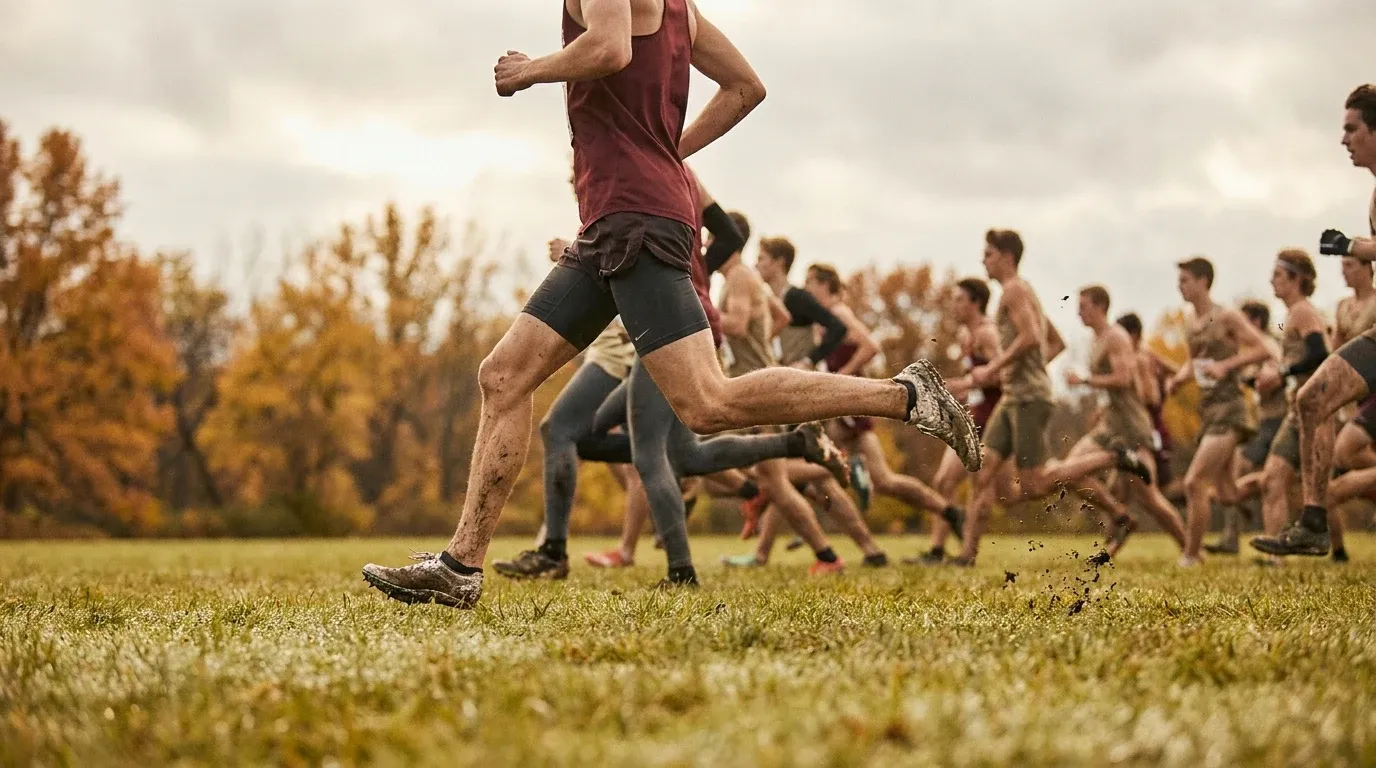
The fall cross-country season doesn't ease in quietly. It announces itself. And the 2026 Timpanogos XC Invitational, held in the foothills of Utah's Wasatch Front, made that point louder than most opening meets in recent memory. Multiple course records fell across divisions, times were sharp, and the racing was competitive in ways that typically don't show up until October.
If you follow high school or collegiate cross-country at all, this meet matters. If you're a recreational runner using the fall race calendar to anchor your own training, it matters for you too.
What Happened at Timpanogos This Year
The Timpanogos XC Invitational has established itself as one of the premier early-season cross-country meets in the United States, drawing varsity programs from across Utah, Nevada, Idaho, and beyond. The course is legitimately demanding. Rolling terrain, variable elevation, and the kind of dry late-summer air that doesn't forgive poor pacing make it a genuine test of summer fitness.
This year, records fell in the boys varsity 5K, the girls varsity 5K, and in several junior varsity divisions. The winning times were not just fast by early-season standards. They were fast by any standard. Athletes who had clearly used the summer to build substantial aerobic bases came in ready to race, not just ready to run.
The boys varsity winner crossed in a time that broke the previous course record by over fifteen seconds. On a course like Timpanogos, that margin is significant. The girls race was similarly competitive, with the top three finishers running within twelve seconds of each other and the winner posting a time that coaches in the region were already calling one of the strongest opening-meet performances they'd seen in years.
Team scoring was equally tight. Several programs that recruited and developed heavily through the off-season showed up with genuine depth, the kind that wins invitational trophies but also previews state championship contention later in November.
What Strong Early Times Actually Signal
It would be easy to dismiss a September meet as too early to read much into. That's a reasonable instinct, but it misses something important about how cross-country fitness works.
Unlike track, where athletes can peak sharply for a single race, cross-country rewards consistent aerobic development over months. The athletes running fast in early September didn't suddenly get fit. They've been building since spring. High mileage summers, altitude training camps, structured long runs. what shows up in week one of the cross-country season is a direct readout of what happened between May and August.
When records fall at a meet like Timpanogos in the opening weeks of the season, it's a reliable early indicator that the class of competitors this fall is unusually well prepared. That has downstream effects. It raises competitive standards across the board, pushes slower programs to lift their own benchmarks, and often produces exceptional performances at regional and state championships later in the cycle.
For anyone tracking the national cross-country conversation, this is worth paying attention to. The fall 2026 season may be shaping up as one of the stronger ones in recent years at the high school level.
Why Cross-Country's Return Matters Beyond High School
Cross-country is one of the few formats in running that pulls together athletes from genuinely different disciplines. Road runners, trail athletes, and track competitors all find common ground on a XC course. The format rewards raw aerobic fitness over technical specificity, which makes it a kind of universal benchmark for where runners stand in a given season.
The return of cross-country each fall functions as a reset point for the broader running community. Summer training gets tested. Priorities get recalibrated. And for runners who spent the warmer months building mileage, lifting in the gym, or working on trail fitness, the fall season is where that work starts to pay off visibly.
If trail running is part of your fall plans, the surge of competitive energy around XC season tends to overlap with some of the best race conditions of the year. The 21 great trail marathons to run this fall represent exactly the kind of goal events that benefit from the fitness you'd want to be building right now, the same base that's producing fast XC times in Utah.
Cross-country also connects to the broader conversation about what serious fitness looks like across the year. The athletes setting records at Timpanogos aren't just running high mileage. They're sleeping intentionally, managing their iron levels carefully, and treating recovery as a training variable. Research consistently shows that endurance athletes, particularly those in heavy training blocks, are highly susceptible to iron deficiency that goes undetected until performance drops. Iron deficiency in endurance athletes is one of the most underdiagnosed factors limiting performance in runners who otherwise feel like they're doing everything right.
How Recreational Runners Can Use XC Results
You don't have to be competing in cross-country to find value in following results like these. Elite and high-level prep XC times serve as a useful external benchmark for where fitness sits in the running world heading into fall.
Here's one practical way to think about it. When you see high school varsity boys running 5Ks in the 14:30 to 15:00 range on a hilly, non-certified course in the first week of September, you're seeing what several months of disciplined aerobic work produces at the highest levels of teenage athletics. That context helps calibrate your own training expectations and goal paces heading into fall road races.
For recreational runners targeting a fall half marathon or marathon, the XC season opening is a useful prompt to audit your own preparation. Are you executing long runs consistently? Is your weekly mileage trending upward? Have you addressed any lingering weaknesses from the summer? The athletes at Timpanogos have been asking themselves those questions since June.
Strength work is increasingly part of the answer for competitive runners at every level. The evidence connecting regular resistance training to improved endurance performance, injury resilience, and even recovery quality is substantial and growing. Strength training cuts depression and loneliness risk, which matters for runners who are deep in a training block and managing the mental load that comes with it.
The Broader Fall Race Season Context
The Timpanogos meet doesn't exist in isolation. It's one node in a fall running ecosystem that stretches from high school invitationals to major international marathons. What happens in early September on a Utah hillside is connected, in spirit at least, to what will happen on the roads of major cities and in the mountains later in the year.
The trail running world has its own version of this seasonal intensity. Events, conferences, and competitive conversations are all accelerating as fall approaches. Craig Thornley and Sally McRae will keynote the US Trail Running Conference this year, signaling that the institutional side of trail running is organizing around the same fall momentum that drives XC season.
At the road racing level, major marathons are gearing up for their fall editions. The pipeline from summer training to fall race-day performance is the same whether you're a high school cross-country runner in Utah or an adult recreational marathoner in Chicago or London. You build the base. The fall is where it gets tested.
What the 2026 Timpanogos Invitational tells us is that the base built this summer, at least among the athletes who showed up in Utah, was genuinely strong. That's an optimistic sign for the season ahead.
What to Watch as the Season Develops
The next several weeks will tell us whether the Timpanogos results represent an early-season outlier or a real trend. Key meets in the coming month will feature many of the same programs and, in some cases, the same individuals. If times continue to trend fast across different courses and different regions, the picture that's starting to emerge will sharpen considerably.
For now, the record-breaking performances in Utah have done what the best early-season meets always do. They've set a standard, started a conversation, and given runners at every level something to measure against as the fall unfolds.
If you're building toward a goal race this fall, that's the spirit worth borrowing. The athletes at Timpanogos didn't wait until October to get serious. Neither should you.