
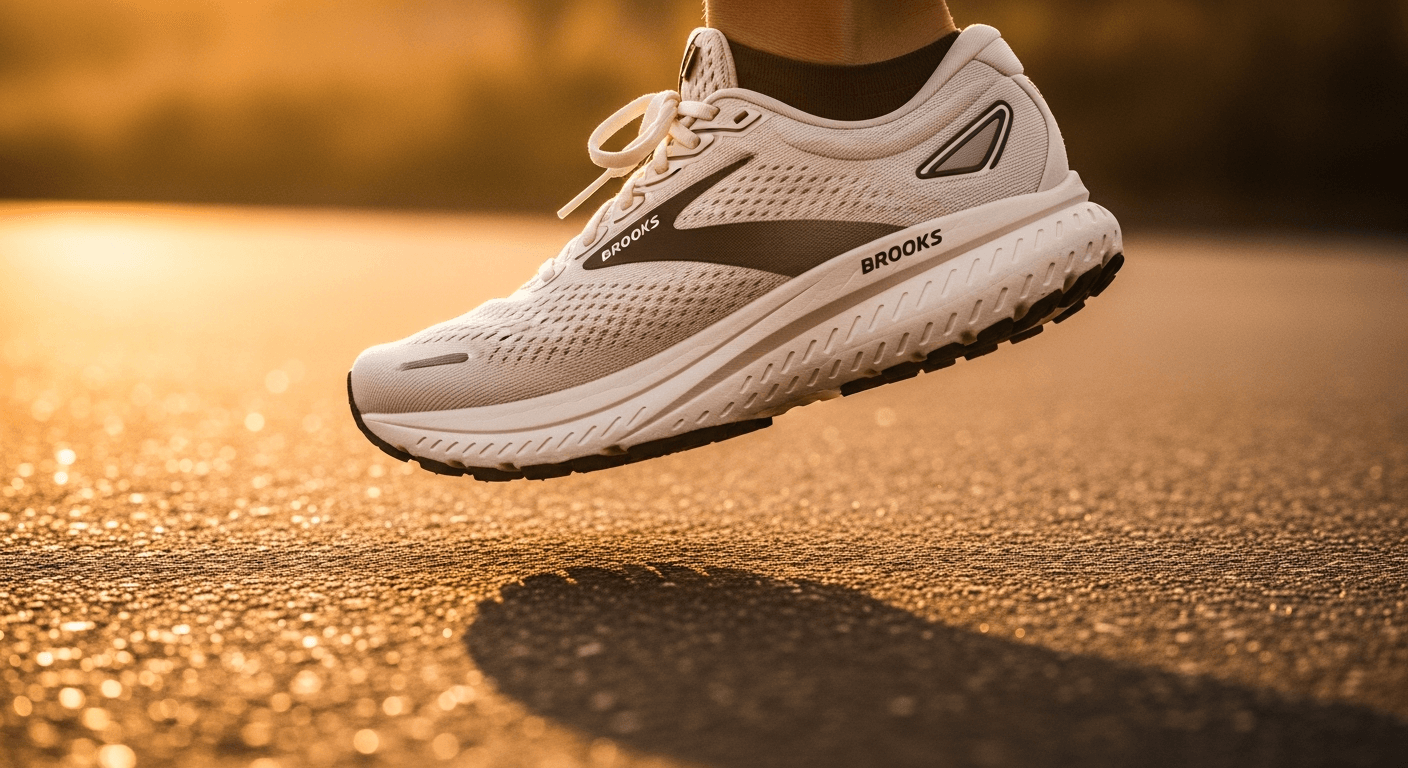
Brooks just posted its best quarter in company history. For a brand that doesn't sell basketball shoes, doesn't sponsor pop stars, and doesn't drop limited-edition colorways to manufacture hype, that's a genuinely remarkable result. But if you've been paying attention to how serious runners actually shop, it's not surprising at all.
The running shoe market is crowded, loud, and increasingly confusing. Nike, Adidas, New Balance, and On are all fighting for the same shelf space, the same athlete endorsements, and the same cultural moment. Brooks isn't playing that game. And right now, that bet is paying off in a significant way.
Run-Only Positioning Is a Strength, Not a Limitation
Brooks makes running shoes. That's it. No lifestyle sneakers, no basketball court crossovers, no fashion collabs with designers who've never laced up for a 10K. In an era where every major athletic brand is trying to be everything to everyone, that narrow focus looks almost radical.
But here's what that focus actually delivers: trust. When you walk into a specialty running store and the staff recommends Brooks, they're not doing it because a celebrity wore them on Instagram. They're doing it because the shoes are designed and tested exclusively for runners, and the brand has decades of data to back that up.
That credibility matters more than you might think. Research consistently shows that runners, especially those training for distance events, prioritize fit and injury prevention over brand prestige when making purchasing decisions. Brooks has built its entire identity around that priority. The result is a customer base that buys again and again, not because of trend cycles but because the shoe actually works for their gait and training volume.
Contrast that with lifestyle-adjacent brands whose running lines often feel like afterthoughts, engineered to look good in a flat lay rather than hold up through a 16-week marathon block. Runners notice the difference.
The Fit Science Advantage Is Quietly Enormous
One of Brooks' less-discussed competitive edges is its investment in biomechanics research and fit technology. Their DNA cushioning system, continuously refined over years, adapts to individual foot strike patterns in ways that budget or fashion-forward competitors simply don't prioritize. More visibly, their Fit Finder tool has become a genuine conversion machine.
Fit Finder works by walking you through a short series of questions about your arch, gait, and training type, then matching you to specific models. It sounds simple. The execution is what matters. Unlike generic size guides, Brooks' system pulls from actual foot shape data and real-world wear feedback to make recommendations that stick.
The business impact has been measurable. Runners who go through a structured fit process return at significantly higher rates than those who browse and guess. They also report fewer injuries and greater satisfaction with their purchase. That's not marketing copy. That's how you build brand loyalty without spending $200 million on an athlete deal.
For you as a buyer, it's worth taking the time to actually use tools like this before your next purchase. Especially if you're moving from casual jogging into structured training, the difference between a shoe that fits your mechanics and one that just fits your budget can be the difference between hitting your goal and spending six weeks dealing with plantar fasciitis.
The Carbon Plate Era Is Sorting Winners From Pretenders
Carbon-plated racing shoes have gone from elite-only curiosities to mainstream race-day gear in under a decade. What started with Nike's Vaporfly has expanded into a full category that virtually every major brand now participates in. But not all carbon plates are created equal, and not every brand has the running science infrastructure to build them well.
Brooks entered the super-shoe conversation with its Hyperion Elite line, and it's done so with the kind of credibility that comes from actually understanding runner biomechanics. When brands with shallow running roots rush carbon-plated models to market, the results are often mixed at best and injury-inducing at worst. Shoe geometry, stack height, and plate stiffness interact in complex ways that require serious research to get right.
The current moment in elite running makes this especially relevant. Three sub-2 marathon finishes at London 2026 marked a threshold moment for the sport, and the footwear decisions behind those performances are now filtering down to recreational training advice. Brands that can credibly speak to what those shoes are doing at a physiological level have a real edge in the conversation.
Brooks is one of those brands. It's not the loudest voice in the room, but when it speaks about running technology, it speaks from a foundation of actual running science. That's a meaningful distinction when the category is full of marketing noise.
What Runners Want in 2026 Is Not What Brands Are Selling
The gap between what lifestyle-first athletic brands are pushing and what dedicated runners actually want has never been more visible. Runners training seriously want consistency, injury prevention, and performance data. They don't want a shoe that was designed in partnership with a streetwear label and happens to have a running outsole attached.
This shows up in purchasing behavior across the market. Specialty running retail, the kind of stores where staff actually watch you run on a treadmill before recommending a shoe, has been growing while general athletic retail has flattened. The customers driving that growth are runners who take their training seriously, whether they're targeting a local 5K or working through the kind of structured heat training covered in resources like how to use summer heat to run faster in the fall.
Those runners want a brand that treats them as athletes, not as style consumers. Brooks' entire positioning is built around that premise. It doesn't talk to you about culture or identity in the abstract. It talks to you about your foot strike, your training load, and your injury history. That's a fundamentally different value proposition, and it's resonating.
The Numbers Behind the Story
Brooks' record quarter wasn't a fluke. The brand has been posting consistent growth for several years, driven by a combination of specialty retail strength, direct-to-consumer investment, and word-of-mouth from runners who feel the brand actually delivers on its promises.
Their Ghost and Adrenaline GTS lines remain perennial bestsellers in the $140 to $160 range, hitting a sweet spot between performance credibility and accessibility. These aren't flashy shoes. They're workhorses. And in a market where plenty of competitors are charging $250 or more for carbon-plated everything, workhorses with a strong fit reputation have a durable audience.
Brooks also benefits from relatively low return rates in the direct-to-consumer channel, something the industry tracks closely as a proxy for customer satisfaction. When fit tools work and customers end up with the right shoe for their mechanics, they keep the shoes. That sounds obvious. In practice, it's a significant operational and brand health indicator.
What This Means for How You Shop
If you're in the market for a new training shoe, the Brooks story has some practical implications beyond brand loyalty debates.
- Fit tools are worth your time. Whether it's Brooks' Fit Finder or an in-store gait analysis, spending 10 minutes on the process before committing $150 to a shoe is a genuine investment in your training continuity.
- Run-specific brands tend to get the details right. Stack height, heel-to-toe drop, and upper construction decisions are made differently when every shoe in your catalog has to perform on a run rather than just look good standing still.
- Carbon plates aren't for everyone. If you're building a base or running mostly easy miles, a well-cushioned daily trainer from a brand with real biomechanics investment will serve you better than chasing super-shoe tech that's optimized for race-day tempo.
- Specialty retail still adds value. The staff at a dedicated running store can watch your gait, ask about your training history, and make a recommendation that a general sporting goods algorithm can't replicate. It's worth seeking out.
Your training doesn't exist in isolation from what you put on your feet. If you're doing the work, whether that's structured intervals, long slow distance, or training smarter through summer heat, the shoe you're doing it in has a real effect on your adaptation, recovery, and injury risk.
It's also worth noting that footwear choices exist alongside other performance inputs. The recovery and fueling side of your training matters just as much as your gear decisions. Understanding something like how protein needs shift with training load is the same category of decision as understanding what shoe fits your mechanics. They're all part of the same system.
The Bigger Signal
Brooks winning a quarter isn't just a business story. It's a data point about where consumer trust in the running market is actually sitting right now. Runners are increasingly skeptical of lifestyle-first brands making performance claims, increasingly aware of the difference between marketing and biomechanics research, and increasingly willing to buy from brands that speak their language without trying to be cool.
That's a shift in how an entire category of consumer makes decisions. And for a brand that has spent decades refusing to be anything other than a running company, the timing could not be better.