
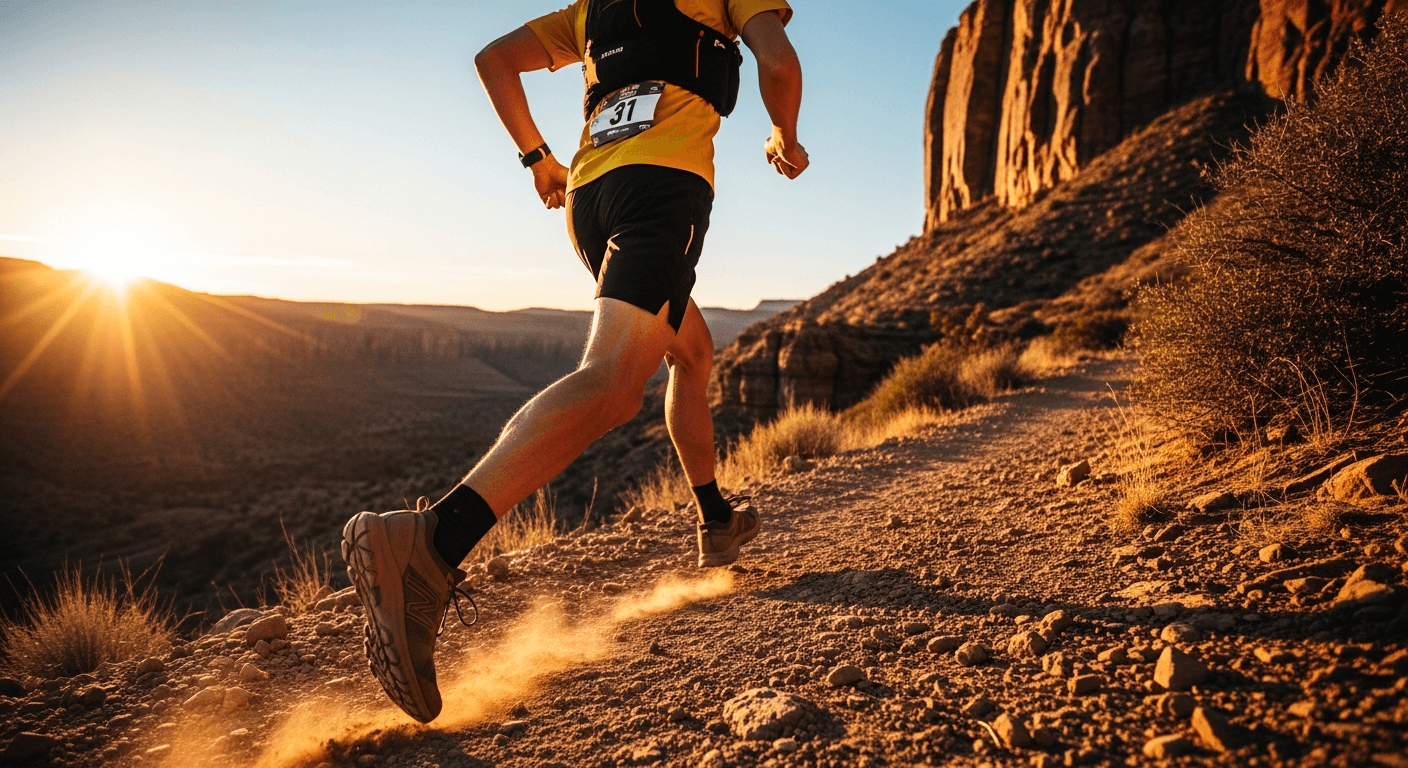
The Canyons by UTMB 100k delivered another defining chapter in elite trail racing this spring. Adam Peterman and Riley Brady crossed the finish line first in their respective fields, producing performances that raised eyebrows across the global trail running community and underlined just how competitive the UTMB World Series has become.
If you follow trail racing at any level, this race deserves your attention. Here's what happened, what it means, and why these two wins say something significant about where the sport is heading.
Adam Peterman Dominates the Men's 100k
Adam Peterman has been building toward a performance like this for two seasons. The American runner, known for his calculated pacing and exceptional technical descending, ran a measured first half before pushing hard through the canyon sections that define this course's brutal second act.
Peterman moved through the field with controlled aggression, not through explosive surges but through consistent pressure. He reached the midpoint aid stations in solid position and then gradually extended his lead as competitors began to crack under the accumulated fatigue of the descents and climbs that make the Canyons course one of the most demanding in the UTMB World Series calendar.
His finishing time reflected both the difficulty of the course conditions on race day and the high standard of competition behind him. The men's podium was tight through the early stages. That Peterman was able to open a meaningful gap in the final 30 kilometers points to superior late-race conditioning, which is often the differentiating factor in races of this distance.
For runners building toward their own long-distance goals, Peterman's approach is worth studying. His training reportedly emphasizes sustained effort over high-intensity work, with structured weekly mileage that prioritizes time on feet. If you're structuring your own training block, how to build a running training week from scratch offers a practical framework for applying similar principles at your level.
Riley Brady Claims a Commanding Women's Victory
Riley Brady's win in the women's race was arguably the more striking performance of the day. She ran with confidence from the opening miles, never allowing a pack to form around her and setting a tempo that forced every competitor to make difficult decisions early in the race.
Brady's strength on the climbs was evident. The Canyons course features relentless elevation gain, and she managed her effort on the uphills intelligently, preserving just enough to run strongly through the final canyon descent into the finish. That ability to hold form when the legs are loaded with fatigue separates good trail runners from exceptional ones.
The women's field at Canyons 2026 was genuinely competitive, with several international athletes who had posted strong results earlier in the season. Brady's margin at the finish was a statement. It signals that she's in exceptional form heading into the rest of the UTMB World Series calendar, and potentially building toward a major result at UTMB Mont-Blanc later this year.
Trail running demands a specific kind of physical preparation that road training alone can't replicate. Vertical work is central to it. the one workout runners need to actually improve breaks down why hill repetitions are non-negotiable if you're serious about performing on technical terrain.
Why Canyons by UTMB Matters Beyond the Elite Race
The Canyons by UTMB isn't just a race for the professionals. It's a key qualifier in the UTMB World Series points system, which means thousands of amateur and age-group runners enter it every year with their eyes on earning a start at the flagship UTMB Mont-Blanc event in Chamonix.
That dual identity, elite showcase and global qualifier, gives this race an unusual energy. You've got world-class athletes competing at the front while runners of wildly different abilities share the same course, the same aid stations, and the same brutal canyon terrain. Few events in trail running manage that balance as well as Canyons does.
The race takes place in the American River canyon system near Auburn, California, a stretch of terrain that demands respect from every runner regardless of experience level. The exposure, the technical footing, and the heat that can build through the day all create conditions where preparation matters as much as fitness. who's actually safer in the wild, hikers or trail runners, explores how preparation and terrain knowledge shape outcomes in backcountry environments that aren't so different from what Canyons runners navigate on race day.
Nutrition and Recovery: The Hidden Variables at 100k
At 100 kilometers, physiology becomes as important as training. The athletes who podium at this distance aren't just fitter than the rest. They've also dialed in their fueling strategies with a level of precision that most recreational runners underestimate.
Peterman and Brady will have had detailed nutrition plans built around the specific aid station spacing and elevation profile of the Canyons course. Carbohydrate intake, sodium management, and hydration all become critical variables once you're past the 50-kilometer mark and the body's glycogen stores are under serious stress.
If you're targeting a 100k or even a 50k, your nutrition plan deserves as much attention as your long runs. the 2026 practical guide to sports nutrition timing covers the evidence-based principles that apply across endurance events, from how to load before race day to how to manage intake during extended effort.
Getting this right isn't optional at the distances Canyons demands. It's the difference between finishing strong and managing a difficult death march through the final 20 kilometers.
What These Results Say About Elite Trail Running in 2026
The performances at Canyons 2026 reflect several trends that have been building in elite trail running over the past few years.
- Depth is increasing. The gap between the winner and the fifth-place finisher in both races has tightened significantly compared to comparable UTMB World Series events five years ago. More athletes are capable of winning on any given day.
- American athletes are increasingly competitive globally. Peterman's win adds to a pattern of strong US performances in UTMB World Series events, a trend that reflects growing depth in the American trail running scene and more sophisticated training and coaching infrastructure.
- Women's trail racing is drawing more attention. Brady's dominant performance in a strong field will generate coverage and sponsorship conversations. The professional trajectory for elite women in trail running has shifted meaningfully in recent years.
- The UTMB World Series format is working. By connecting races across multiple continents into a coherent qualification and ranking system, UTMB has created stakes that extend well beyond race day. Runners plan entire seasons around Series points, which elevates every individual race on the calendar.
The Canyons Course: A Brutal and Beautiful Test
For anyone unfamiliar with the Canyons by UTMB course, it's worth understanding what Peterman and Brady actually ran. The 100k route covers some of the most dramatic terrain in Northern California, featuring multiple descents and climbs into and out of the American River canyon, sections of exposed singletrack, and cumulative elevation gain that punishes any weakness in climbing efficiency.
The course is not forgiving. Technical sections require focus even when you're hours into the race and fatigue is compressing your decision-making. Aid station cutoffs are real. The field loses a meaningful percentage of starters every year to DNFs, whether from injury, heat, or simply running out of time.
That difficulty is part of what makes a Canyons finish meaningful, at any pace. And it's part of what makes Peterman and Brady's performances worth recognizing beyond the podium result. Running 100 kilometers through that terrain at the pace they maintained requires a level of preparation and mental fortitude that deserves more than a time and a trophy.
Looking Ahead: What's Next for Peterman and Brady
A Canyons win typically positions athletes well for the second half of the UTMB World Series season. Both Peterman and Brady will likely use this result as a confidence anchor heading into summer racing, with UTMB Mont-Blanc in August representing the obvious peak target for anyone who performed at this level in the spring.
Whether either athlete chooses to race again before Chamonix will depend on recovery and individual season planning. A 100k at race intensity takes weeks to fully absorb, and smart athletes treat that recovery period as part of the training cycle rather than lost time.
For the broader trail running world, Canyons 2026 delivered exactly what the best races should. Clear winners, genuine competition throughout the field, and performances that set a benchmark for the rest of the season. Peterman and Brady both raised the bar. The rest of the field now knows exactly where it is.