
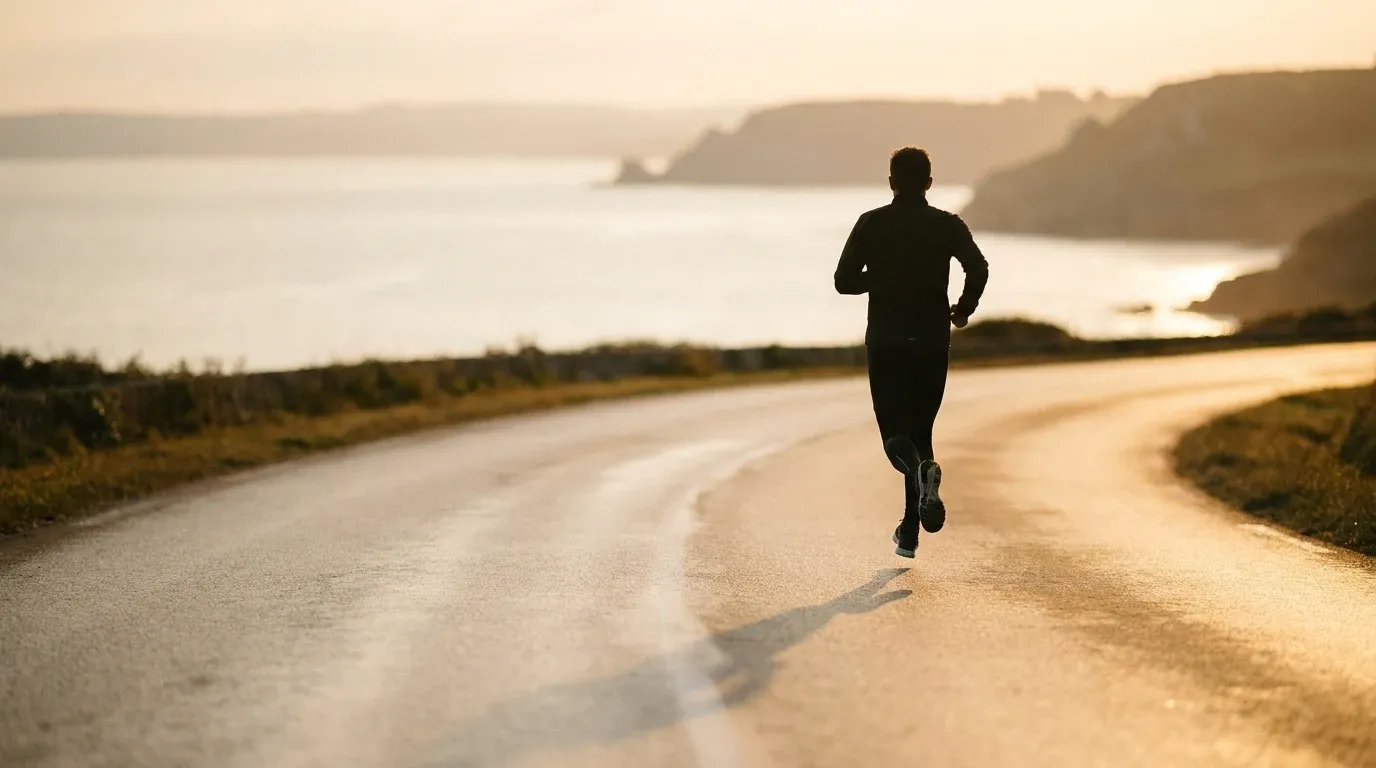
The seventh edition of the Deauville Marathon delivered exactly what this Normandy coastal race has built its reputation on. Strong performances at the front, a full field of committed runners, and scenery that makes the effort feel worth every mile. Here's how it played out.
Men's Race: Murithi Controls from the Front
Kenyan Peter Murithi crossed the finish line in 2 hours, 18 minutes and 56 seconds, claiming the men's title with a measured, controlled performance. Murithi ran his own race from early in the second half, pulling away from the lead pack and holding steady pace through the coastal stretches that define the back end of this course.
His time places him comfortably in the tier of competitive regional marathon winners across Europe. It's not a world-stage result, but it's a serious performance on a course that doesn't flatter average runners. The elevation changes along the Normandy coastline demand discipline, and Murithi showed exactly that.
The men's podium reflected a mix of elite-level club runners and semi-professionals, consistent with what Deauville has attracted since it began growing its field in recent editions.
Women's Race: Hamel Claims a Clear Victory
Zoe Hamel won the women's race in 2 hours, 42 minutes and 18 seconds, taking the title in what was a well-executed effort from start to finish. Hamel ran with patience in the first half, avoided going out too hard on the early flat sections, and finished strongly over the final 10 kilometers.
Her margin of victory was comfortable enough to suggest she had more in reserve, though the conditions on race day were not ideal for chasing personal bests. Winds off the English Channel are a known factor at Deauville, and smart pacing tends to reward runners who respect them.
Hamel's performance is a reminder of how women's marathon racing at the regional level continues to evolve. The marathon gender gap is closing, and results like this one at mid-sized events reflect that shift as much as any world major does.
2,901 Finishers: Normandy's Biggest Running Day
Total finisher count reached 2,901 runners across all distances, confirming this as one of the largest running events in Normandy by participation. That's not a small number for a race that sits outside the major metropolitan circuits. For context, many well-regarded regional marathons across the US and UK operate in the 2,000 to 4,000 finisher range, and Deauville is competing comfortably in that bracket.
The growth trajectory of this race matters. Seven editions in, it's no longer the niche local event it started as. It has built enough of a reputation to draw runners from across France and beyond, with international participation becoming a consistent feature of the field.
If you're planning a destination race for 2026 or looking ahead to 2027, this scale is significant. It's large enough to have real atmosphere and logistics support, but small enough that you're not fighting crowds at every water station.
The Course: What Makes Deauville Different
The Deauville Marathon runs along and around the Normandy coast, which gives it a character that most city marathons simply don't have. You get open road sections with sea views, stretches through the town center, and enough variety to keep the experience from feeling repetitive.
It's not a flat, fast course. If you're targeting a personal best on a certified point-to-point or loop with minimal elevation, this probably isn't your race. But if you want a memorable experience with legitimate competition, it delivers.
The race offers multiple distance options alongside the flagship marathon, including shorter formats that make it accessible to runners at different stages of their training. This is part of why the finisher numbers are strong. Deauville doesn't ask everyone to show up for 26.2 miles. It builds a running day.
Multiple Distances, One Race Weekend
Beyond the marathon, Deauville organizes shorter distance events on race weekend, allowing runners of all levels to participate in the same event environment. This model has become increasingly common among successful regional marathons globally, and it works here because the town itself is well-suited to hosting it.
Deauville is a compact, scenic coastal destination with the infrastructure to handle a multi-event running weekend. Hotels, cafes, and logistics are manageable in a way that larger urban marathons often aren't, and the tourism angle is real. Many runners combine the race with a broader trip to Normandy, which has obvious historical and cultural draw for international visitors.
If you're based in the UK, this is a short trip across the Channel. For North American runners, it fits naturally into a European travel itinerary. The race date in the calendar avoids the cluttered spring marathon window, which gives it another practical advantage.
Training and Nutrition Considerations for a Coastal Race
If Deauville is on your radar for a future edition, your preparation needs to account for the specific demands of a coastal course. Wind exposure, variable conditions, and modest elevation changes all factor into how you should train and fuel.
On the nutrition side, pacing your carbohydrate intake correctly over a marathon effort is more nuanced than most runners realize. The question of how many carbs endurance athletes actually need per hour is worth revisiting before you lock in your race-day fueling plan. Getting this wrong on a course with wind resistance can cost you significantly in the final 10 kilometers.
Your base-building phase matters just as much. Building your marathon base through the winter months is the most reliable way to arrive at a spring race ready to perform, rather than scrambling for fitness in the weeks before the gun.
Recovery and energy balance also deserve attention. Runners preparing for a full marathon over several months are at genuine risk of under-fueling, which affects both performance and long-term health. Relative Energy Deficiency in Sport is more common among endurance athletes than many coaches acknowledge, and it's worth understanding whether your training load and calorie intake are actually aligned.
Why This Race Belongs on Your Radar
Deauville isn't chasing world records or trying to become the next major. What it's doing is building a consistent, well-organized marathon weekend in a location that earns its place on a runner's calendar through experience rather than hype.
Seven editions in, the results are real, the field is growing, and the winners this year ran times that reflect genuine competitive depth. Murithi's 2:18:56 and Hamel's 2:42:18 are performances that set a credible standard for the event.
If you're a runner who values destination races that combine a legitimate athletic challenge with a worthwhile travel experience, Deauville belongs in your planning. The 2026 edition proved the race continues to deliver on both fronts.
Keep an eye on registration for the 2027 edition. If participation trends continue, spots in preferred start waves won't stay open long. Late entry closures have become a real issue at popular regional races, and Deauville's growing reputation makes it a candidate for that problem sooner rather than later.